
Gå ubegrenset med Magzter GOLD
Få ubegrenset tilgang til over 9000 magasiner, aviser og premiumhistorier for bare
Prøve GULL - Gratis
TOXIC
The New Yorker
|June 16, 2025
What the pop culture of the two-thousands did to millennial women.
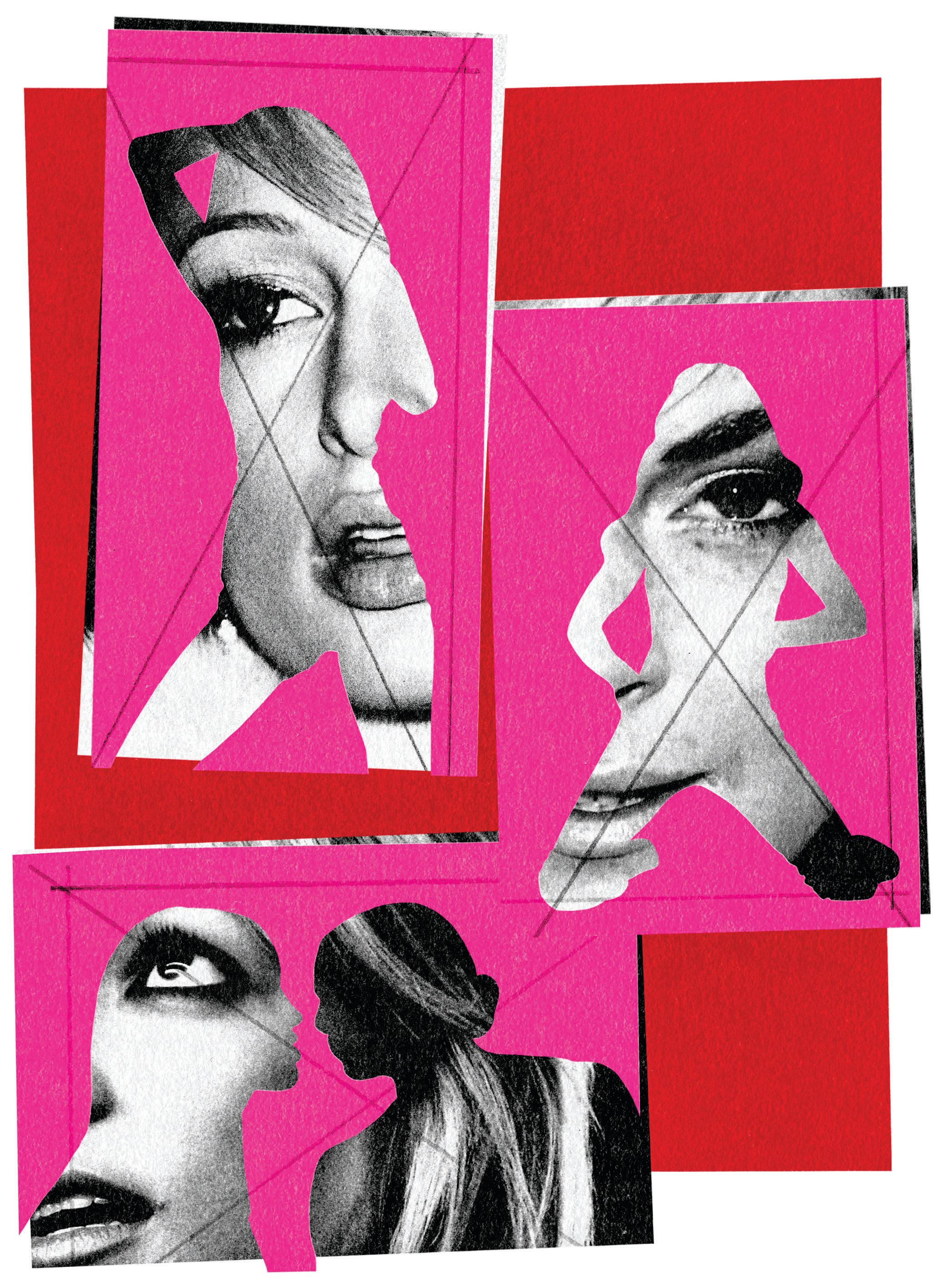
In 1969, Vivian Gornick was assigned by the Village Voice to write about the “women’s libbers” gathering in downtown Manhattan. Gornick set out never having heard of women's liberation. She returned one week later a convert. What happened in the interval was the dawning of what second-wave feminists called feminist consciousness: the growing conviction that how things were for women were not how they had to be. Often, this insight arose in conversation with other women, in consciousness-raising groups. Comparing notes on the parts of their lives once thought too personal to merit political analysis—love, sex, housework, marriage, motherhood—they found their “symptoms of private unhappiness,” in Gornick’s words, “so powerfully and so consistently duplicated among women that perhaps these symptoms could be ascribed to cultural causes as to psychological ones.” Reflecting on one’s life in a consciousness-raising session, Gornick wrote, was “rather like shaking a kaleidoscope and watching all the same pieces rearrange themselves into an altogether other picture.”
Making sense of this new picture involved a kind of reappraisal. What voices, loud or soft, had convinced women of their own inferiority for so long? What myths, scripts, and stories had predisposed them to accept the limitations placed on them from within and without? What alternate ways of living could be gleaned from the past? “Contemporary feminism is bound up with a profound rereading of the culture,” Gornick wrote years later. “We read the novels we grew up on as though for the first time, we sit up late watching the movies of our childhood, we turn again to familiar memoirs and biographies of distinguished men and women.” Adrienne Rich, in 1972, wrote that “re-vision,” the task of “entering an old text from a new critical direction,” was “an act of survival” for women: “Until we can understand the assumptions in which we are drenched we cannot know ourselves.”

Denne historien er fra June 16, 2025-utgaven av The New Yorker.
Abonner på Magzter GOLD for å få tilgang til tusenvis av kuraterte premiumhistorier og over 9000 magasiner og aviser.
Allerede abonnent? Logg på
FLERE HISTORIER FRA The New Yorker

The New Yorker
A WEB OF ABUSE
Andrew Tate became a global celebrity—and a political force—by systematically exploiting women.

79 mins
June 15, 2026
The New Yorker
BLOOD FROM A STONE
How Edmonia Lewis changed nineteenth-century sculpture.
11 mins
June 15, 2026

The New Yorker
TICKS TO FEAR THIS SUMMER
Gray-Legged Tick - Physically resembling a crossbreed of a gremlin and Stephen Miller’s soul, the Gray-Legged Tick can be found wherever it is even moderately interesting to vacation in the Northeast.
2 mins
June 15, 2026

The New Yorker
HAPPY CAMPERS
“Can I Be Frank?” and “Heated Rivalry: The Unauthorized Musical.”
6 mins
June 15, 2026

The New Yorker
SILENCE, PLEASE
For people with misophonia, everyday sounds can be agony.
18 mins
June 15, 2026
The New Yorker
NO VACANCY
Could Switzerland be the first country to cap its population?
21 mins
June 15, 2026

The New Yorker
SURF AND TURF
World-class sushi in Omaha, Nebraska.
7 mins
June 15, 2026

The New Yorker
Constellation
When I think of the free time my mother spent with my father, in our small town outside Turin, this is the scene I usually picture: she’s on the couch, working through La Settimana Enigmistica, a weekly word-puzzle magazine, while he reads a book.
17 mins
June 15, 2026

The New Yorker
THE ANTAGONIST
It took me a few tries to find my mother on Google in 2017.
3 mins
June 08, 2026

The New Yorker
CARTE BLANCHE
Maggie O'Farrell and the art of inventing the past.
6 mins
June 08, 2026
Listen
Translate
Change font size