
Gå ubegrenset med Magzter GOLD
Få ubegrenset tilgang til over 9000 magasiner, aviser og premiumhistorier for bare
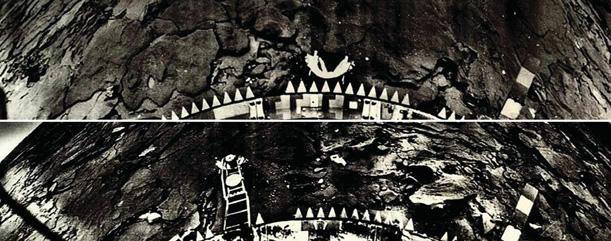
Venus's hostile atmosphere
BBC Sky at Night Magazine
|December 2023
Katrin Raynor takes a look at a planet where the skies boil and the clouds rain acid

Christiaan Huygens, a Dutch astronomer, first hypothesised the existence of Venus's atmosphere in 1698 when he observed the planet through his telescope. Despite viewing its waxing and waning phases, he could not see any features on its surface and guessed that a thick atmosphere must be obscuring his view. Years later in 1761, Russian Mikhail V Lomonosov detected the refraction of solar rays while observing the transit of Venus across the Sun - and thus discovered the atmosphere of Venus.
In 1962, Venus became the first planet to be visited by spacecraft, when NASA's Mariner 2 flew within 34,854km of the planet. Since then, nearly 40 missions have visited Venus and this month marks the 45th anniversary of NASA's Pioneer Venus mission and the Soviet Venera 11 and 12, all of which collected data about the planet's hostile atmosphere.
Venus is the second planet from the Sun and our nearest planetary neighbour. It has a rocky body similar in nature to Mercury, Earth and Mars. Named after the goddess of love and beauty, and described as Earth's twin, Venus is only 638.4km smaller in diameter than Earth and has a similar mass.

Denne historien er fra December 2023-utgaven av BBC Sky at Night Magazine.
Abonner på Magzter GOLD for å få tilgang til tusenvis av kuraterte premiumhistorier og over 9000 magasiner og aviser.
Allerede abonnent? Logg på
FLERE HISTORIER FRA BBC Sky at Night Magazine
BBC Sky at Night Magazine
MOONWATCH
January's top lunar feature to observe

2 mins
January 2026
BBC Sky at Night Magazine
Speed up your processing workflow
How to use Photoshop's Actions tool to drastically cut your processing time
3 mins
January 2026
BBC Sky at Night Magazine
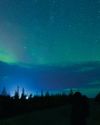
Chasing Canada's polar lights
With solar maximum peaking and a new Moon promising dark skies, Jamie Carter travels to Churchill, Manitoba to hunt the Northern Lights - and dodge polar bears – in Canada's far north
7 mins
January 2026
BBC Sky at Night Magazine
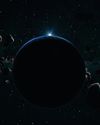
Beyond Pluto: The search for the hidden planets
Could one – or even two - undiscovered planets lurk at the edges of our Solar System? Nicky Jenner explores how close we are to finding the elusive 'Planet 9'
6 mins
January 2026
BBC Sky at Night Magazine
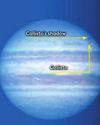
Jupiter moon events
Jupiter is a magnificent planet to observe.
2 mins
January 2026
BBC Sky at Night Magazine
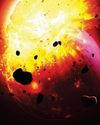
What samples from space have taught us
Alastair Gunn explains what scientists have learnt in the 20 years since the first unmanned mission brought materials back from alien worlds
3 mins
January 2026
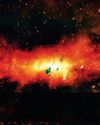
BBC Sky at Night Magazine
The Milky Way as you've never seen it before
This is the largest low-frequency radio colour image of our Galaxy ever assembled
1 min
January 2026
BBC Sky at Night Magazine
Merger of ‘impossibly' massive black holes explained
Scientists discover how enormous, fast-spinning black holes can exist after all
1 mins
January 2026
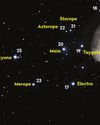
BBC Sky at Night Magazine
Lunar occultation of the Pleiades
BEST TIME TO SEE: 27 January from 20:30 UT
1 min
January 2026
BBC Sky at Night Magazine
The Universe's expansion may be slowing down
New study suggests current theories of dark energy could be wrong
1 mins
January 2026
Translate
Change font size