
Gå ubegrenset med Magzter GOLD
Få ubegrenset tilgang til over 9000 magasiner, aviser og premiumhistorier for bare
Our DISAPPEARING dark skies
BBC Sky at Night Magazine
|June 2023
Shaoni Bhattacharya looks at what is - and isn't - being done to help ensure everyone can see the stars

The stars have always been part of human culture. From motifs on Greek pottery to van Gogh's Starry Night painting, the connection is evident across the globe. But today, there are few people who get to experience what our forebears saw every night in the sky, researcher Christopher Kyba tells me.
"If you went outside at night you would have had the whole cosmos staring down at you - this really difficult to understand thing," says Kyba.
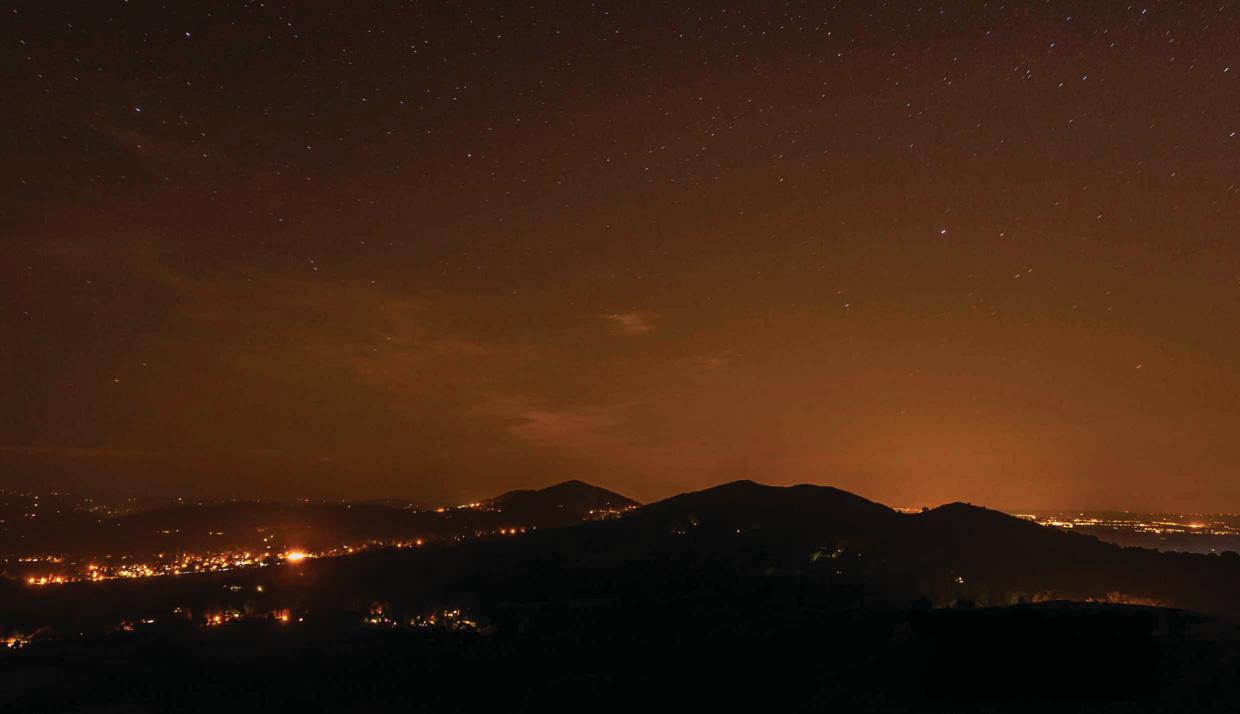
"From my experience with stars, it makes you quite reflective. It changes how you think - this confrontation with awe." The light pollution from humanity's use of lights at night is reducing the number of stars we can see.
Year on year it worsens, threatening our connection with the night sky, not to mention the implications for astronomy, wildlife, health, the climate and energy wastage.
To the human eye, the night sky is brightening by about 10 per cent a year, according to a recent study in Science by Kyba, a physicist at Ruhr University Bochum, Germany, and his colleagues.
At this rate, a child born in a location where 250 stars are visible at night would only be able to view 100 by the time they reach adulthood at 18. "That's a really fast and dramatic change," says Kyba.
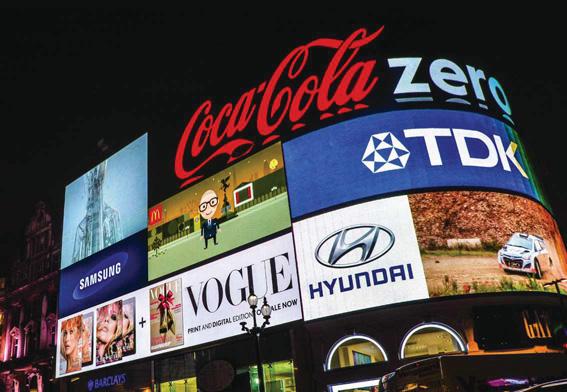
He and his colleagues attribute this decrease in star visibility to 'skyglow' - an artificial twilight caused by streetlights, LED signs and residential lighting, scattering off molecules in the atmosphere. While most of this light escapes into space, some of it bounces back down towards Earth.
Measuring the dark


Denne historien er fra June 2023-utgaven av BBC Sky at Night Magazine.
Abonner på Magzter GOLD for å få tilgang til tusenvis av kuraterte premiumhistorier og over 9000 magasiner og aviser.
Allerede abonnent? Logg på
FLERE HISTORIER FRA BBC Sky at Night Magazine
BBC Sky at Night Magazine
MOONWATCH
January's top lunar feature to observe

2 mins
January 2026
BBC Sky at Night Magazine
Speed up your processing workflow
How to use Photoshop's Actions tool to drastically cut your processing time
3 mins
January 2026
BBC Sky at Night Magazine
Chasing Canada's polar lights
With solar maximum peaking and a new Moon promising dark skies, Jamie Carter travels to Churchill, Manitoba to hunt the Northern Lights - and dodge polar bears – in Canada's far north
7 mins
January 2026
BBC Sky at Night Magazine
Beyond Pluto: The search for the hidden planets
Could one – or even two - undiscovered planets lurk at the edges of our Solar System? Nicky Jenner explores how close we are to finding the elusive 'Planet 9'
6 mins
January 2026
BBC Sky at Night Magazine
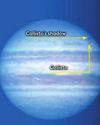
Jupiter moon events
Jupiter is a magnificent planet to observe.
2 mins
January 2026

BBC Sky at Night Magazine
What samples from space have taught us
Alastair Gunn explains what scientists have learnt in the 20 years since the first unmanned mission brought materials back from alien worlds
3 mins
January 2026
BBC Sky at Night Magazine
The Milky Way as you've never seen it before
This is the largest low-frequency radio colour image of our Galaxy ever assembled
1 min
January 2026
BBC Sky at Night Magazine
Merger of ‘impossibly' massive black holes explained
Scientists discover how enormous, fast-spinning black holes can exist after all
1 mins
January 2026
BBC Sky at Night Magazine
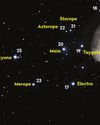
Lunar occultation of the Pleiades
BEST TIME TO SEE: 27 January from 20:30 UT
1 min
January 2026
BBC Sky at Night Magazine
The Universe's expansion may be slowing down
New study suggests current theories of dark energy could be wrong
1 mins
January 2026
Translate
Change font size