
Gå ubegrenset med Magzter GOLD
Få ubegrenset tilgang til over 9000 magasiner, aviser og premiumhistorier for bare
Meteor hunters unite!
BBC Sky at Night Magazine
|August 2025
Meteor showers are always awe-inspiring, but now amateur data is helping us track, understand and even protect ourselves from these cosmic invaders. Mark McIntyre explains how you can join in
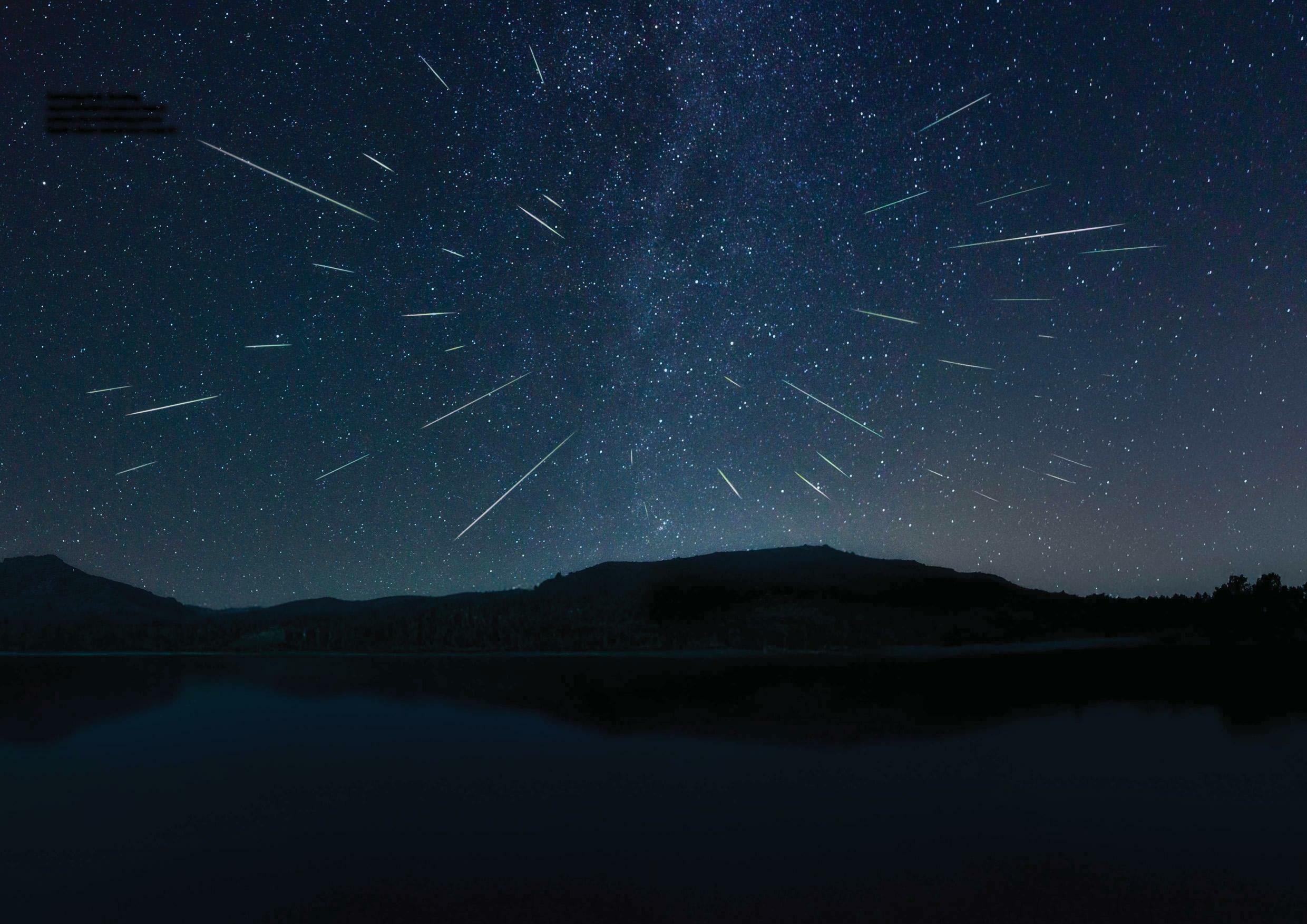
We all love watching meteor showers like the Perseids in August. These dramatic events are one of the easiest astronomical events to observe because they're regular, you don't need to travel to see them and they require nothing more than your own two eyes - and a comfortable chair!
However, many amateur astronomers are now taking their sky watching up a level by recording meteors during showers and reporting their observations to organisations like the British Astronomical Association (BAA), Global Meteor Network (GMN) and the UK Meteor Network (UKMON). So, why are they doing this?
Collecting meteor data is a great way to get involved in science that has real-world implications. Data from amateurs has helped us protect spacecraft and astronauts, locate meteorites, explore the origins of life on our planet and reveal new information about the early Solar System. It's even keeping Earth safer from hazardous asteroids.
And it’s now easier than ever. Scientists have been studying meteor showers for centuries, but in the last 20 years or so, new technology has made amateur contributions much simpler. At the same time, government research funding has increasingly targeted ‘big science’ — like particle colliders and space missions - while meteor science, being an ‘established science’, is the poor cousin. That's why contributions from amateurs are vital - they're driving the science forward and supplying much of the data that researchers rely on today.
What's more, those amateur contributions come from all over the world, from the Arctic to the Antipodes and from city centres to remote deserts. This allows scientists to have a global picture and to take into account weather and light pollution. We can also monitor events over long distances. For example, in 2024 an 'Earth-grazing' meteor travelled around 900km (560 miles) across the whole of Europe, from Croatia to the UK.
Join the great meteor hunt

Denne historien er fra August 2025-utgaven av BBC Sky at Night Magazine.
Abonner på Magzter GOLD for å få tilgang til tusenvis av kuraterte premiumhistorier og over 9000 magasiner og aviser.
Allerede abonnent? Logg på
FLERE HISTORIER FRA BBC Sky at Night Magazine
BBC Sky at Night Magazine
MOONWATCH
January's top lunar feature to observe

2 mins
January 2026
BBC Sky at Night Magazine
Speed up your processing workflow
How to use Photoshop's Actions tool to drastically cut your processing time
3 mins
January 2026

BBC Sky at Night Magazine
Chasing Canada's polar lights
With solar maximum peaking and a new Moon promising dark skies, Jamie Carter travels to Churchill, Manitoba to hunt the Northern Lights - and dodge polar bears – in Canada's far north
7 mins
January 2026

BBC Sky at Night Magazine
Beyond Pluto: The search for the hidden planets
Could one – or even two - undiscovered planets lurk at the edges of our Solar System? Nicky Jenner explores how close we are to finding the elusive 'Planet 9'
6 mins
January 2026
BBC Sky at Night Magazine
Jupiter moon events
Jupiter is a magnificent planet to observe.
2 mins
January 2026

BBC Sky at Night Magazine
What samples from space have taught us
Alastair Gunn explains what scientists have learnt in the 20 years since the first unmanned mission brought materials back from alien worlds
3 mins
January 2026
BBC Sky at Night Magazine
The Milky Way as you've never seen it before
This is the largest low-frequency radio colour image of our Galaxy ever assembled
1 min
January 2026

BBC Sky at Night Magazine
Merger of ‘impossibly' massive black holes explained
Scientists discover how enormous, fast-spinning black holes can exist after all
1 mins
January 2026
BBC Sky at Night Magazine
Lunar occultation of the Pleiades
BEST TIME TO SEE: 27 January from 20:30 UT
1 min
January 2026
BBC Sky at Night Magazine
The Universe's expansion may be slowing down
New study suggests current theories of dark energy could be wrong
1 mins
January 2026
Listen
Translate
Change font size