
Gå ubegrenset med Magzter GOLD
Få ubegrenset tilgang til over 9000 magasiner, aviser og premiumhistorier for bare
Euclid Shedding light on the dark Universe PRO
BBC Sky at Night Magazine
|July 2023
A new European space telescope launching this month will tackle the mysteries of dark matter and dark energy, reports Govert Schilling

Leaf through this issue of BBC Sky at Night Magazine, look at the numerous eye-catching photographs and marvel at the beauty of the cosmos. Then realise that everything we can see with astronomical telescopes - stars, nebulae, galaxies - amounts to a mere 5 per cent of the total content of the Universe. The remaining 95 per cent is composed of two mysterious components: dark energy - the 'force' behind the accelerating expansion of the Universe - and dark matter. We know they exist, but their true nature eludes us.
Enter Euclid, the next space mission in the Cosmic Vision science programme of the European Space Agency (ESA). Due to launch into space in the first half of July from Cape Canaveral in Florida, this ambitious space telescope will focus on the dark Universe by mapping and studying no less than two billion galaxies. "Nothing like this has ever been done before," says Euclid's independent legacy scientist Ivan Baldry of Liverpool John Moores University.
Euclid's observations will reveal the expansion history of our Universe (which is governed by dark energy) and the three-dimensional distribution of mass (which mainly consists of dark matter). As a bonus, the mission will check whether Albert Einstein's general theory of relativity is the right formulation of gravity on cosmic scales. According to project manager Giuseppe Racca at ESTEC (ESA's science and technology centre in Noordwijk, the Netherlands), "This combination is the unique selling point of Euclid".
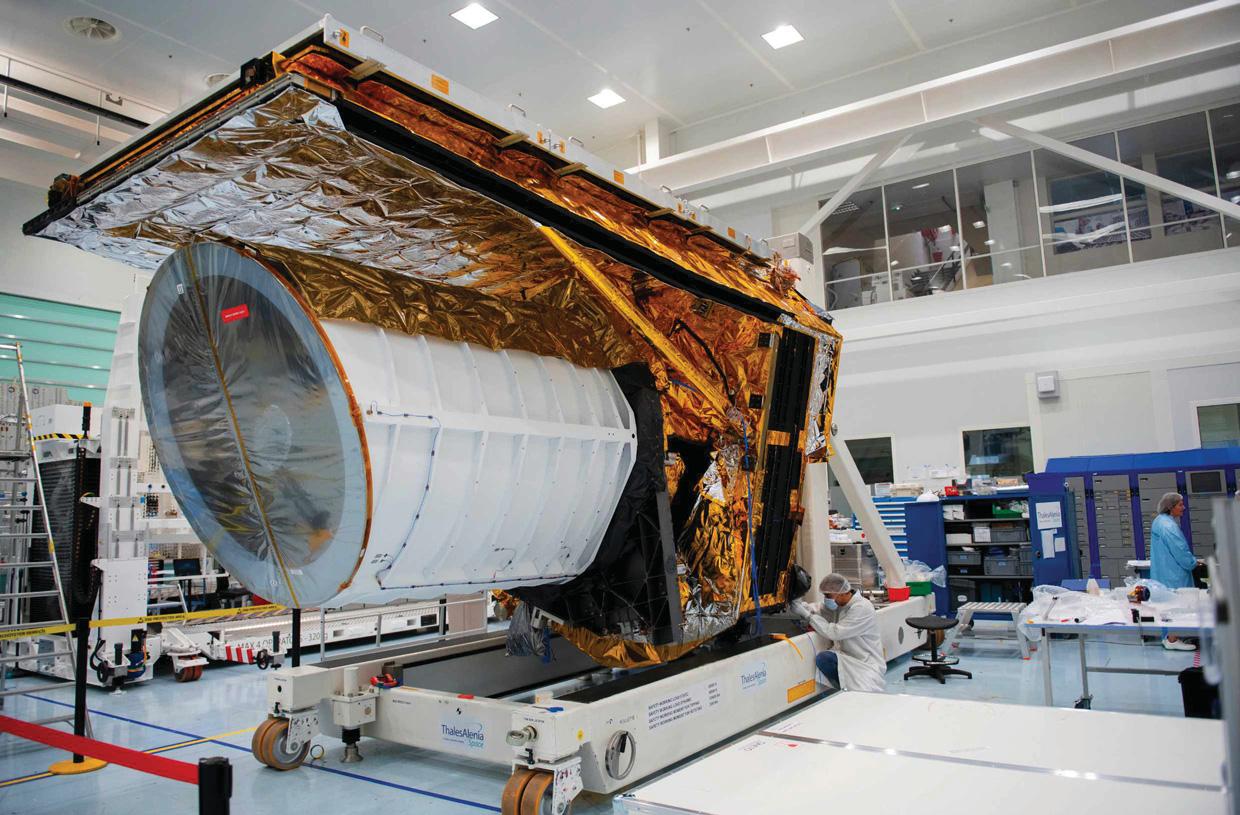
The road to launch
The Euclid mission was selected in 2011 and formally adopted by ESA in the summer of 2012. NASA became a partner in the project in early 2013. At present, the Euclid consortium has about 2,000 members from 13 European countries plus the United States.


Denne historien er fra July 2023-utgaven av BBC Sky at Night Magazine.
Abonner på Magzter GOLD for å få tilgang til tusenvis av kuraterte premiumhistorier og over 9000 magasiner og aviser.
Allerede abonnent? Logg på
FLERE HISTORIER FRA BBC Sky at Night Magazine
BBC Sky at Night Magazine
MOONWATCH
January's top lunar feature to observe

2 mins
January 2026
BBC Sky at Night Magazine
Speed up your processing workflow
How to use Photoshop's Actions tool to drastically cut your processing time
3 mins
January 2026
BBC Sky at Night Magazine
Chasing Canada's polar lights
With solar maximum peaking and a new Moon promising dark skies, Jamie Carter travels to Churchill, Manitoba to hunt the Northern Lights - and dodge polar bears – in Canada's far north
7 mins
January 2026
BBC Sky at Night Magazine
Beyond Pluto: The search for the hidden planets
Could one – or even two - undiscovered planets lurk at the edges of our Solar System? Nicky Jenner explores how close we are to finding the elusive 'Planet 9'
6 mins
January 2026
BBC Sky at Night Magazine
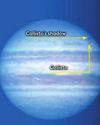
Jupiter moon events
Jupiter is a magnificent planet to observe.
2 mins
January 2026

BBC Sky at Night Magazine
What samples from space have taught us
Alastair Gunn explains what scientists have learnt in the 20 years since the first unmanned mission brought materials back from alien worlds
3 mins
January 2026
BBC Sky at Night Magazine
The Milky Way as you've never seen it before
This is the largest low-frequency radio colour image of our Galaxy ever assembled
1 min
January 2026
BBC Sky at Night Magazine
Merger of ‘impossibly' massive black holes explained
Scientists discover how enormous, fast-spinning black holes can exist after all
1 mins
January 2026
BBC Sky at Night Magazine
Lunar occultation of the Pleiades
BEST TIME TO SEE: 27 January from 20:30 UT
1 min
January 2026
BBC Sky at Night Magazine
The Universe's expansion may be slowing down
New study suggests current theories of dark energy could be wrong
1 mins
January 2026
Translate
Change font size