
Gå ubegrenset med Magzter GOLD
Få ubegrenset tilgang til over 9000 magasiner, aviser og premiumhistorier for bare
Are we ALONE? We asked the experts
BBC Sky at Night Magazine
|May 2025
Four specialists in the hunt for extraterrestrial life tell Ezzy Pearson how they're hoping to find aliens
-
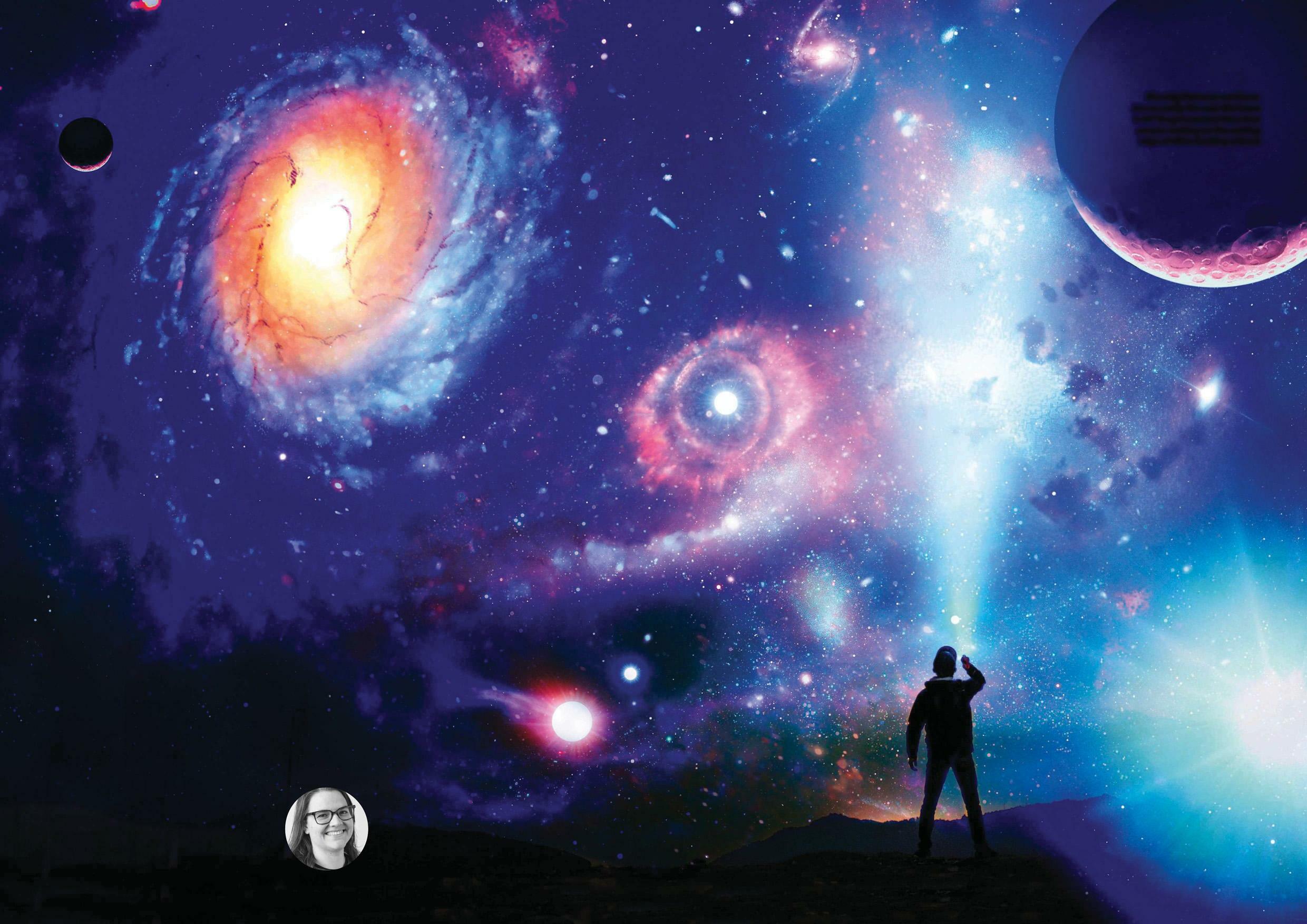
For centuries, humanity has asked itself whether it is alone in its ability to comprehend and investigate the cosmos, and whether Earth is the sole bastion of life in the Universe or simply a single outpost among billions of inhabited worlds. In the past, the exploration of extraterrestrial life was firmly left to the realm of science fiction, but in recent years the hunt for aliens has become an increasingly focused area of rigorous scientific research – from looking for echoes of Earth's habitats in our neighbouring worlds to searching for signals from distant star systems. We spoke with four of the leading figures involved in the hunt – an astrobiologist, an icy moon explorer, an exoplanet expert and a SETI searcher – to find out why we're closer than ever to finding an answer.
Penny Boston
Pioneers the field of astrobiology at the Ames Research Center
 What is astrobiology?
Astrobiology is anything that touches on the quest for understanding whether there are other life forms in the rest of our Universe. It really is an all-encompassing, multidisciplinary area of research, looking at the bodies in our own Solar System for signs of past or present lifeforms, all the way out to the study of exoplanets.
How are you helping in the search for alien life?
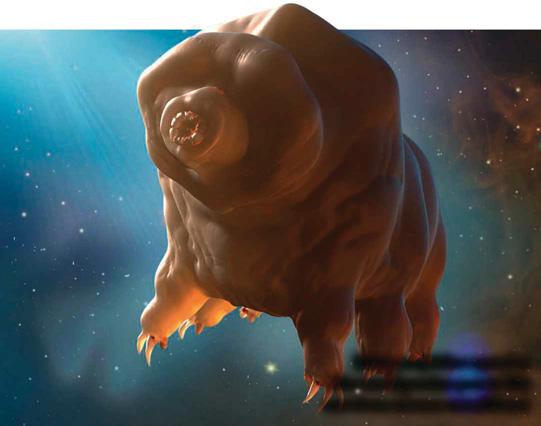
I look at extreme life forms here on Earth as a template for other environments. Those that tolerate extreme environmental conditions - high temperatures, being frozen, being trapped in a salt crystal, those that process minerals rather than eating organic carbon made by plants. Other folks have studied some small animals, like tardigrades. Everybody loves a tardigrade - they can tolerate a whole lot.
How does learning about Earth help us find aliens?

Denne historien er fra May 2025-utgaven av BBC Sky at Night Magazine.
Abonner på Magzter GOLD for å få tilgang til tusenvis av kuraterte premiumhistorier og over 9000 magasiner og aviser.
Allerede abonnent? Logg på
FLERE HISTORIER FRA BBC Sky at Night Magazine
BBC Sky at Night Magazine
MOONWATCH
January's top lunar feature to observe

2 mins
January 2026

BBC Sky at Night Magazine
Speed up your processing workflow
How to use Photoshop's Actions tool to drastically cut your processing time
3 mins
January 2026
BBC Sky at Night Magazine
Chasing Canada's polar lights
With solar maximum peaking and a new Moon promising dark skies, Jamie Carter travels to Churchill, Manitoba to hunt the Northern Lights - and dodge polar bears – in Canada's far north
7 mins
January 2026
BBC Sky at Night Magazine
Beyond Pluto: The search for the hidden planets
Could one – or even two - undiscovered planets lurk at the edges of our Solar System? Nicky Jenner explores how close we are to finding the elusive 'Planet 9'
6 mins
January 2026
BBC Sky at Night Magazine
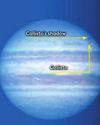
Jupiter moon events
Jupiter is a magnificent planet to observe.
2 mins
January 2026

BBC Sky at Night Magazine
What samples from space have taught us
Alastair Gunn explains what scientists have learnt in the 20 years since the first unmanned mission brought materials back from alien worlds
3 mins
January 2026
BBC Sky at Night Magazine
The Milky Way as you've never seen it before
This is the largest low-frequency radio colour image of our Galaxy ever assembled
1 min
January 2026
BBC Sky at Night Magazine
Merger of ‘impossibly' massive black holes explained
Scientists discover how enormous, fast-spinning black holes can exist after all
1 mins
January 2026
BBC Sky at Night Magazine
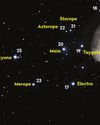
Lunar occultation of the Pleiades
BEST TIME TO SEE: 27 January from 20:30 UT
1 min
January 2026
BBC Sky at Night Magazine
The Universe's expansion may be slowing down
New study suggests current theories of dark energy could be wrong
1 mins
January 2026
Listen
Translate
Change font size