
Gå ubegrenset med Magzter GOLD
Få ubegrenset tilgang til over 9000 magasiner, aviser og premiumhistorier for bare
WideSky 80 f/6.25 ED refractor
BBC Sky at Night Magazine
|June 2022
An all-round telescope that works well for visual astronomy and astrophotography

We are always very happy to see a telescope arrive for review in a solid carry case, W and the WideSky 80 f/6.25 ED refractor's smart, padded suitcase provided us with an excellent first impression when it was unboxed.
Our admiration continued when we looked at the optical tube assembly, which appeared slick, robust, and incredibly well made. We were pleasantly surprised, as the WideSky 80 has the look and feel of a telescope worth twice the price. With our curiosity piqued by this new brand, we headed out to begin our tests.
Mounting the optical tube assembly wasn't an issue, although we did feel it would benefit from a slightly longer foot. For observing, this proved ample, but with a DSLR or astro camera attached we struggled to balance the setup as it was bottom-heavy. During our time with the WideSky 80, we opted for tube rings and a longer bar when we used it for astrophotography.
Despite some questionable seeing on a damp night, we were curious to see how the WideSky 80 performed as a visual telescope. Armed with eyepieces, first a 25mm and then a 15mm, we first slewed over to Aldebaran (Alpha (a) Tauri). We could resolve a beautifully crisp and sharp red star in the centre of the field of view with both eyepieces. However, as we nudged our target towards the edge of the field, the appearance did distort slightly. Happily, we saw next to no colour fringing. For a true star test, we headed to the Double Cluster in the constellation of Perseus, the Hero. The WideSky 80 rose to the challenge and returned a lovely delicate view, in which we could appreciate different colours from the yellow and blue-tinged stars within.

Enjoying the sights


Denne historien er fra June 2022-utgaven av BBC Sky at Night Magazine.
Abonner på Magzter GOLD for å få tilgang til tusenvis av kuraterte premiumhistorier og over 9000 magasiner og aviser.
Allerede abonnent? Logg på
FLERE HISTORIER FRA BBC Sky at Night Magazine
BBC Sky at Night Magazine
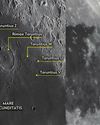
MOONWATCH
January's top lunar feature to observe

2 mins
January 2026

BBC Sky at Night Magazine
Speed up your processing workflow
How to use Photoshop's Actions tool to drastically cut your processing time
3 mins
January 2026
BBC Sky at Night Magazine
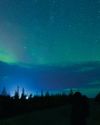
Chasing Canada's polar lights
With solar maximum peaking and a new Moon promising dark skies, Jamie Carter travels to Churchill, Manitoba to hunt the Northern Lights - and dodge polar bears – in Canada's far north
7 mins
January 2026

BBC Sky at Night Magazine
Beyond Pluto: The search for the hidden planets
Could one – or even two - undiscovered planets lurk at the edges of our Solar System? Nicky Jenner explores how close we are to finding the elusive 'Planet 9'
6 mins
January 2026
BBC Sky at Night Magazine
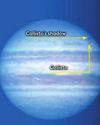
Jupiter moon events
Jupiter is a magnificent planet to observe.
2 mins
January 2026

BBC Sky at Night Magazine
What samples from space have taught us
Alastair Gunn explains what scientists have learnt in the 20 years since the first unmanned mission brought materials back from alien worlds
3 mins
January 2026

BBC Sky at Night Magazine
The Milky Way as you've never seen it before
This is the largest low-frequency radio colour image of our Galaxy ever assembled
1 min
January 2026

BBC Sky at Night Magazine
Merger of ‘impossibly' massive black holes explained
Scientists discover how enormous, fast-spinning black holes can exist after all
1 mins
January 2026

BBC Sky at Night Magazine
Lunar occultation of the Pleiades
BEST TIME TO SEE: 27 January from 20:30 UT
1 min
January 2026
BBC Sky at Night Magazine
The Universe's expansion may be slowing down
New study suggests current theories of dark energy could be wrong
1 mins
January 2026
Translate
Change font size