
Gå ubegrenset med Magzter GOLD
Få ubegrenset tilgang til over 9000 magasiner, aviser og premiumhistorier for bare
Prøve GULL - Gratis
Protest Works
The Atlantic
|September 2020
How the Black Lives Matter demonstrations will shake up the 2020 election—and reshape American politics for a generation to come

I drove 1,200 miles, from Philadelphia to Minneapolis, to be a part of the George Floyd protest movement. Throughout the city, from the predominantly white neighborhood of Bancroft to the more diverse streets of Bryant, I saw signs in livingroom windows that read black lives matter and we stand for equality. As I drove up Cedar Avenue, heading to 38th Street, I also saw signs in the windows of stores and restaurants that read minority-owned—an indication that these businesses stood with the Floyd movement, but also that they hoped to be spared should the protests turn violent.
Pressed together with protesters adorned in masks, I stood on the unofficially renamed George Floyd Avenue, across the street from Cup Foods, where Floyd had been killed after allegedly passing a counterfeit $20 bill. As I scanned the crowd, I saw what I had seen in the other cities I’d visited as I made my way west: a shockingly diverse group of protesters. As a Black man, I found myself standing next to many people who did not look like me—sometimes, their cries even drowned out my own. The coalition has changed. It has grown.
Of course, not all Americans have embraced Black Lives Matter. Some look at the men and women demanding reform and see only looters and thugs. ¥ey are nurtured in this view by the president of the United States, who greeted the outcry following Floyd’s murder with threats of violence against the protesters and tweets about “LAW AND ORDER” and the “SILENT MAJORITY.”
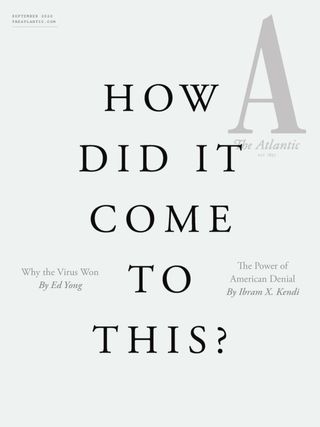

Denne historien er fra September 2020-utgaven av The Atlantic.
Abonner på Magzter GOLD for å få tilgang til tusenvis av kuraterte premiumhistorier og over 9000 magasiner og aviser.
Allerede abonnent? Logg på
FLERE HISTORIER FRA The Atlantic
The Atlantic
Deadlier Than Gettysburg
How the cruelty of the Confederacy's prison camps gave rise to the rules of war

10 mins
March 2026

The Atlantic
THE MAN WHO BROKE PHYSICS
One of the pleasures of watching Ilia Malinin, apart from his indifference to gravity, is to witness him becoming.
16 mins
March 2026

The Atlantic
How Toni Morrison Saw History
In her novels, she located the missing story of Black America.
12 mins
March 2026

The Atlantic
The Madness of Lord Tennyson
The Victorian poet was startlingly modern.
5 mins
March 2026

The Atlantic
THE PLOT AGAINST THE HUMANITIES
What is the Andrew W. Mellon Foundation doing to higher education?
22 mins
March 2026

The Atlantic
Why Do Democrats Hate Winning?
Ken Martin has one of those resting dread faces, as if he's bracing for someone to dump a bucket of rocks on his head.
37 mins
March 2026

The Atlantic
ROD DREHER'S DEMONS
HE DERIDES THE ENLIGHTENMENT, SECULARISM, AND THE MODERN WORLD. CONSERVATIVES-INCLUDING THE VICE PRESIDENT-ARE JOINING HIM ON A MARCH BACK TO THE MIDDLE AGES.
20 mins
March 2026

The Atlantic
Every Nation for Itself
President Trump wants to return to the 19th century's international order. He will leave America less prosperous—and the whole world less secure.
19 mins
March 2026

The Atlantic
The Secrets of Indigenous Art
Major exhibits are upending the way people understand Native American and Aboriginal artists.
14 mins
March 2026

The Atlantic
The Novel as Extended Op-Ed
If anyone could write good fiction about immigration, it would probably be Lionel Shriver. Instead, her latest book goes off the rails.
10 mins
March 2026
Translate
Change font size