
Gå ubegrenset med Magzter GOLD
Få ubegrenset tilgang til over 9000 magasiner, aviser og premiumhistorier for bare
Prøve GULL - Gratis
THE NIGHTMARE OF DESPOTISM
The Atlantic
|November 2025
Hamilton feared the mob. Jefferson warned against unchecked elites. But both thought that the republic could fall.
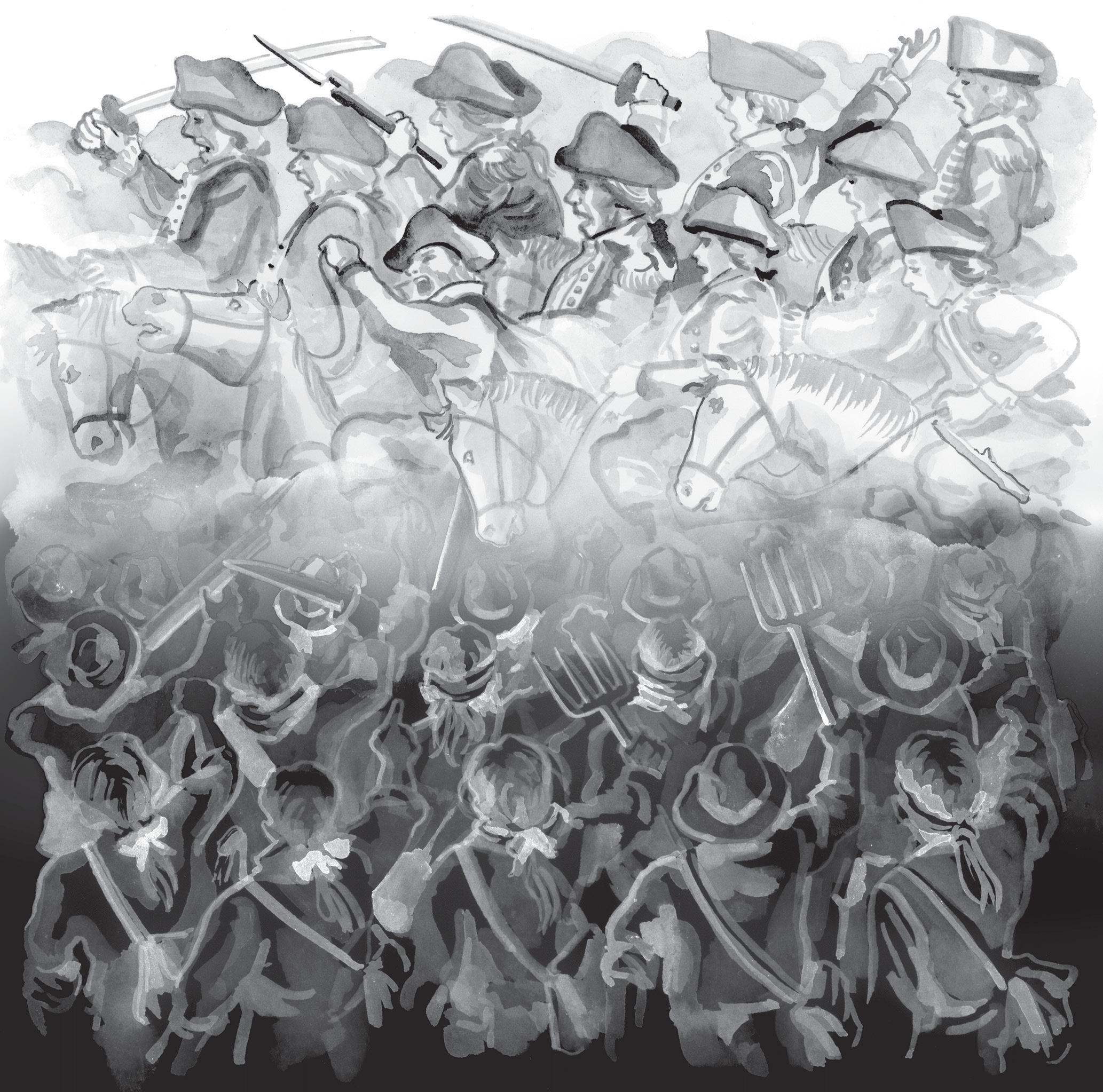
Shays’s Rebellion filled Alexander Hamilton with dread. In 1786, armed men shut down courts in five counties across Massachusetts and, early the next year, marched on the federal armory in Springfield. The mobs included debtors trying to prevent the courts from foreclosing on their farms, and opponents of centralized government. The insurrectionists believed that the newly adopted Massachusetts Constitution, drafted in 1779 by John Adams, would shift power from the poor to the rich, from the many to the few, from the backcountry to Boston, from democracy to aristocracy. They were led by Daniel Shays, a dashing Revolutionary War veteran who'd had to sell a sword given to him by the Marquis de Lafayette to pay his debts.
Observing the rebellion from New York, Hamilton worried that civil unrest in Massachusetts could augur the rise of a demagogue on the national stage, one who might pander to angry debtors across America and threaten the stability of the new nation. The insurrection was eventually put down by a private army hired by Massachusetts Governor James Bowdoin, after members of the state militia refused his call to do so. But what might have happened, Hamilton wrote, if, instead of Shays, the rebellion “had been headed by a Caesar or by a Cromwell”?
In Hamilton's view, the greatest threat to the American experiment was a demagogue who might flatter the people, overthrow popular elections, and consolidate power in his own hands. “Of those men who have overturned the liberties of republics,” he wrote in “Federalist No. 1,” “the greatest number have begun their career by paying an obsequious court to the people.”

Denne historien er fra November 2025-utgaven av The Atlantic.
Abonner på Magzter GOLD for å få tilgang til tusenvis av kuraterte premiumhistorier og over 9000 magasiner og aviser.
Allerede abonnent? Logg på
FLERE HISTORIER FRA The Atlantic
The Atlantic
The Eighth Deadly Sin
Humankind has devised a new form of debasement.

5 mins
May 2026

The Atlantic
The Art of the (New) Deal
What the murals of the Wilbur J. Cohen Federal Building can teach us about patriotism, propaganda, and beauty
12 mins
May 2026

The Atlantic
New Chairs
Collaboration, for Robert Rauschenberg and Merce Cunningham, began with the arrangement of chairs.
1 mins
May 2026

The Atlantic
HISTORY IS RUNNING BACKWARDS
Why reactionaries are taking over the world
21 mins
May 2026

The Atlantic
SOMEDAY IN TEHRAN
Like Donald Trump, I, too, once underestimated the Islamic Republic of Iran.
16 mins
May 2026

The Atlantic
On Losing a Daughter
The people we were died at the exact moment our child did.
19 mins
May 2026

The Atlantic
I Found It: The Best Free Restaurant Bread in America
Thirteen thousand miles. Infinite contenders. One beautiful loaf.
15 mins
May 2026

The Atlantic
EVERYTHING IS FREE AND NOTHING MATTERS
What I saw at Jeff Bezos's Campfire retreat
9 mins
May 2026

The Atlantic
Who Is Black Comedy For?
A new book is nostalgic for the '90s. But the era of crossover success was not necessarily the pinnacle of Black comedic achievement.
8 mins
May 2026

The Atlantic
The Feeling of Becoming Less and Less of a Person
In Ben Lerner's new novel, technology divides us further from one another, and ourselves.
9 mins
May 2026
Listen
Translate
Change font size