Prøve GULL - Gratis
How Islam Created Europe
The Atlantic
|May 2016
In late antiquity, Islam split the Mediterranean world in two. Now it is remaking the Continent.

Europe was essentially defined by Islam. And Islam is redefining it now.
For centuries in early and middle antiquity, Europe meant the world surrounding the Mediterranean, or Mare Nostrum (“Our Sea”), as the Romans famously called it. It included North Africa. Indeed, early in the fifth century a.D., when Saint Augustine lived in what is today Algeria, North Africa was as much a center of Christianity as Italy or Greece. But the swift advance of Islam across North Africa in the seventh and eighth centuries virtually extinguished Christianity there, thus severing the Mediterranean region into two civilizational halves, with the “Middle Sea” a hard border between them rather than a unifying force. Since then, as the Spanish philosopher José Ortega y Gasset observed, “all European history has been a great emigration toward the North.”
After the breakup of the Roman empire, that northward migration saw the Germanic peoples (the Goths, Vandals, Franks, and Lombards) forge the rudiments of Western civilization, with the classical legacy of Greece and Rome to be rediscovered only much later. It would take many more centuries for the modern European state system to develop. Slowly, though, feudalism, whose consensual give-and-take worked in the direction of individualism and away from absolutism, gave way to early modern empires and, over time, to nationalism and democracy. Along the way, new freedoms allowed the Enlightenment to take hold. In sum, “the West” emerged in northern Europe (albeit in a very slow and tortuous manner) mainly after Islam had divided the Mediterranean world.
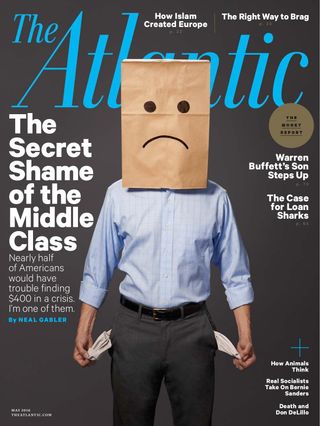

Denne historien er fra May 2016-utgaven av The Atlantic.
Abonner på Magzter GOLD for å få tilgang til tusenvis av kuraterte premiumhistorier og over 9000 magasiner og aviser.
Allerede abonnent? Logg på
FLERE HISTORIER FRA The Atlantic
The Atlantic
What Dante Is Trying to Tell Us
A colloquial translation of Paradiso might make people actually read it.

10 mins
February 2026

The Atlantic
Sense of an Ending
Julian Barnes says goodbye to the novel
9 mins
February 2026

The Atlantic
IS THIS WHAT PATRIOTISM LOOKS LIKE?
Why an ex—police officer assaulted a fellow cop on January 6
37 mins
February 2026
The Atlantic
THE PURGED
DONALD TRUMP'S DESTRUCTION OF THE CIVIL SERVICE IS A TRAGEDY NOT JUST FOR THE ROUGHLY 300,000 WORKERS WHO HAVE BEEN DISCARDED, BUT FOR AN ENTIRE NATION.
8 mins
February 2026

The Atlantic
GROUNDED
THE SPACE PROGRAM ENNOBLED AMERICAN CULTURE AND ADVANCED AMERICAN SCIENCE. DONALD TRUMP HAS CHOSEN TO END THAT ERA OF AMBITION.
17 mins
February 2026
The Atlantic
The New History of Fighting Slavery
What we learn by tracing rebellions from Africa to the Americas
10 mins
February 2026

The Atlantic
MICAELA WHITE
By the beginning of 2025, there was a famine in Sudan, which meant that it was only a matter of time before the U.S.government dispatched Micaela White to the scene. She was America's fixer of choice.
2 mins
February 2026
The Atlantic
WHAT JEFFREY EPSTEIN DIDN'T UNDERSTAND ABOUT LOLITA
Everything.
5 mins
February 2026
The Atlantic
Who Gets to Be Indian- And Who Decides?
The very American story of Chief Buffalo Child Long Lance
22 mins
February 2026

The Atlantic
I'm Not From the Government but I'm Here to Help
The Trump administration is trying to eliminate federal services? Fine. I'll do everything myself.
24 mins
February 2026
Translate
Change font size