
Gå ubegrenset med Magzter GOLD
Få ubegrenset tilgang til over 9000 magasiner, aviser og premiumhistorier for bare
Prøve GULL - Gratis
Fire In The Fens
Archaeology
|January/February 2017
A short-lived settlement provides an unparalleled view of bronze age life in eastern england.
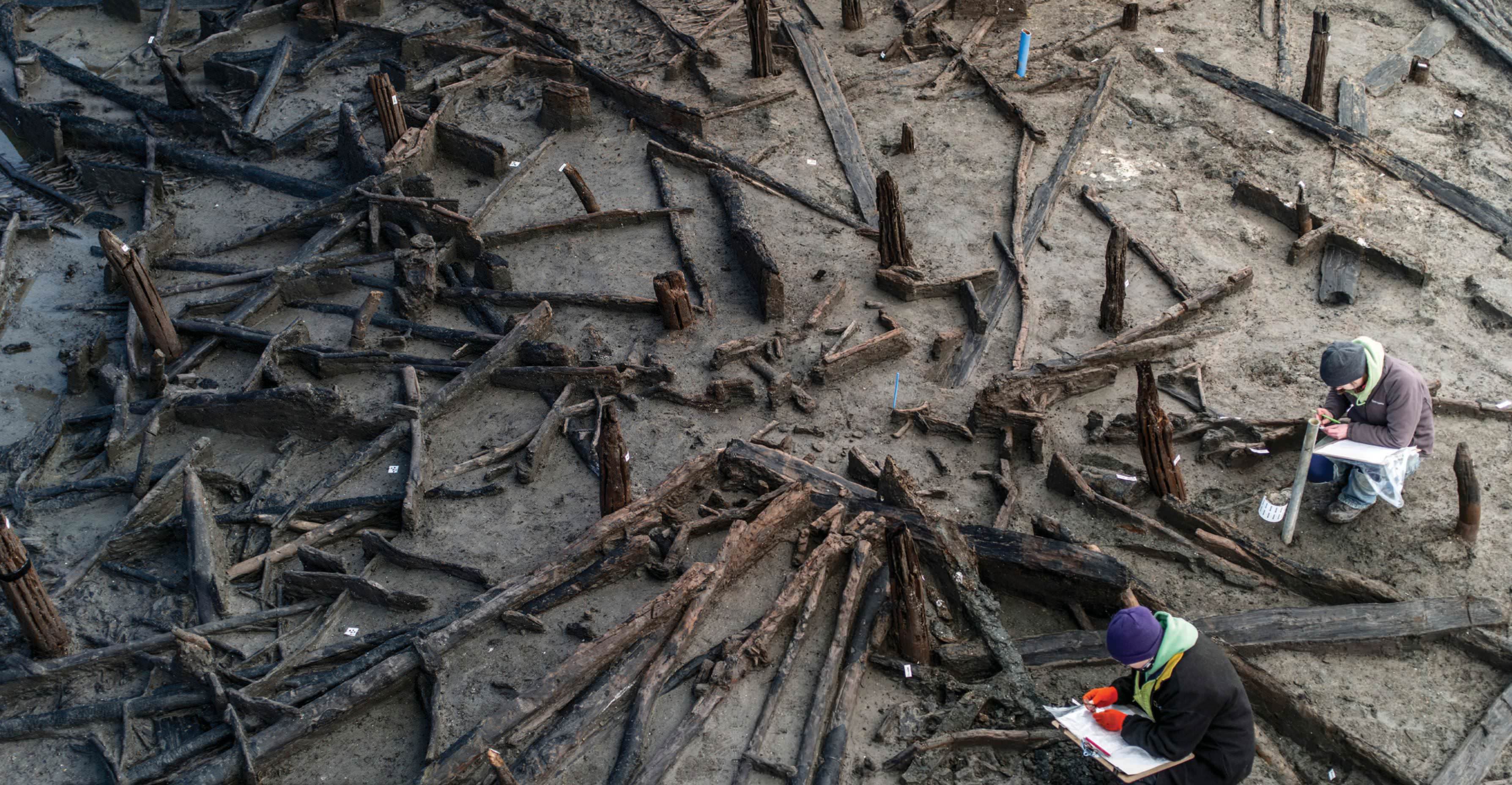
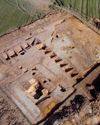
Some 3,000 years ago, throughout Britain, broad changes in settlement patterns, society, and technology were slowly bringing an end to what archaeologists call the British Bronze Age (2500–800 b.c.). In the coming centuries, the Iron Age would emerge. But in the wetlands of East Anglia, referred to as the Fenland, a transformation of another sort, both more conspicuous and tangible, was taking place. Climate change was gradually causing water levels to rise, and, as marshland increased, vital dry land became scarcer. The solution for one small settlement was to build its homes on pylons directly above the water. However, by some twist of fate, shortly after the new settlement was built, it was destroyed by fire—whether deliberate or accidental is not known. The conflagration caused the houses and their contents to collapse into the shallow river below. There, extraordinary circumstances led to their preservation and eventual discovery. Recent excavations of this Late Bronze Age village are providing archaeologists with as yet unmatched insights into the lifestyle and day-to-day lives of Britons three millennia ago. It is considered one of the most important discoveries in the history of British archaeology.
The site, called Must Farm, is named after and located in a modern-day clay quarry outside the town of Peterborough.Until now, much of what is known about Bronze Age Britain has stemmed from investigations of specialized sites such as burial mounds, megalithic monuments, or ritual deposits of bronze weapons. While these types of finds have value, they offer archaeologists little information about ordinary people and everyday life. Even when Bronze Age houses and settlements have been identified, they have yielded scant material evidence.
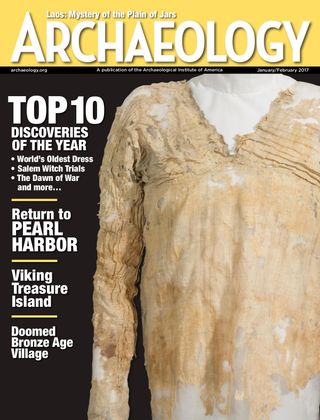

Denne historien er fra January/February 2017-utgaven av Archaeology.
Abonner på Magzter GOLD for å få tilgang til tusenvis av kuraterte premiumhistorier og over 9000 magasiner og aviser.
Allerede abonnent? Logg på
FLERE HISTORIER FRA Archaeology
Archaeology
THE EGYPTIAN SEQUENCE
Until now, the earliest Egyptians to have even part of their DNA sequenced were three people who lived between 787 and 544 B.C.

1 mins
November/December 2025
Archaeology
SOURCE MATERIAL
As early as 40,000 years ago, some hunter-gatherers in southern Africa ventured long distances to procure special types of stone to make their tools.
1 min
November/December 2025

Archaeology
Secrets of the Seven Wonders
How archaeologists are rediscovering the ancient world's most marvelous monuments
13 mins
November/December 2025
Archaeology
ACTS OF FAITH
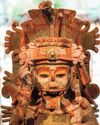
Evidence emerges of the day in 1562 when an infamous Spanish cleric tried to destroy Maya religion
12 mins
November/December 2025
Archaeology
OASIS MAKERS OF ARABIA
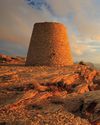
Researchers are just beginning to understand how people thrived in the desert of Oman some 5,000 years ago
8 mins
November/December 2025

Archaeology
FOSSIL FORCE
One of the planet's most successful arthropods, trilobites, abounded in the oceans from about 520 million to 250 million years ago.
1 min
November/December 2025
Archaeology
BIGHORN MEDICINE WHEEL, WYOMING
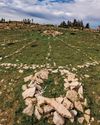
Perched almost 9,700 feet above sea level on Medicine Mountain in Wyoming's Bighorn Range, the Medicine Wheel is an 80-foot-diameter circular structure made from limestone boulders.
2 mins
November/December 2025
Archaeology
ANCIENT LOOK BOOK
A young woman buried in China's Tarim Basin some 2,000 years ago went to the afterlife accompanied by the height of fashion.
1 mins
November/December 2025
Archaeology
A FAMILIAR FACE
In the early eleventh century, a landslide on the island of Ostrów Lednicki in western Poland caused a hillfort to collapse and slip to the bottom of Lake Lednica.
1 min
November/December 2025
Archaeology
Temples to Tradition
A looted cache of bronzes compels archaeologists to explore Celtic sanctuaries across Burgundy
13 mins
November/December 2025
Translate
Change font size