Prøve GULL - Gratis
Do Not Disturb
BBC Wildlife
|July 2021
With overseas holidays largely off the cards, Britain is bracing itself for a season of ‘staycations’. But what does this mean for our local wildlife?

Sue Sayer is founder and director of Cornwall Seal Group Research Trust. Her passion for seals began more than 20 years ago, when she answered an advert in the local paper for somebody to help on a monitoring project. That day, Sayer learned something that was to change her life: that every seal has got a unique fur pattern.
“As soon as I knew that, I could start answering questions,” she says. Was that three seals she was watching in the bay? Or the same one bobbing up three times? Sayer initially thought her own seal colony consisted of about 30 individuals. She now estimates more than 800 pass through.
The intervening 20 years has taught Sayer many things about seals – not least just how sensitive they are to human disturbance.
Holiday hordes
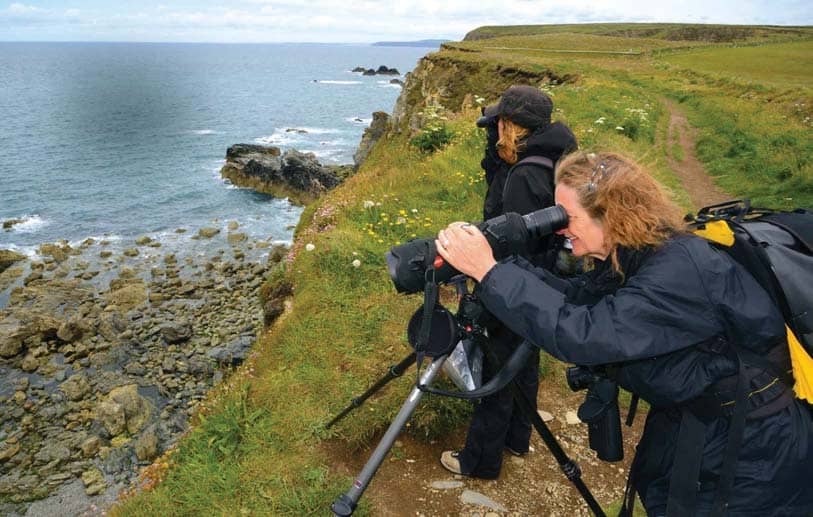
Recent research conducted by the trust has shown that at sites around St Ives, seals were disturbed an astonishing 14 times per hour. Perhaps most worrying of all, a major cause of these disturbances (40 per cent across all sites) was commercial wildlife tour boats.
This is the essential conundrum of wildlife tourism – the very real danger that we might destroy the very thing we have come to see.
Given the chaotic scenes in the UK countryside last year, when lockdown restrictions were eased, many who work with wildlife are bracing themselves for a similar onslaught during this ‘staycation summer’, caused by restrictions on overseas holidays.
 How to photograph seals

Denne historien er fra July 2021-utgaven av BBC Wildlife.
Abonner på Magzter GOLD for å få tilgang til tusenvis av kuraterte premiumhistorier og over 9000 magasiner og aviser.
Allerede abonnent? Logg på
FLERE HISTORIER FRA BBC Wildlife
BBC Wildlife
"I was terrified the elephant would ram us"
African elephant in Kenya

2 mins
January 2026
BBC Wildlife
ALL YOU EVER NEEDED TO KNOW ABOUT THE Fennec fox
THE FENNEC FOX IS THE SMALLEST fox in the world, with a body length that can be as little as 24cm.
3 mins
January 2026
BBC Wildlife
INTO THE PLASTISPHERE
A unique synthetic ecosystem is evolving in our oceans – welcome to the plastisphere
7 mins
January 2026
BBC Wildlife
“More than half of all animal life exists in a parasitic relationship, and all life lives in symbiosis”
Our survival depends on species evolving to live together - but some relationships take dark turns
7 mins
January 2026
BBC Wildlife
Are animals able to dream?
SLEEP IS A MYSTERIOUS THING. FOR A long time, we weren't sure why we do it.
1 mins
January 2026
BBC Wildlife
Does a cuckoo know it's a cuckoo?
ABSURD LITTLE BIRDS ACROSS THE world lay their eggs in the nests of other species, leaving the hapless parents to raise a changeling at the expense of their own offspring.
2 mins
January 2026
BBC Wildlife
Orcas killing young sharks
Juvenile great whites are easy prey for orca pod
1 mins
January 2026
BBC Wildlife
Ocean goes on tour
Acclaimed film touring the UK, backed by live orchestra and choir
1 min
January 2026
BBC Wildlife
Feisty bats hunt like lions
Winged mammals use a 'hang and wait' strategy to take down large prey
1 mins
January 2026
BBC Wildlife
SNAP-CHAT
Richard Birchett on magical merlins, wily coyotes and charging deer
2 mins
January 2026
Translate
Change font size