試す 金 - 無料
THE EYES THAT WATCH THE SKY
BBC Science Focus
|April 2024
When it launches in 2026, the Copernicus programme's Anthropogenic Carbon Dioxide Monitoring satellite will give us a new window on to Earth's atmosphere... And how we're altering it

It's a rather delicious irony that one of the most valuable things to come out of the space programme wasn't the ability to look into the deepest regions of the Universe, but to look back at Earth; to see our world as a beautiful disc of white clouds, blue oceans and multicoloured continents.
Since Sputnik, the first artificial satellite, was launched more than 70 years ago, an armada of Earth-observation spacecraft has been put into orbit. Together with more than a century and a half of consistent Earth-based weather measurements, the data these satellites have gathered has allowed us to develop a much better understanding of our planet's climate and our effects upon it.
As is now well known, Earth's climate is changing, with average global temperatures increasing. This occurs because of the industrial and domestic burning of fossil fuels, which releases carbon dioxide (CO2) into the atmosphere, where it traps heat. We rely on this 'greenhouse effect' to make the planet habitable, but in recent decades so much CO₂ has been released by humans that we've thrown Earth's natural balance off-kilter.
In December 2015, 196 Parties at the UN Climate Change Conference (COP21) in Paris, France, agreed to a legally binding international treaty on climate change. This treaty's goal is to hold global temperatures to below an increase of 2°C. To do this, countries are required to report how much anthropogenic (man-made) CO₂ they emit and, starting this year, they must also report on the actions they're taking to reduce these emissions.
This will allow us to do a global carbon 'stocktake' and, from that, recommend further actions that ́need to be taken on a country-by-country basis. At present, countries calculate their carbon emissions based on statistical and economic factors, such as how much fuel is being imported or produced in the country. The assumption is then that this fuel is used within the country and produces its waste CO2.

このストーリーは、BBC Science Focus の April 2024 版からのものです。
Magzter GOLD を購読すると、厳選された何千ものプレミアム記事や、10,000 以上の雑誌や新聞にアクセスできます。
すでに購読者ですか? サインイン
BBC Science Focus からのその他のストーリー
BBC Science Focus
HOW UNLIKELY IS OUR UNIVERSE?
Our understanding of the Universe has revealed that its existence, and indeed our own, relies on a particular set of rules.

1 mins
December 2025

BBC Science Focus
DOES YOUR NAME AFFECT YOUR PERSONALITY?
Research is revealing that nominative determinism isn't as easy to dismiss as you might think
5 mins
December 2025
BBC Science Focus
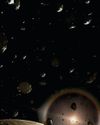
HOW DIFFICULT WOULD IT BE TO FLY THROUGH THE ASTEROID BELT?
In the 1980 film Star Wars: The Empire Strikes Back, Han Solo and friends try to escape pursuing imperial forces by flying through an asteroid field. Droid C-3PO remarks, \"the odds of successfully navigating an asteroid field is approximately 3,720 to 1\". The scene depicts a chaotic, dense field of rocks swirling and spinning through space. This scenario has been played out many times in the cinema.
1 min
December 2025

BBC Science Focus
HOW CAN I BE MORE PERSUASIVE?
Most of us like to think we're rational people. If someone shows us evidence that we're wrong, we'll change our minds, right? Well, not necessarily, because it's not always that simple. Being wrong feels uncomfortable and sometimes threatening. That's why changing someone's mind is often much harder than it seems.
2 mins
December 2025

BBC Science Focus
This bizarre optical illusion could teach us how animals think
By seeing which animals fall for a classic visual trick, scientists are uncovering how different brains make sense of the world
1 mins
December 2025

BBC Science Focus
LIFE AT THE PARTY
The secret that keeps the superagers so sprightly could be socialising
3 mins
December 2025
BBC Science Focus
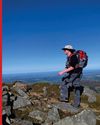
AIN'T NO MOUNTAIN HIGH ENOUGH
Could an exoskeleton help you scale every peak with ease? Ezzy Pearson straps on some cyborg enhancements to find out
5 mins
December 2025
BBC Science Focus
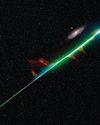
A slice across the sky
The green flash slicing through the skies in this shot is a fireball.
1 min
December 2025

BBC Science Focus
TB is surging. Should we be worried?
Cases of the world's deadliest infection are climbing in the UK and US. Why is tuberculosis returning and how do we fight back?
4 mins
December 2025
BBC Science Focus
I survived the worst fire in the history of space exploration and had to keep it a secret
Astronaut Jerry Linenger opens up about one of the worst accidents in space, and the cover-up that followed
1 mins
December 2025
Listen
Translate
Change font size