試す 金 - 無料
“More than half of all animal life exists in a parasitic relationship, and all life lives in symbiosis”
BBC Wildlife
|January 2026
Our survival depends on species evolving to live together - but some relationships take dark turns
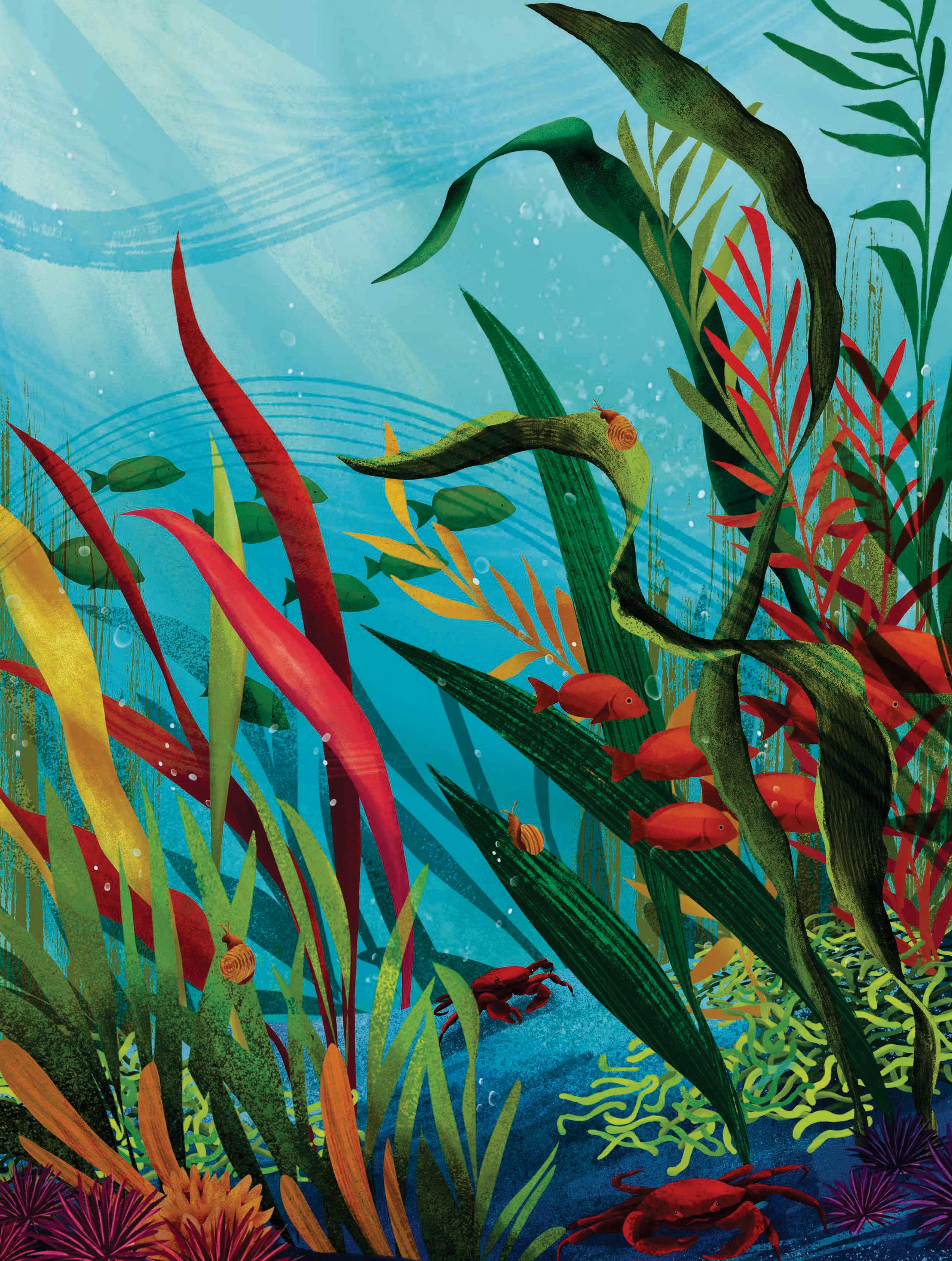
I'M IN EXETER CATHEDRAL AND I'M looking up at Antarctica.
This is Gaia by artist Luke Jerram: a 7m-diameter model of Earth suspended above the nave, created from detailed NASA satellite imagery of the planet's surface. The monumental installation is designed to summon 'the overview effect'. Commonly reported by astronauts, this describes a cognitive shift towards feelings of awe and a renewed urge to protect the planet.
Inspired by the Gaia hypothesis - the hivemind between chemist James Lovelock and biologist Lynn Margulis in the mid-1970s - Gaia reintroduces Earth as one self-regulating, interconnected system. These teachings reveal the planet's vitality and vulnerability, its strength and interconnection - a world teeming with relationships - driven by the environment and change.
As I orbited our planet that night, symbiosis was on my mind - the captivating situation where different species have evolved to live together to survive. Lynn Margulis championed symbiosis as the essential state of interbeing. Species join forces, share resources, operate within ancient evolutionary pacts of give and take - shaping ecosystems, binding pivotal connections and building resilience.
Perhaps you know symbiosis as synonymous with mutualism - a cosy narrative promoting equal shares in the relationship. But modern scientific understanding leads us towards an enigmatic version distinguished by raw inequality and reciprocal exploitation so precisely executed, it upholds ecosystem stability.
Symbiosis demands dark and dangerous lifestyles. Parasitism is its dominant form, where the suffering of one species enables the survival of another. More than half of all animal life exists in a parasitic relationship, and all life lives in symbiosis.

このストーリーは、BBC Wildlife の January 2026 版からのものです。
Magzter GOLD を購読すると、厳選された何千ものプレミアム記事や、10,000 以上の雑誌や新聞にアクセスできます。
すでに購読者ですか? サインイン
BBC Wildlife からのその他のストーリー
BBC Wildlife
"I was terrified the elephant would ram us"
African elephant in Kenya

2 mins
January 2026
BBC Wildlife
ALL YOU EVER NEEDED TO KNOW ABOUT THE Fennec fox
THE FENNEC FOX IS THE SMALLEST fox in the world, with a body length that can be as little as 24cm.
3 mins
January 2026
BBC Wildlife
INTO THE PLASTISPHERE
A unique synthetic ecosystem is evolving in our oceans – welcome to the plastisphere
7 mins
January 2026
BBC Wildlife
“More than half of all animal life exists in a parasitic relationship, and all life lives in symbiosis”
Our survival depends on species evolving to live together - but some relationships take dark turns
7 mins
January 2026
BBC Wildlife
Are animals able to dream?
SLEEP IS A MYSTERIOUS THING. FOR A long time, we weren't sure why we do it.
1 mins
January 2026
BBC Wildlife
Does a cuckoo know it's a cuckoo?
ABSURD LITTLE BIRDS ACROSS THE world lay their eggs in the nests of other species, leaving the hapless parents to raise a changeling at the expense of their own offspring.
2 mins
January 2026
BBC Wildlife
Orcas killing young sharks
Juvenile great whites are easy prey for orca pod
1 mins
January 2026
BBC Wildlife
Ocean goes on tour
Acclaimed film touring the UK, backed by live orchestra and choir
1 min
January 2026
BBC Wildlife
Feisty bats hunt like lions
Winged mammals use a 'hang and wait' strategy to take down large prey
1 mins
January 2026
BBC Wildlife
SNAP-CHAT
Richard Birchett on magical merlins, wily coyotes and charging deer
2 mins
January 2026
Listen
Translate
Change font size