
Passez à l'illimité avec Magzter GOLD
Obtenez un accès illimité à plus de 9 000 magazines, journaux et articles Premium pour seulement
Essayer OR - Gratuit
“More than half of all animal life exists in a parasitic relationship, and all life lives in symbiosis”
BBC Wildlife
|January 2026
Our survival depends on species evolving to live together - but some relationships take dark turns
I'M IN EXETER CATHEDRAL AND I'M looking up at Antarctica.
This is Gaia by artist Luke Jerram: a 7m-diameter model of Earth suspended above the nave, created from detailed NASA satellite imagery of the planet's surface. The monumental installation is designed to summon 'the overview effect'. Commonly reported by astronauts, this describes a cognitive shift towards feelings of awe and a renewed urge to protect the planet.
Inspired by the Gaia hypothesis - the hivemind between chemist James Lovelock and biologist Lynn Margulis in the mid-1970s - Gaia reintroduces Earth as one self-regulating, interconnected system. These teachings reveal the planet's vitality and vulnerability, its strength and interconnection - a world teeming with relationships - driven by the environment and change.
As I orbited our planet that night, symbiosis was on my mind - the captivating situation where different species have evolved to live together to survive. Lynn Margulis championed symbiosis as the essential state of interbeing. Species join forces, share resources, operate within ancient evolutionary pacts of give and take - shaping ecosystems, binding pivotal connections and building resilience.
Perhaps you know symbiosis as synonymous with mutualism - a cosy narrative promoting equal shares in the relationship. But modern scientific understanding leads us towards an enigmatic version distinguished by raw inequality and reciprocal exploitation so precisely executed, it upholds ecosystem stability.
Symbiosis demands dark and dangerous lifestyles. Parasitism is its dominant form, where the suffering of one species enables the survival of another. More than half of all animal life exists in a parasitic relationship, and all life lives in symbiosis.

Cette histoire est tirée de l'édition January 2026 de BBC Wildlife.
Abonnez-vous à Magzter GOLD pour accéder à des milliers d'histoires premium sélectionnées et à plus de 9 000 magazines et journaux.
Déjà abonné ? Se connecter
PLUS D'HISTOIRES DE BBC Wildlife
BBC Wildlife
Animal welfare
FURTHER TO EM GENOVESE'S LETTER (Your Letters, Spring 2026), I would like to signpost the charity Wild Welfare to readers.

2 mins
May 2026
BBC Wildlife
"The hooves pounded up the trail behind us"
Moose in Colorado
3 mins
May 2026
BBC Wildlife
SEAGRASS SAVIOURS
Sometimes, saving the planet requires a bright idea, some practical know-how and a bit of tinkering
6 mins
May 2026
BBC Wildlife
WALL TO WILD
After the fall of the Berlin Wall, reunified Germany became a new landscape not only for people, but for wildlife too 'M SITTING IN A FOREST IN Brandenburg, northeast Germany, looking over a large clearing.
7 mins
May 2026

BBC Wildlife
SNAP-CHAT
Samuel Bloch on wild horses, crazy capercaillies and sleeping on the job
2 mins
May 2026
BBC Wildlife
Old trees key to resilience
Study finds mature trees trump youthful ones
1 min
May 2026
BBC Wildlife
ONE STEP BEYOND
There's a lot more to these quirky seabirds than their eye-catching limbs
2 mins
May 2026
BBC Wildlife
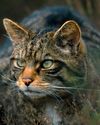
RETURN OF A LEGEND
Once teetering on the very brink of extinction, the elusive Scottish wildcat is prowling the Highlands once more, thanks to a bit of help
7 mins
May 2026

BBC Wildlife
Urban scavengers help curb carbon
New study reveals the extent of emissions saved as city animals feast on food waste
2 mins
May 2026
BBC Wildlife
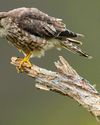
Merlin on the brink
The diminutive raptor is one of many species facing extinction in Britain, suggests new report
1 mins
May 2026
Listen
Translate
Change font size