
Magzter GOLDで無制限に
10,000以上の雑誌、新聞、プレミアム記事に無制限にアクセスできます。
How The New Political Correctness Is Ruining Education
The Atlantic
|September 2015
Todays college students can't seem to take a joke.

Three comic s sat around a café table in the chilly atrium of the Minneapolis Convention Center, talking about how to create the cleanest possible set. “Don’t do what’s in your gut,” Zoltan Kaszas said. “Better safe than sorry,” Chinedu Unaka offered. Feraz Ozel mused about the first time he’d ever done stand-up: three minutes on giving his girlfriend herpes and banging his grandma. That was out.
This was not a case of professionals approaching a technical problem as an intellectual exercise. Money was riding on the answer. They had come to Minneapolis in the middle of a brutal winter for the annual convention of the National Association for Campus Activities (Naca), to sell themselves and their comedy on the college circuit. Representatives of more than 350 colleges had come as well, to book comics, musicians, sword swallowers, unicyclists,magicians, hypnotists, slam poets, and every kind of boat act, inspirational speaker, and one-trick pony you could imagine for the next academic year.
For the comics, the college circuit offers a lucrative alternative to Chuckle Hut gigs out on the pitiless road, spots that pay a couple hundred bucks and a free night in whatever squat the club owner uses to warehouse out-of-town talent. College gigs pay easily a grand a night—often much more—and they can come in a firecracker string, with relatively short drives between schools, each hour-long performance paid for (without a moment’s ugliness or hesitation) by a friendly student-activities kid holding out a check and hoping for a selfie. For all these reasons, thousands of comics dream of being invited to the convention.
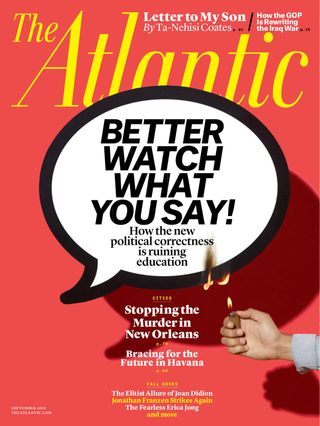

このストーリーは、The Atlantic の September 2015 版からのものです。
Magzter GOLD を購読すると、厳選された何千ものプレミアム記事や、10,000 以上の雑誌や新聞にアクセスできます。
すでに購読者ですか? サインイン
The Atlantic からのその他のストーリー
The Atlantic
You Had to Be There
An emerging field of history asks if we can ever really understand how our forebears experienced love, anger, fear, and sorrow.

23 mins
January 2026

The Atlantic
By the Horns
The week before the biggest bullfight of her career, in Cádiz, Spain, this past July, 24-year-old Miriam Cabas posted a carefully produced video on Instagram.
1 mins
January 2026

The Atlantic
The New German War Machine
After World War II, Germany embraced pacifism as a form of atonement. Now the country is arming itself again.
18 mins
January 2026
The Atlantic
The Eloquence
The prime minister was watching a disaster movie when we found him.
4 mins
January 2026

The Atlantic
What's for Dinner, Mom?
The women who want to change the way America eats
12 mins
January 2026
The Atlantic
How Terror Works
A 1947 German novel explores the sometimes corrosive, sometimes energizing nature of fear.
8 mins
January 2026

The Atlantic
Yesterday's Idea of a Modern Man
Sam Shepard, a self-made cowboy, was also a poet of masculine angst.
7 mins
January 2026

The Atlantic
ACCOMMODATION NATION
America's colleges have an extra-time-on-tests problem.
11 mins
January 2026

The Atlantic
Respect the Drummer
A new history of rock, told through its overlooked heroes
5 mins
January 2026

The Atlantic
THE MOST POWERFUL MAN IN SCIENCE
WHY IS ROBERT F. KENNEDY JR. SO CONVINCED HE'S RIGHT?
42 mins
January 2026
Translate
Change font size