試す 金 - 無料
What's for Dinner, Mom?
The Atlantic
|January 2026
The women who want to change the way America eats
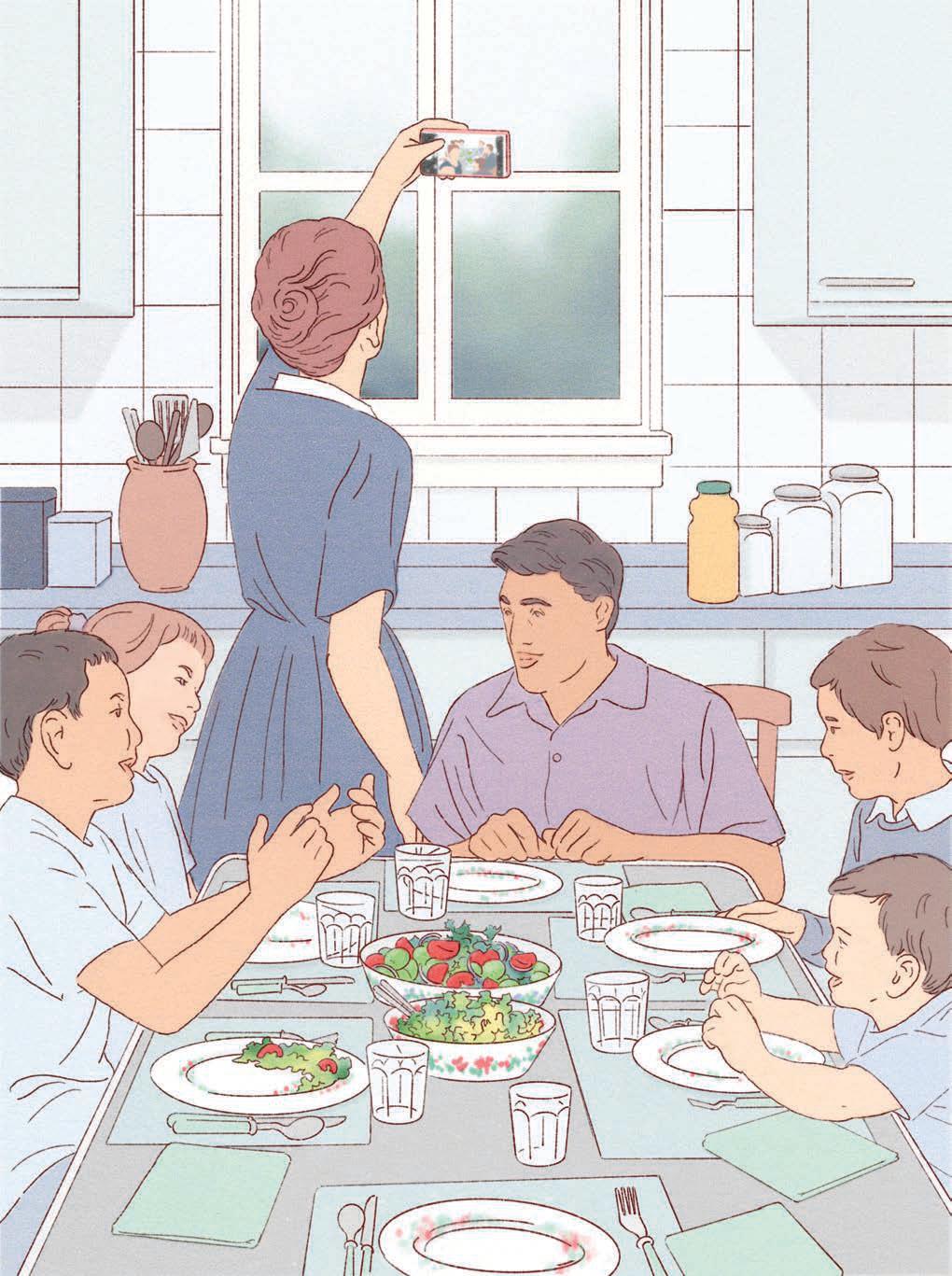
Sometimes I think I became a mother not in a hospital room but in a Trader Joe's in New York City. It was May 2020. A masked but smizing employee took one look at my stomach and handed me a packet of darkchocolate peanut-butter cups. "Happy Mother's Day!" she said. I was pregnant, with twins, during the early months of the pandemic, and all I could think about was food-what to eat and how to acquire it. Once a week I dashed clumsily through the store's aisles, grabbing cans of beans and bags of apples while trying not to breathe, like a contestant on a postapocalyptic episode of Supermarket Sweep.
Food then was interlaced with a sense of danger, the coronavirus potentially spreading (we worried, absurdly it turned out) even by way of reusable totes.
Meanwhile, I knew from my relentless pregnancy apps that what I ate could have monumental implications for my future children's eating habits. I was scared, and I felt powerless, and food seemed like one of the few things I could control, or at least try to.
What I didn't yet know was that I was tapping into a deep-rooted tradition-or that, even as I panic-shopped, it was evolving. Mothers are our first food influencers, and for most of history, they have been our primary ones. The process starts even before we're born, we now know: The tastes we're exposed to in utero inform the preferences we'll have much later in life. Culture, "at least when it comes to food, is really just a fancy word for your mother," Michael Pollan wrote in his best-selling 2008 book, In Defense of Food: An Eater's Manifesto. Up until the mid-20th century or so, we humans ate much as our parents did, and their parents before them, and so on: food cooked at home, from fresh ingredients, made predominantly by women.

このストーリーは、The Atlantic の January 2026 版からのものです。
Magzter GOLD を購読すると、厳選された何千ものプレミアム記事や、10,000 以上の雑誌や新聞にアクセスできます。
すでに購読者ですか? サインイン
The Atlantic からのその他のストーリー
The Atlantic
You Had to Be There
An emerging field of history asks if we can ever really understand how our forebears experienced love, anger, fear, and sorrow.

23 mins
January 2026

The Atlantic
By the Horns
The week before the biggest bullfight of her career, in Cádiz, Spain, this past July, 24-year-old Miriam Cabas posted a carefully produced video on Instagram.
1 mins
January 2026

The Atlantic
The New German War Machine
After World War II, Germany embraced pacifism as a form of atonement. Now the country is arming itself again.
18 mins
January 2026
The Atlantic
The Eloquence
The prime minister was watching a disaster movie when we found him.
4 mins
January 2026
The Atlantic
What's for Dinner, Mom?
The women who want to change the way America eats
12 mins
January 2026
The Atlantic
How Terror Works
A 1947 German novel explores the sometimes corrosive, sometimes energizing nature of fear.
8 mins
January 2026

The Atlantic
Yesterday's Idea of a Modern Man
Sam Shepard, a self-made cowboy, was also a poet of masculine angst.
7 mins
January 2026

The Atlantic
ACCOMMODATION NATION
America's colleges have an extra-time-on-tests problem.
11 mins
January 2026

The Atlantic
Respect the Drummer
A new history of rock, told through its overlooked heroes
5 mins
January 2026

The Atlantic
THE MOST POWERFUL MAN IN SCIENCE
WHY IS ROBERT F. KENNEDY JR. SO CONVINCED HE'S RIGHT?
42 mins
January 2026
Listen
Translate
Change font size