कोशिश गोल्ड - मुक्त
THE EXPLAINER PHOBIAS
BBC Science Focus
|April 2023
AN EXPLORATION INTO THE ORIGINS AND TREATMENTS OF IRRATIONAL FEARS
-

In the context of mental health, a phobia is far more serious than a mild aversion.
Many of us dislike flying, or giving a talk in front of our colleagues, and we might not be too happy if a large, slobbery dog, no matter how gentle, came bounding toward us. But as long as we can tolerate these kinds of situations without too much distress, and our lives aren't adversely affected, then we haven't got a phobia for any of these situations as such.
In contrast, people diagnosed with a relevant phobia would experience an intense, extremely unpleasant fear reaction that could be overwhelming. So much so, that it might interfere with their day-to-day lives. Flying phobias, social phobias, and a fear of dogs (even cute ones) are common examples - but there are dozens of others, including some quite bizarre examples, such as trypophobia, which is a fear of clusters of holes (like you get in crumpets), sedatephobia (a fear of silence) and gerascophobia (a fear of ageing).
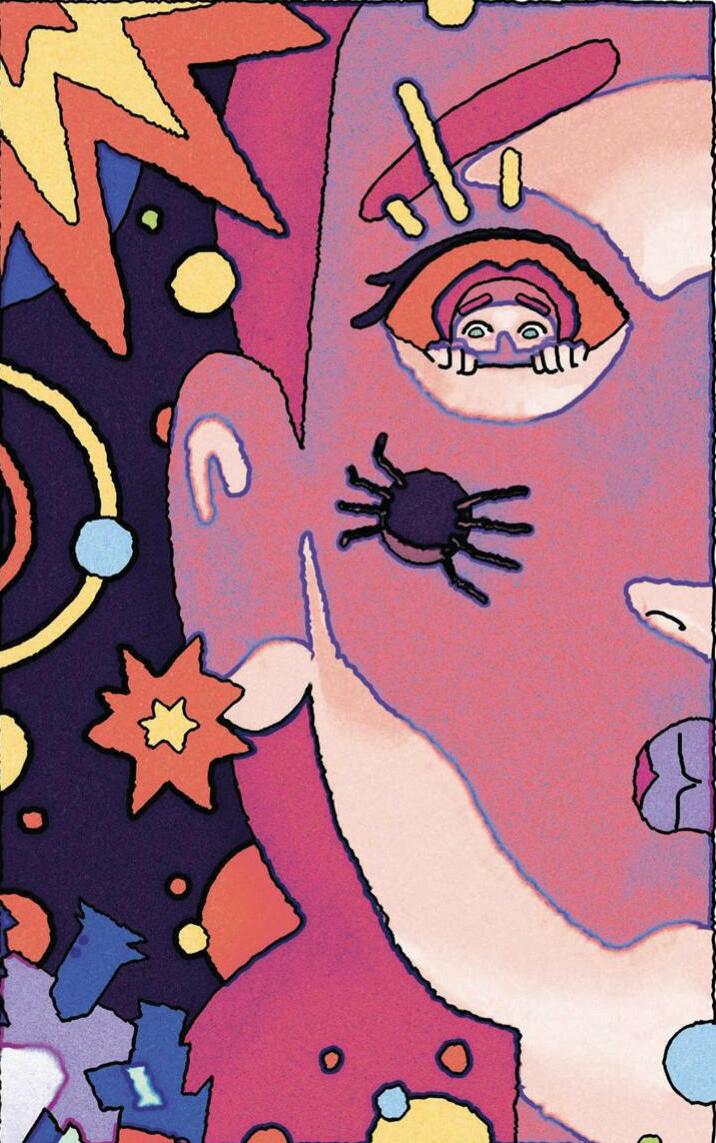
ARE PHOBIAS A DISORDER?
Phobias are a formal psychiatric diagnosis in the anxiety category. To be diagnosed, you'd need to have experienced a phobia for at least six months, and your fear reactions to the focus of your phobia would need to be out of proportion to the danger you were in.
Psychiatry recognises five main categories of 'specific phobia' (between 3 to 15 per cent of people will develop one of these at some point in their lives): animal phobias (spiders and snakes are common examples); environmental phobias (such as heights or deep water); blood/injection phobias (think needles or the mere sight of blood); situational phobias (such as bridges or dentists); and finally an 'other' category that covers almost everything else, such as a fear of swallowing or being sick.


यह कहानी BBC Science Focus के April 2023 संस्करण से ली गई है।
हजारों चुनिंदा प्रीमियम कहानियों और 10,000 से अधिक पत्रिकाओं और समाचार पत्रों तक पहुंचने के लिए मैगज़्टर गोल्ड की सदस्यता लें।
क्या आप पहले से ही ग्राहक हैं? साइन इन करें
BBC Science Focus से और कहानियाँ

BBC Science Focus
HEALTH: Eating oats could lower your cholesterol in just two days
The health benefits of a two-day porridge diet lasted for weeks afterwards

1 mins
April 2026

BBC Science Focus
Most people are too sure they can identify fake human faces
Even 'super recognisers' struggle with the challenge. Can you do better?
1 min
April 2026

BBC Science Focus
WHAT'S THE WORST THING YOU CAN DO FOR THE PLANET ONLINE?
Human beings can barely move a muscle without some kind of deleterious effect on the environment around us.
2 mins
April 2026

BBC Science Focus
A bug in the system
The complex arrangement of equipment you see here is part of a particle accelerator.
1 min
April 2026

BBC Science Focus
Snug as a bug in a rug
At first glance, you might feel envious of this little leafhopper, swaddled beneath the folds of what appears to be a luxurious fur blanket.
1 min
April 2026

BBC Science Focus
WHY DO WE ROOT FOR THE VILLAIN IN MOVIES?
Whether it's Darth Vader or Cruella de Vil, we all have a favourite movie villain.
1 mins
April 2026

BBC Science Focus
A TURN TO DISPERSE
Why a fart walk after dinner does more than release your gas
3 mins
April 2026

BBC Science Focus
Hatching a nebula
Welcome to the Egg Nebula, an enigmatic structure formed by ejected stardust in the Cygnus constellation around 1,000 light-years from Earth.
1 min
April 2026

BBC Science Focus
7 TIMES AI GOT IT SPECTACULARLY WRONG
For the past four years, AI has been reshaping how we work and live. But its failures are proving just as transformative as its triumphs
8 mins
April 2026

BBC Science Focus
CHARLES ADCOCK, VIA EMAIL: COULD DARK MATTER BE ALL AROUND PLANET EARTH BUT UNDETECTABLE?
Astronomers have gathered overwhelming evidence that 80 per cent of all matter in the Universe is invisible.
1 min
April 2026
Translate
Change font size