
मैगज़्टर गोल्ड के साथ असीमित हो जाओ
10,000 से अधिक पत्रिकाओं, समाचार पत्रों और प्रीमियम कहानियों तक असीमित पहुंच प्राप्त करें सिर्फ
कोशिश गोल्ड - मुक्त
How a tiny worm's brain could transform artificial intelligence
BBC Science Focus
|December 2025
'Liquid neural networks', inspired by tiny worms, promise smaller, smarter and more transparent AI
-
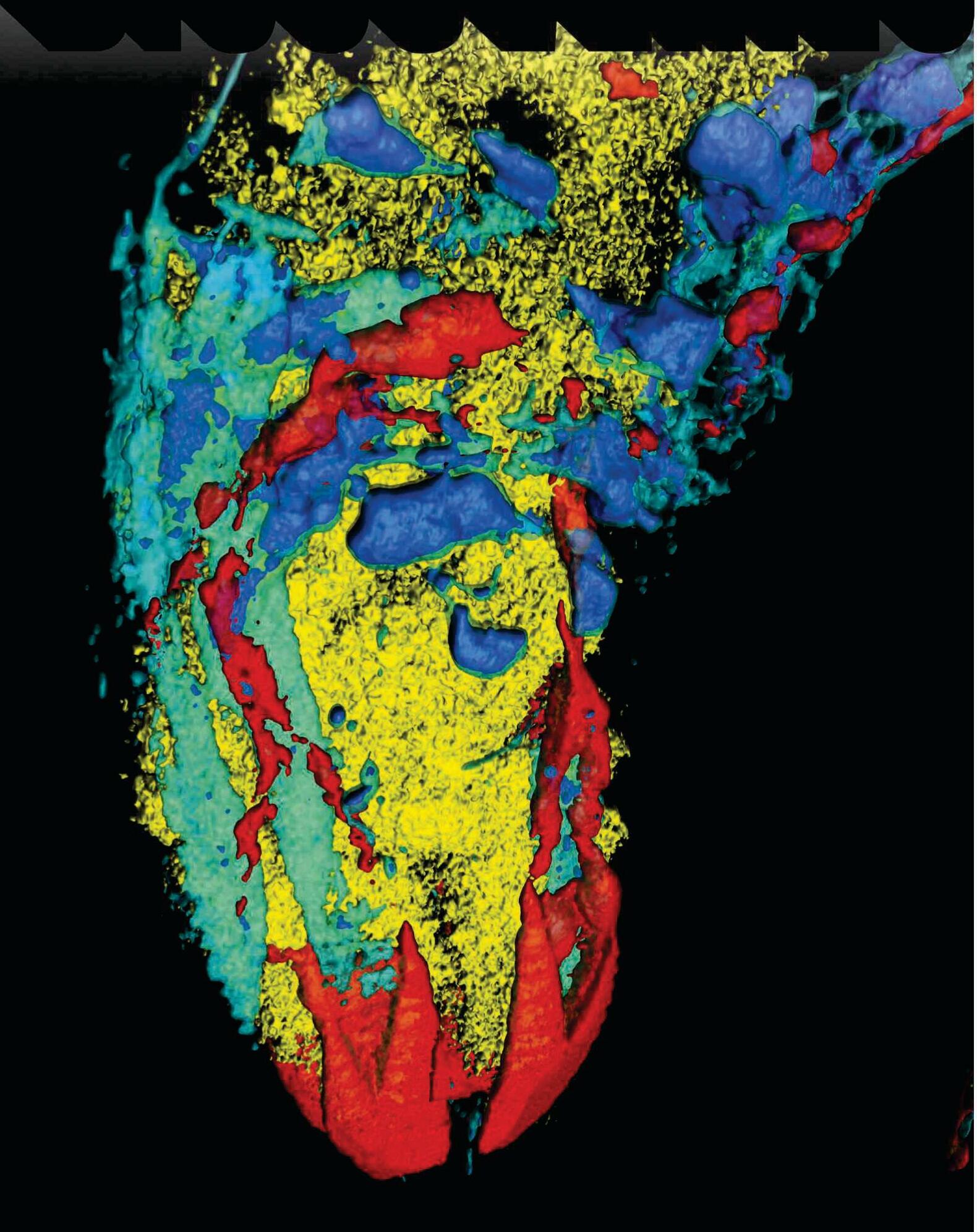
Today's artificial intelligence (AI) models are behemoths. Their function is determined by billions of parameters, they're trained on oceans of data and are hosted on vast, energy-hungry server farms. But does it have to be this way? Apparently not. One of the most promising new contenders for the future of machine intelligence grew out of something much smaller: a microscopic worm.
Inspired by Caenorhabditis elegans, a millimetre-long nematode with just 302 neurons in its nervous system, researchers have created a radically different kind of AI. Known as 'liquid neural networks', they can learn, adapt and reason all while running on a single device, instead of being distributed across many servers and the cloud.
"I wanted to understand human intelligence," Dr Ramin Hasani, co-founder and CEO of Liquid AI, a company at the forefront of this tiny revolution, told BBC Science Focus. “But when I started to look at what information we have available on the human brain, or even rat or monkey brains, I realised it’s almost nothing.”
At the time, the animal with the most comprehensively mapped nervous system was C. elegans. So that’s where Hasani and his colleagues started.
Hasani’s fascination with C. elegans wasn’t about its behaviour, but its ‘neural dynamics’ — the way its cells communicate.
Neurons in the worm’s brain communicate through graded, analogue signals rather than the electrical spikes more akin to digital signals found in larger animals. As nervous systems evolved and organisms grew bigger, spiking neurons became a more efficient way to send information.
Yet the roots of human neural computation still trace back to that analogue world.
For Hasani, this was a revelation. “Biology as a whole is a fascinating way to reduce the space of possibilities,” he said. “Billions of years of evolution have searched through all possible combinations of building efficient algorithms.”

यह कहानी BBC Science Focus के December 2025 संस्करण से ली गई है।
हजारों चुनिंदा प्रीमियम कहानियों और 10,000 से अधिक पत्रिकाओं और समाचार पत्रों तक पहुंचने के लिए मैगज़्टर गोल्ड की सदस्यता लें।
क्या आप पहले से ही ग्राहक हैं? साइन इन करें
BBC Science Focus से और कहानियाँ

BBC Science Focus
HEALTH: Eating oats could lower your cholesterol in just two days
The health benefits of a two-day porridge diet lasted for weeks afterwards

1 mins
April 2026

BBC Science Focus
Most people are too sure they can identify fake human faces
Even 'super recognisers' struggle with the challenge. Can you do better?
1 min
April 2026

BBC Science Focus
WHAT'S THE WORST THING YOU CAN DO FOR THE PLANET ONLINE?
Human beings can barely move a muscle without some kind of deleterious effect on the environment around us.
2 mins
April 2026

BBC Science Focus
A bug in the system
The complex arrangement of equipment you see here is part of a particle accelerator.
1 min
April 2026
BBC Science Focus
Snug as a bug in a rug
At first glance, you might feel envious of this little leafhopper, swaddled beneath the folds of what appears to be a luxurious fur blanket.
1 min
April 2026

BBC Science Focus
WHY DO WE ROOT FOR THE VILLAIN IN MOVIES?
Whether it's Darth Vader or Cruella de Vil, we all have a favourite movie villain.
1 mins
April 2026

BBC Science Focus
A TURN TO DISPERSE
Why a fart walk after dinner does more than release your gas
3 mins
April 2026

BBC Science Focus
Hatching a nebula
Welcome to the Egg Nebula, an enigmatic structure formed by ejected stardust in the Cygnus constellation around 1,000 light-years from Earth.
1 min
April 2026

BBC Science Focus
7 TIMES AI GOT IT SPECTACULARLY WRONG
For the past four years, AI has been reshaping how we work and live. But its failures are proving just as transformative as its triumphs
8 mins
April 2026
BBC Science Focus
CHARLES ADCOCK, VIA EMAIL: COULD DARK MATTER BE ALL AROUND PLANET EARTH BUT UNDETECTABLE?
Astronomers have gathered overwhelming evidence that 80 per cent of all matter in the Universe is invisible.
1 min
April 2026
Listen
Translate
Change font size