
Magzter GOLD ile Sınırsız Olun
Sadece 9.000'den fazla dergi, gazete ve Premium hikayeye sınırsız erişim elde edin
Denemek ALTIN - Özgür
How a tiny worm's brain could transform artificial intelligence
BBC Science Focus
|December 2025
'Liquid neural networks', inspired by tiny worms, promise smaller, smarter and more transparent AI
-
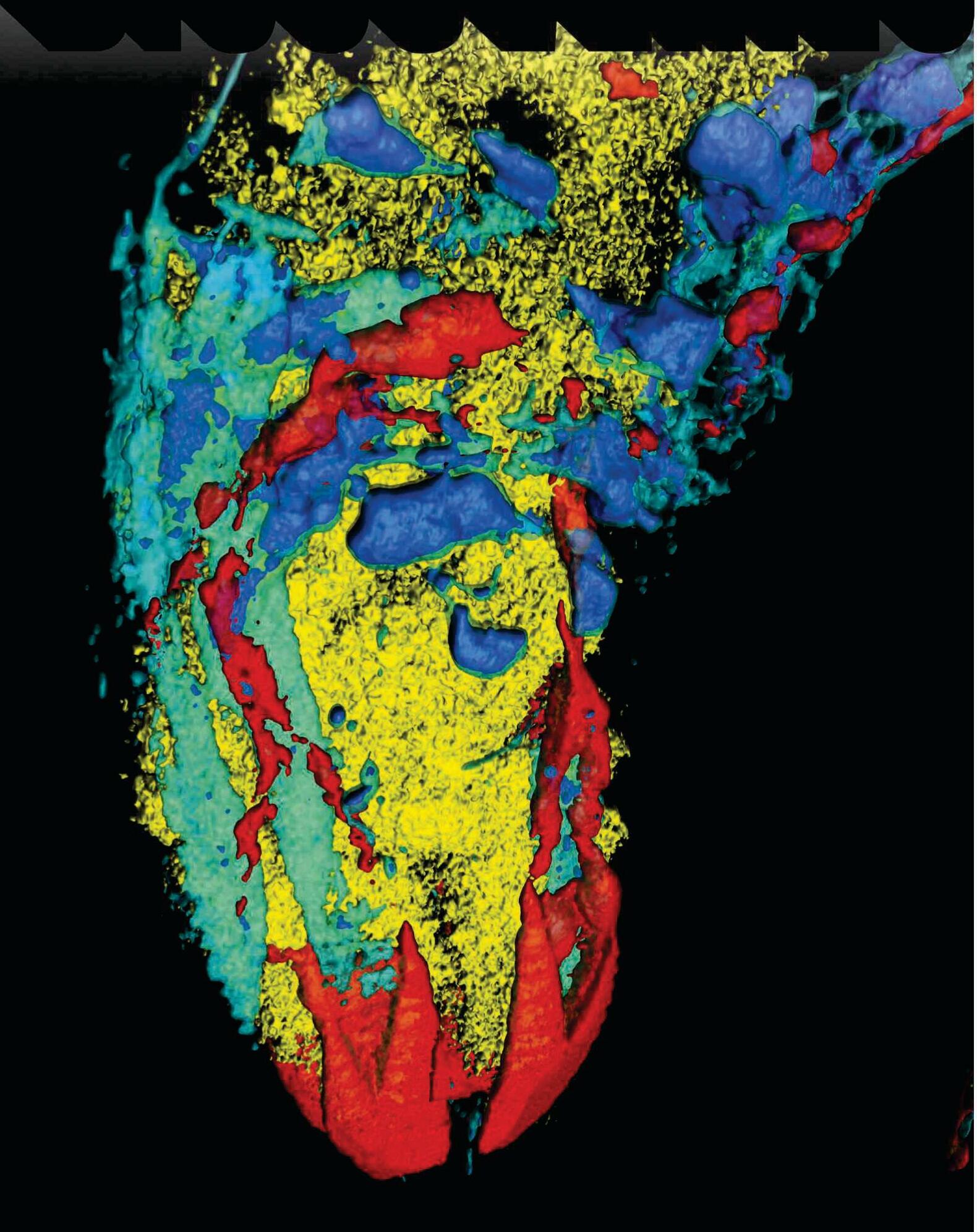
Today's artificial intelligence (AI) models are behemoths. Their function is determined by billions of parameters, they're trained on oceans of data and are hosted on vast, energy-hungry server farms. But does it have to be this way? Apparently not. One of the most promising new contenders for the future of machine intelligence grew out of something much smaller: a microscopic worm.
Inspired by Caenorhabditis elegans, a millimetre-long nematode with just 302 neurons in its nervous system, researchers have created a radically different kind of AI. Known as 'liquid neural networks', they can learn, adapt and reason all while running on a single device, instead of being distributed across many servers and the cloud.
"I wanted to understand human intelligence," Dr Ramin Hasani, co-founder and CEO of Liquid AI, a company at the forefront of this tiny revolution, told BBC Science Focus. “But when I started to look at what information we have available on the human brain, or even rat or monkey brains, I realised it’s almost nothing.”
At the time, the animal with the most comprehensively mapped nervous system was C. elegans. So that’s where Hasani and his colleagues started.
Hasani’s fascination with C. elegans wasn’t about its behaviour, but its ‘neural dynamics’ — the way its cells communicate.
Neurons in the worm’s brain communicate through graded, analogue signals rather than the electrical spikes more akin to digital signals found in larger animals. As nervous systems evolved and organisms grew bigger, spiking neurons became a more efficient way to send information.
Yet the roots of human neural computation still trace back to that analogue world.
For Hasani, this was a revelation. “Biology as a whole is a fascinating way to reduce the space of possibilities,” he said. “Billions of years of evolution have searched through all possible combinations of building efficient algorithms.”

Bu hikaye BBC Science Focus dergisinin December 2025 baskısından alınmıştır.
Binlerce özenle seçilmiş premium hikayeye ve 9.000'den fazla dergi ve gazeteye erişmek için Magzter GOLD'a abone olun.
Zaten abone misiniz? Oturum aç
BBC Science Focus'den DAHA FAZLA HİKAYE

BBC Science Focus
ARE PSYCHOPATHS REALLY THAT GOOD AT LYING?
Picture infamous psychopaths from fiction, such as the eerily cold and calculating Patrick Bateman in the film adaptation of American Psycho, and they certainly seem like master deceivers. But what about real-life psychopaths? Research confirms that psychopaths are more inclined to lie to get what they want, and that they typically display a striking fearlessness - as if they have ice running through their veins.

1 min
January 2026
BBC Science Focus
WHY DO WE HAVE TWO OF SOME ORGANS, BUT ONLY ONE OF OTHERS?
The majority of animals on Earth, humans included, are bilaterally symmetrical. It means we can be divided roughly into two mirror-image sides. Evolutionary biologists believe that it has been like that for at least 300 million years, and because life organised this way survived, so did symmetrical design. Hence, two eyes, two ears, two lungs and two kidneys.
1 min
January 2026

BBC Science Focus
WHY DO CATS PREFER TO SLEEP ON THEIR LEFT?
I've said it before, and I'll keep saying it again and again and again: who knows why cats do anything?
1 min
January 2026

BBC Science Focus
FORGET COUNTING CALORIES TRY THIS INSTEAD...
Calorie counting isn't just difficult, it's riddled with problems that make it practically useless for anyone trying to lose weight.But there are alternatives
9 mins
January 2026

BBC Science Focus
SIGNS OF LIFE
The more planets we find outside our Solar System, the better our chances are of finding life on one of them. But if there really is life out there, how do we spot it?
8 mins
January 2026
BBC Science Focus
WHAT ACTUALLY MAKES SOMEBODY COOL?
Most of us have probably wanted to be cool at some point in our lives, and these efforts can have a big influence on the things we buy, the way we dress, the hobbies we invest in, the people we look up to and even the words we use.
2 mins
January 2026

BBC Science Focus
It's TIME to WAKE UP and SMELL the roses
What if the pursuit of happiness in the traditional sense – chasing wealth or power – is the very thing stopping you from being happy? Researchers are beginning to understand that spending time enjoying the simple things might be the secret ingredient to enjoying a happy, healthy life
8 mins
January 2026
BBC Science Focus
THE AARDVARK
In a time when people are being asked to consider eating insects, we should, perhaps, learn a thing or two from the aardvark (Orycteropus afer), Africa’s ant-guzzling gourmand. On an average night, the big-schnozzed mammal devours up to 50,000 of the crunchy critters.
2 mins
January 2026

BBC Science Focus
ADD WEIGHT TO LOSE WEIGHT
A very basic kind of wearable could make your New-Year-weight-loss plans stick
3 mins
January 2026

BBC Science Focus
AHEAD OF THEIR TIME
The Maya civilisation is known for its art and architecture.
8 mins
January 2026
Listen
Translate
Change font size