कोशिश गोल्ड - मुक्त
Pharmaco-Metaphysics?
Philosophy Now
|August/September 2025
Raymond Tallis argues against acidic assertions, and doubts DMT discoveries.
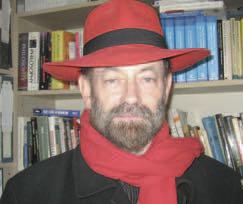
I ought to begin with a confession. I have had no firsthand- or first-head - experience of psychedelic drugs. Admittedly, I occasionally (actually, frequently) 'do' a bit of (actually, quite a lot of) my favourite white wine. Courtesy of Pinot Grigio, I am sometimes translated to a parallel universe in which my jokes are funny and the laughter they trigger is directed at the tale rather than the teller. But this is hardly comparable to the experiences of 'psychonauts' who take hallucinogenic drugs such as psilocybin in pursuit of revelations about the true nature of the world, of our place in it, and of our eventual destination.
In The Doors of Perception (1954), Aldous Huxley reported on his experiences with the psychedelic drug mescaline. They ranged from the enchantment of an unpeeled awareness of the beauty of flowers, to a sense of a Divine Presence. The title of the book echoed William Blake's claim in The Marriage of Heaven and Hell (1790) that "If the doors of perception were cleansed, then everything would appear to man as it is, Infinite."
The philosopher and psychologist William James (1842-1910) was ahead of Huxley. His experiences with nitrous oxide (laughing gas) had an enduring influence on his thought and, in particular, on his attitude towards religion. Reflecting on his experiences, he felt that all religions "converge towards a kind of insight to which I cannot help ascribing some metaphysical significance." James was haunted by the suspicion that his everyday awareness was flanked by utterly different modes of consciousness, and separated from them by 'the flimsiest of screens'.
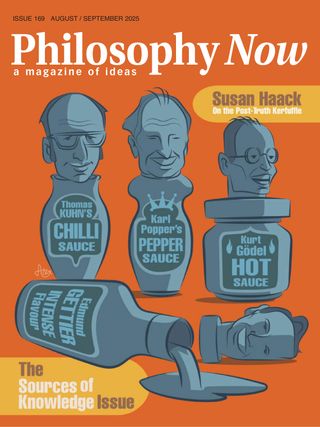

यह कहानी Philosophy Now के August/September 2025 संस्करण से ली गई है।
हजारों चुनिंदा प्रीमियम कहानियों और 10,000 से अधिक पत्रिकाओं और समाचार पत्रों तक पहुंचने के लिए मैगज़्टर गोल्ड की सदस्यता लें।
क्या आप पहले से ही ग्राहक हैं? साइन इन करें
Philosophy Now से और कहानियाँ

Philosophy Now
Nosferatu
Stefan Bolea considers two very different artistic approaches to love and death.

6 mins
April/May 2025

Philosophy Now
Heidegger's Ghost
Raymond Tallis wonders where Heidegger's body went when he was philosophising.
7 mins
April/May 2025

Philosophy Now
Is Comedy Good For Us?
Damaris Stock has a laugh with Plato and friends.
10 mins
April/May 2025
Philosophy Now
In Defense of Idleness
Wendell O'Brien says, 'Just Don't Do It'.
10 mins
April/May 2025
Philosophy Now
Leaving Nothing to Chance by Carl Knight
LEAVING NOTHING TO Chance (2025) by Carl Knight, is an informed, proficient and lucid defence of luck egalitarianism.
3 mins
April/May 2025

Philosophy Now
Star Maker by Olaf Stapledon
THE 1937 SCIENCE FICTION novel Star Maker was written by philosophy professor Olaf Stapledon in the dark days as Europe awaited the onslaught of Nazi Germany. This casts a shadow over the whole book.
6 mins
April/May 2025
Philosophy Now
Love & Emptiness in the Sufi Tradition
Medha Ninad Tambe meditates on Rumi, love and self-negation.
7 mins
April/May 2025

Philosophy Now
The Hedgehog's Dilemma: A Metaphor About the Challenges of Human Intimacy
Krishna Chaubey explains Arthur Schopenhauer's poignant thought experiment.
4 mins
April/May 2025
Philosophy Now
The Mirror & the Flame
Rebwar Fatah imagines Attar's & Hegel's shared path.
4 mins
April/May 2025
Philosophy Now
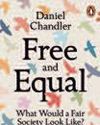
Free and Equal by Daniel Chandler
DANIEL CHANDLER, AN economist and philosopher based at the London School of Economics, begins Free and Equal: What Would a Fair Society Look Like? (2023) by asking an intriguing question. How is it, he wonders, that the most influential political philosopher of the last century has had almost no practical impact on politics or policy? The philosopher in question is John Rawls, whose magnum opus was A Theory of Justice (1971).
5 mins
April/May 2025
Listen
Translate
Change font size