कोशिश गोल्ड - मुक्त
An Island Mystery
BBC History Magazine
|April 2022
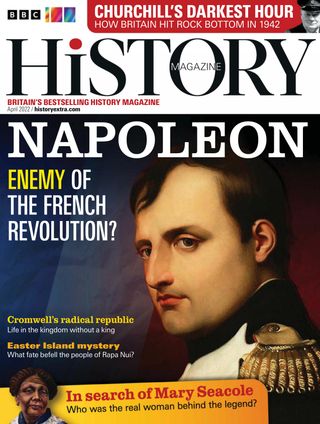
Three centuries ago, when European explorers first sighted the Pacific island of Rapa Nui, it was home to a thriving population and hundreds of haunting moai statues. But, within a few generations, the landscape was decimated and its population in sharp decline. So what happened? Cat Jarman untangles

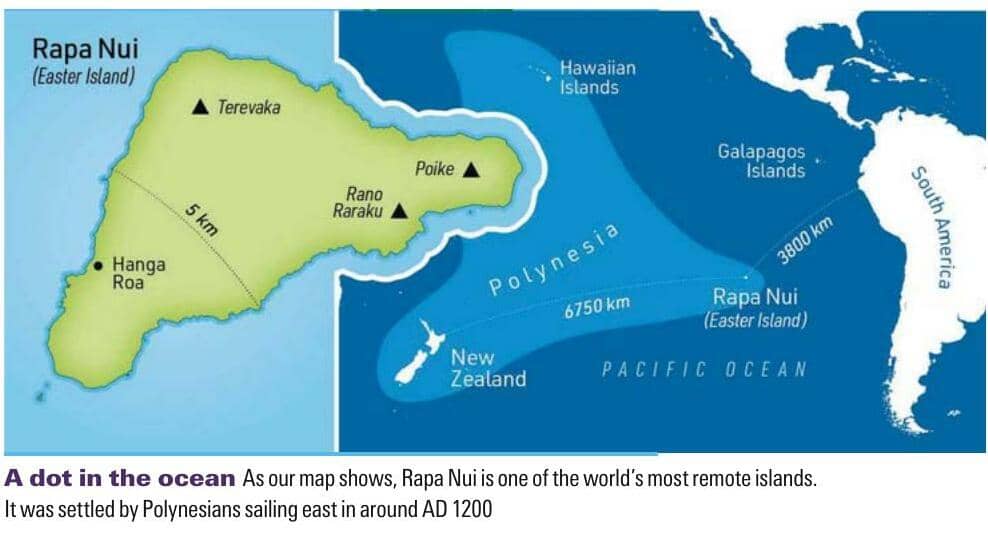
On Easter Sunday 1722, the Dutch explorer Jacob Roggeveen sighted a small, largely treeless island on his journey across the Pacific Ocean. It was located almost 2,000 miles from South America, the nearest continent, and more than 1,200 miles from the nearest island; it was one of the most remote and isolated locations in the world. Roggeveen's crew rejoiced, and he gave to the land the name Paásch Eyland (Easter Island], because it was discovered by us on Easter Day.
Yet despite its remoteness, the sailor soon discovered that the island was already home to a population of settlers, who had arrived there centuries earlier: “We saw smoke rising in several places,” Roggeveen reported, “from which we concluded that there were people dwelling on the same.” Those people had named their home Te Pito o te Henua - the navel of the world - or, more commonly, Rapa Nui. The Dutch explorers estimated that the population, known as the Rapanui, numbered around 3,000, and described it as “healthy.
In 1774 Captian Cook also visited the island, while searching for a new continent in the frigid waters of the southern Pacific. After two months at sea, his crew were exhausted and debilitated by scurvy, and in desperate need of provisions. They headed to Rapa Nui but were surprised by what they found: a barren island with neither wood nor much fresh water on its roughly 164 sq km. Nature,” Cook noted, “has been exceedingly sparing of her favors to the spot.”

यह कहानी BBC History Magazine के April 2022 संस्करण से ली गई है।
हजारों चुनिंदा प्रीमियम कहानियों और 10,000 से अधिक पत्रिकाओं और समाचार पत्रों तक पहुंचने के लिए मैगज़्टर गोल्ड की सदस्यता लें।
क्या आप पहले से ही ग्राहक हैं? साइन इन करें
BBC History Magazine से और कहानियाँ
BBC History UK
Royal progress
Alice Loxton's new book begins with a compelling premise.

1 mins
January 2026

BBC History UK
"Leaving Muslim contributions out of European history has allowed Islamophobic sentiment to flourish"
THARIK HUSSAIN speaks to Danny Bird about the long but often overlooked and distorted history of Muslims in Europe - and the enduring resistance to its reappraisal
9 mins
January 2026

BBC History UK
7 UNMISSABLE TRIPS IN 2026
With new routes, big anniversaries and fresh ways of discovering familiar favourites, TOM HALL highlights historical destinations to explore this year
4 mins
January 2026

BBC History UK
SOPHIE SCHOLL
Novelist Simon Scarrow chooses
2 mins
January 2026
BBC History UK
Portrait of the artists
TRACY BORMAN is enraptured by a beautifully written and richly illustrated exploration of early modern English art
2 mins
January 2026
BBC History UK
Humble heroes
Statues celebrate monarchs, rulers and conquerors - but who remembers the brave folk who gave their lives to save others? Anna Maria Barry recounts stories of selfsacrificing but otherwise ordinary people from the 19th and 20th centuries who are commemorated in one London park.
9 mins
January 2026
BBC History UK
BACK FROM THE DEAD
Britain’s War Office thanked the SAS for its remarkable efforts in WW2 by abolishing it – yet soon realised the error of its ways. Gavin Mortimer tells the story of how the elite unit reinvented itself to confront the challenges of the postwar world
8 mins
January 2026
BBC History UK
Q&A - A selection of historical conundrums answered by experts
Were Roman gladiators vegetarian?
8 mins
January 2026
BBC History UK
Martha McGill on a pioneering study of folk beliefs in early modern England
I was recently chatting with a handful of early modernists about the history book we'd take to a desert island.
1 min
January 2026
BBC History UK
Independent empires
Viewing the British empire through an American lens provides an intriguing alternative perspective on the 'Land of the Free', says DAVID ARMITAGE
4 mins
January 2026
Translate
Change font size