Essayer OR - Gratuit
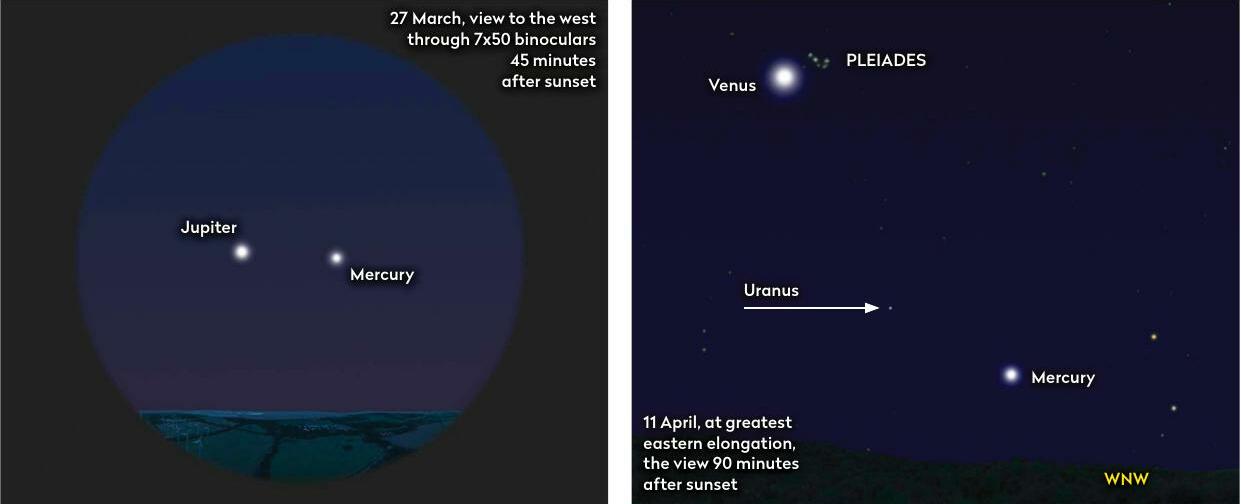
Mercury returns to twilight
BBC Sky at Night Magazine
|April 2023
The inner wanderer graces our evening skies once again this month.

When most beginners start out in planetary astronomy, it's easy to default to the holy trinity' of Jupiter, Saturn and our neighbour Mars. Each boasts unique and relatively easy to observe features, from Saturn's rings and Jupiter's bands and Great Red Spot, to Mars's dusty surface. But why stop there? There are eight planets in our Solar System and many can be appreciated with beginner setups. The 'inner planets', Mercury and Venus, present new and exciting challenges to planetary astronomers. We explored Venus in last month's issue and now it's Mercury's turn for the spotlight.
Due to its proximity to the Sun, extra care must be taken to observe Mercury safely, which adds to the challenge. There are particular times that are best to view this elusive, mysterious planet, and this April we can seize the opportunity. Get ready to enjoy one of the Solar System's unsung heroes.
Following Mercury's path
The fastest planet in the Solar System, Mercury is named after the messenger of the Greek gods, renowned for speed. And time is certainly of the essence with this planet. To catch Mercury, we need to understand how its position relative to the Sun affects its visibility.
Mercury is 0.4 astronomical units (AU) away from the Sun and orbits at speeds of up to 47km per second, compared to Earth's relaxed pace of 30km per second. When it reaches its closest point to the Sun, Mercury is at its fastest and it then slows down slightly the further away it gets. As the innermost planet, it also has the shortest year, taking 88 Earth days to circle the Sun.

Cette histoire est tirée de l'édition April 2023 de BBC Sky at Night Magazine.
Abonnez-vous à Magzter GOLD pour accéder à des milliers d'histoires premium sélectionnées et à plus de 9 000 magazines et journaux.
Déjà abonné ? Se connecter
PLUS D'HISTOIRES DE BBC Sky at Night Magazine
BBC Sky at Night Magazine
How to photograph the Geminids
Dramatic meteor photos aren't just down to luck. We show you how to bag one

3 mins
December 2025
BBC Sky at Night Magazine
10 Christmas crackers for your new telescope
So Santa brought you a telescope - what now? Stuart Atkinson sprinkles some cosmic sparkle, with 10 sights to see over one fabulous festive night - from glorious galaxies and planets to glittering star clusters
7 mins
December 2025
BBC Sky at Night Magazine
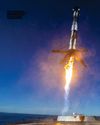
10 years of reusable rockets
Ben Evans charts the rise of multi-flight spacecraft, the tech revolution that's transforming our access to space
6 mins
December 2025
BBC Sky at Night Magazine
SKILLS FOR STARGAZERS
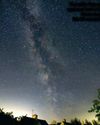
Take great photos of the Milky Way
3 mins
December 2025

BBC Sky at Night Magazine
Smart scopes: from backyard to big science
Home-based stargazers are helping scientists crack some of the Universe's big mysteries - and you can join them. Charlotte Daniels shows us how
6 mins
December 2025

BBC Sky at Night Magazine
FIELD OF VIEW
Forget Instagram – embrace the moment
2 mins
December 2025
BBC Sky at Night Magazine
Q&A WITH A PLANETARY LIFE EXPERT
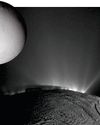
Saturn's icy moon Enceladus boasts water, heat and organics. Now scientists have discovered it has complex chemistry too. Could it prove to be habitable?
3 mins
December 2025
BBC Sky at Night Magazine
INSIDE THE SKY AT NIGHT
When The Sky at Night joined Curious Cases for a special episode, George Dransfield was there to answer your burning questions. Here she dives deeper into her favourite
3 mins
December 2025
BBC Sky at Night Magazine
Students fix JWST's blurry vision
PhD researchers restore the telescope's ultra-precise imaging - without a spacewalk
1 min
December 2025

BBC Sky at Night Magazine
On a Mission
This is an inspiring tribute to the trailblazing women who shaped NASA's human spaceflight programmes.
1 mins
December 2025
Translate
Change font size