Intentar ORO - Gratis
STRANDED ON MARS
Scientific American
|December 2025
NASA spent years and billions of dollars collecting Martian samples to bring home. Now it might just leave them there
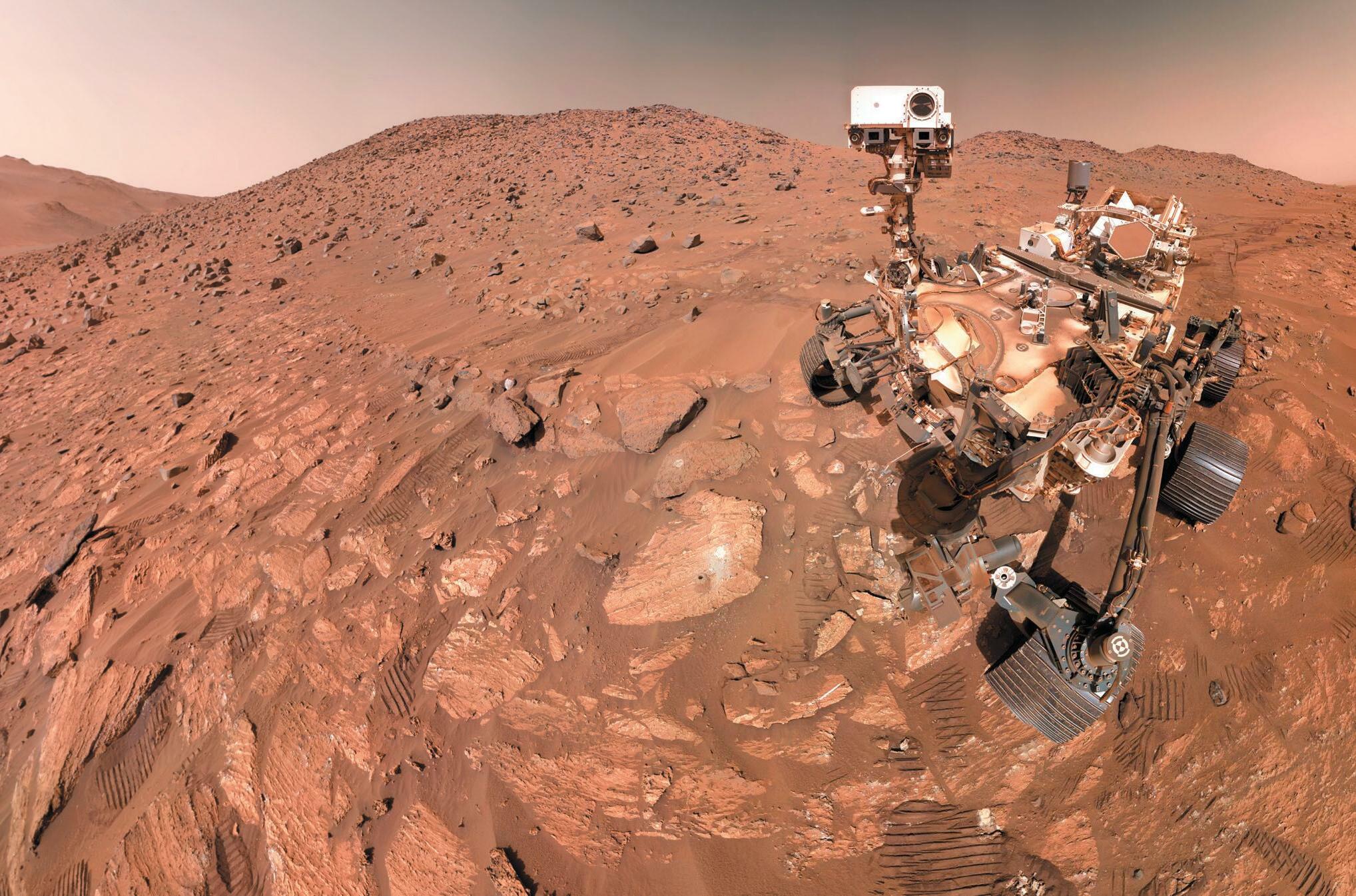
NASA's Perseverance Mars rover took this selfie on Mars in July 2024. The rover stands next to a rock named Cheyava Falls, which scientists say may hold clues about whether the planet ever hosted microbial life.
RIGHT NOW ONE OF THE MOST advanced planetary explorers ever built is scouring the surface of Mars. Supported by a team of hundreds of scientists back on Earth, the Perseverance rover has traveled nearly the distance of a marathon to answer some of the biggest questions about our neighboring world: What was the planet like eons ago? Was it ever habitable? Did it host life?
One rock visited by Perseverance, called Cheyava Falls, is speckled with iron-rich minerals that might be able to answer these questions, scientists announced in September. On Earth the presence of these minerals usually means microbes that used iron in the chemical reactions essential to their metabolism once lived there. Does the same hold true on Mars? A piece of Cheyava Falls is safely tucked inside the rover's storage cache. If it can be shipped to Earth, analysis with the full range of laboratory equipment here could tell us the answer.
But Cheyava Falls's ride to our planet might have fallen through. The Perseverance rover is the first phase of a multistep mission to bring bits of Mars to Earth known as Mars Sample Return (MSR), and the next step is dangling by a thread. The Trump administration has proposed canceling the return portion of the endeavor. The mission's fate, as of press time, rests with the U.S. Congress.
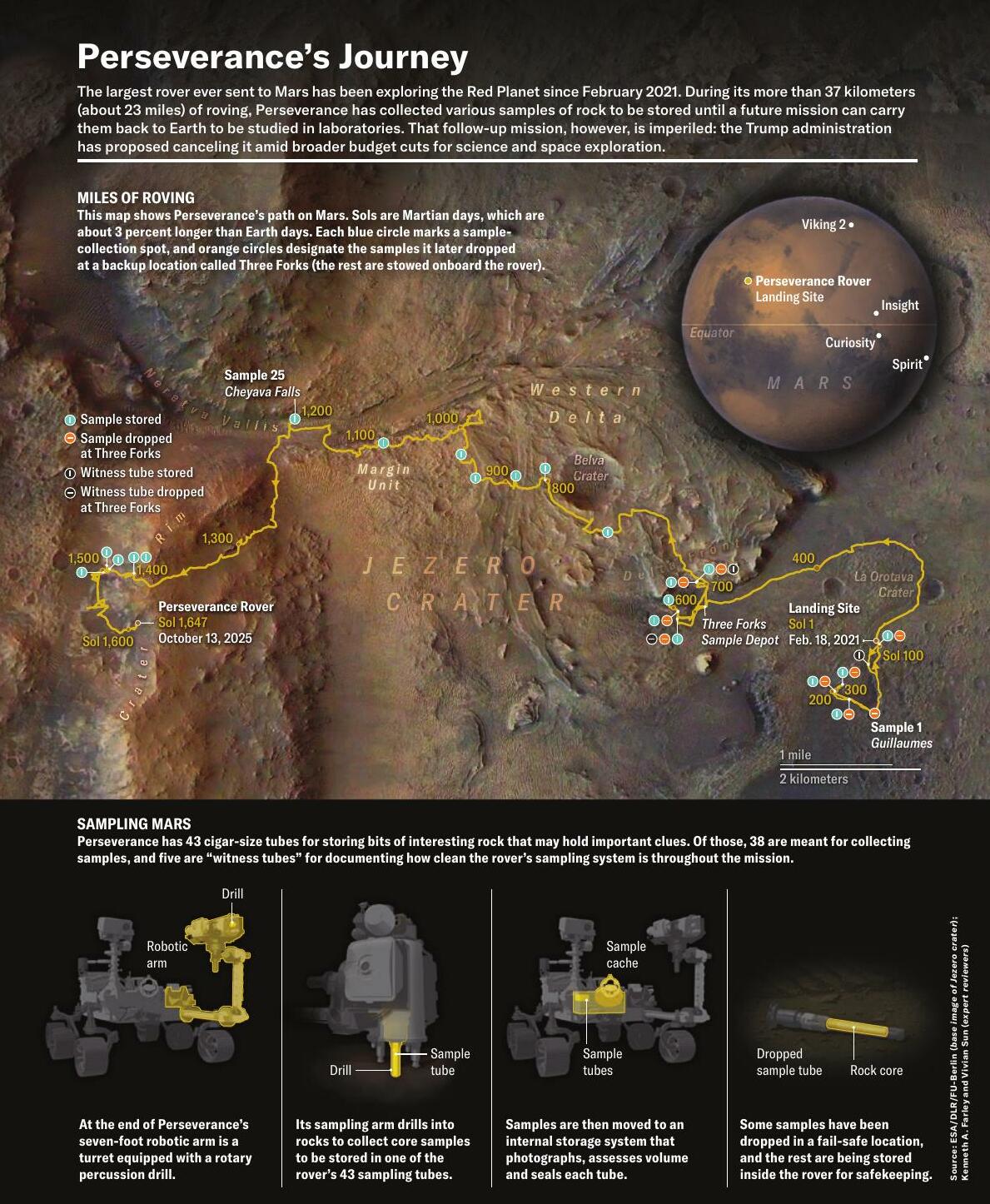 The situation has dismayed scientists who have longed to get their hands on Martian rocks. Now that Perseverance has scooped up prized samples, scientists are faced with the prospect of leaving them on Mars to languish.

Esta historia es de la edición December 2025 de Scientific American.
Suscríbete a Magzter GOLD para acceder a miles de historias premium seleccionadas y a más de 9000 revistas y periódicos.
¿Ya eres suscriptor? Iniciar sesión
MÁS HISTORIAS DE Scientific American

Scientific American
A Dose of Prevention
New alert systems and biomarkers are spotting drug- induced kidney damage early, before irreversible harm

6 mins
April 2026

Scientific American
Stopping an Autoimmune Attack
IgA nephropathy, a frequent cause of kidney failure, is underdiagnosed. New treatments mean it's more important now to find those who will benefit
8 mins
April 2026
Scientific American
War's New Fuel
The Pentagon needs nuclear power. A start-up plans to harvest it from radioactive waste the U.S. leaves sitting idle
4 mins
April 2026

Scientific American
In Search of the Most Distant Galaxy
Record-breaking objects can reveal truths about the cosmos
5 mins
April 2026

Scientific American
Catching Fear
Fuzzy, fast-breathing robots can make humans more afraid
1 mins
April 2026

Scientific American
Lighting the Way
The forest may be glowing- at least to deer
2 mins
April 2026

Scientific American
Are Ultraprocessed Foods Addictive?
The perils of highly processed snacks
7 mins
April 2026

Scientific American
Lost in the Music
Rhythmic tunes trigger synchronized eyeblinks and directional movement
2 mins
April 2026

Scientific American
Kidneys Get the Diabetes Treatment
Three different classes of diabetes medication are revolutionizing the prognosis of patients with chronic kidney disease
8 mins
April 2026

Scientific American
Rising to the Challenge of Pregnancy
Advances in care have allowed many more people with kidney disease to become parents. But pregnancy still carries risks
8 mins
April 2026
Listen
Translate
Change font size