Intentar ORO - Gratis
Waterborne monster
Down To Earth
|August 16, 2023
A lethal marine bacterium, Vibrio vulnificus, could become a major threat to coastal populations, with warmer oceans and high rainfall creating ideal condition for its proliferation

CHANCES ARE that Vibrio vulnificus cases are underreported in India," says Lekshmi N, a researcher at Translational Health Science and Technology Institute, Faridabad. While pursuing a PhD at Rajiv Gandhi Centre for Biotechnology in Kerala in 2019, Lekshmi and her colleagues heard of a 55-year-old man in Thiruvananthapuram district who had developed a painful swelling in his right leg. The swelling lead to gangrene, then septicaemia, and the patient died within 24 hours. Curious about the case, the researchers managed to get his blood sample from the hospital where he was treated and identified Vibrio vulnificus as the microorganism responsible for the death.
People can get V vulnificus by eating infected raw shellfish (which results in diarrhoea, vomiting, fever) or by exposing wounds to waters where the bacteria live (which can cause life-threatening flesh-eating disease that kills about 20 per cent of the infected in one or two days).
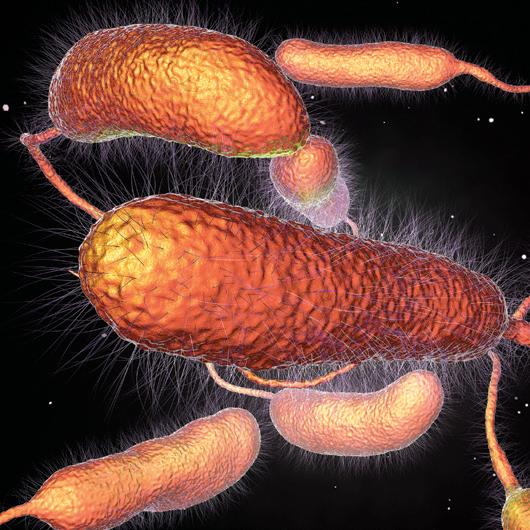
The Kerala case was India's only sixth case of V vulnificus since 2007, and seventh till date, as per data collected by Down To Earth from case reports in peer-reviewed journals. Experts, however, believe that the number could increase significantly in coming years.
These pathogens thrive in the tropics or subtropics, where sea or brackish water temperatures reach 20°C or higher (see 'Marine threat'). They also prefer waters with low salinity. As climate change increases the frequency and intensity of cyclones, rain and flooding, coastal communities across the world could face a higher risk of exposure to V vulnificus. High rainfall also reduces salt levels in the sea, which suits the bacteria.

Esta historia es de la edición August 16, 2023 de Down To Earth.
Suscríbete a Magzter GOLD para acceder a miles de historias premium seleccionadas y a más de 9000 revistas y periódicos.
¿Ya eres suscriptor? Iniciar sesión
MÁS HISTORIAS DE Down To Earth

Down To Earth
CONSERVED BY COMMUNITY
How a desire to make snow leopard tourism sustainable helped a small Ladakhi settlement became the region's first Community Conserved Area

4 mins
May 16, 2026

Down To Earth
An 'open' and 'shut' case of Al's risky trajectory
Elon Musk's lawsuit against Sam Altman, OpenAl, Microsoft is crucially about open-source versus closed technology for corporate profit
4 mins
May 16, 2026
Down To Earth
Burden of transition
Clean energy transition is once again shifting environmental, human costs to the Global South, finds a UN university investigation
4 mins
May 16, 2026
Down To Earth
One step closer
India attains criticality in fast breeder reactor technology, reaching the second stage of the country's three- stage nuclear programme towards energy security
4 mins
May 16, 2026

Down To Earth
ZESTY SEEDS
Coriander seeds are a traditional antidote to summer heat
3 mins
May 16, 2026

Down To Earth
Sahyadri gets a bird village
Residents of Maharashtra's Pisavare village have embarked on a mission to protect birds in their vicinity through simple practices such as documenting species and building nests
2 mins
May 16, 2026

Down To Earth
CONFLICT IN THE BACKYARD
Across India, farmers are abandoning their fields as conflict with wild and stray animals intensifies. Conservation policy must move beyond protection alone to restore a workable coexistence between people and animals.
18 mins
May 16, 2026

Down To Earth
Capital punishment
Adequate compensation and proper rehabilitation remain a mirage for many displaced by the construction of Chhattisgarh's new capital, Nava Raipur, even two decades after the project began
3 mins
May 16, 2026
Down To Earth
Migrant workers are assets
MIGRATION HAS turned into a potent tool of political warfare across the world. For over a decade, domestic electoral politics across regions, from Europe and North America to Asia and Africa, have fuelled anti-immigration sentiments. This is also increasingly fuelling anti-immigrant vigilantism, as seen widely across Europe in 2015-16, coinciding with the refugee crisis.
2 mins
May 16, 2026

Down To Earth
Petri dish to plate
Synthetic meat production has seen a rise globally, even as environmental benefits of growing foods in laboratory remain debatable
10 mins
May 16, 2026
Translate
Change font size