Prøve GULL - Gratis
Waterborne monster
Down To Earth
|August 16, 2023
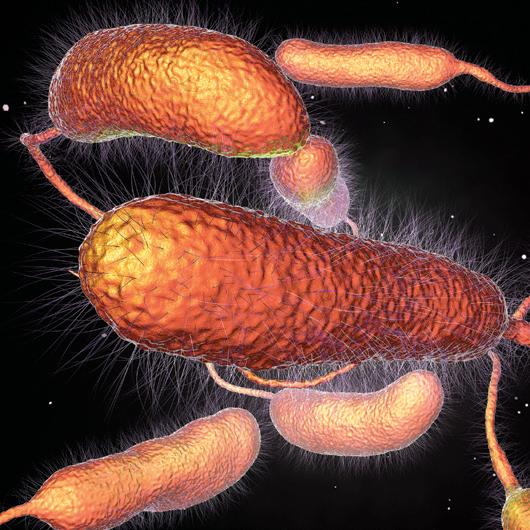
A lethal marine bacterium, Vibrio vulnificus, could become a major threat to coastal populations, with warmer oceans and high rainfall creating ideal condition for its proliferation

CHANCES ARE that Vibrio vulnificus cases are underreported in India," says Lekshmi N, a researcher at Translational Health Science and Technology Institute, Faridabad. While pursuing a PhD at Rajiv Gandhi Centre for Biotechnology in Kerala in 2019, Lekshmi and her colleagues heard of a 55-year-old man in Thiruvananthapuram district who had developed a painful swelling in his right leg. The swelling lead to gangrene, then septicaemia, and the patient died within 24 hours. Curious about the case, the researchers managed to get his blood sample from the hospital where he was treated and identified Vibrio vulnificus as the microorganism responsible for the death.
People can get V vulnificus by eating infected raw shellfish (which results in diarrhoea, vomiting, fever) or by exposing wounds to waters where the bacteria live (which can cause life-threatening flesh-eating disease that kills about 20 per cent of the infected in one or two days).
The Kerala case was India's only sixth case of V vulnificus since 2007, and seventh till date, as per data collected by Down To Earth from case reports in peer-reviewed journals. Experts, however, believe that the number could increase significantly in coming years.
These pathogens thrive in the tropics or subtropics, where sea or brackish water temperatures reach 20°C or higher (see 'Marine threat'). They also prefer waters with low salinity. As climate change increases the frequency and intensity of cyclones, rain and flooding, coastal communities across the world could face a higher risk of exposure to V vulnificus. High rainfall also reduces salt levels in the sea, which suits the bacteria.

Denne historien er fra August 16, 2023-utgaven av Down To Earth.
Abonner på Magzter GOLD for å få tilgang til tusenvis av kuraterte premiumhistorier og over 9000 magasiner og aviser.
Allerede abonnent? Logg på
FLERE HISTORIER FRA Down To Earth
Down To Earth
Popular distrust
THE WORLD seems to be going through a period of stasis despite facing an unfathomable polycrisis.

2 mins
February 01, 2026
Down To Earth
CONSERVE OR PERISH
Periyar Tiger Reserve has rewritten Indian conservation by turning poachers into protectors and conflict into coexistence
5 mins
February 01, 2026

Down To Earth
'Rivers need to run free'
From Tibet to West Bengal, the Brahmaputra is the pulse of communities and ecosystems along its course. But what are the risks the river faces through human interventions, particularly dams, discusses journalist, author and filmmaker SANJOY HAZARIKA in his new book, River Traveller.
4 mins
February 01, 2026

Down To Earth
India is facing up to its innovation lag
There are signs now that India is acknowledging the superior strides made by China in a frontier technology like Al
4 mins
February 01, 2026

Down To Earth
Competing concerns
What are the repercussions of the EU-Mercosur pact that have made European farmers protest against the free trade agreement?
4 mins
February 01, 2026

Down To Earth
From fryer to flight
Sustainable fuel made from used cooking oil can play a pivotal role in helping India achieve its aviation emission reduction goals. Measures to collect this oil must be revamped
4 mins
February 01, 2026

Down To Earth
ACCESS OPEN
An amendment to India's nodal forest conservation law opens up forests across India to commercial exploitation by the paper industry
6 mins
February 01, 2026
Down To Earth
DRINK FROM TAP CAN BE A REALITY
As cities across India struggle to supply safe piped water, Odisha offers a success story
2 mins
February 01, 2026

Down To Earth
GREAT DRYING
The Earth is hotter than at any point in the past 100,000 years, with 2023-25 becoming the warmest three-year period on record and also breaching the 1.5°C threshold for the first time. One fallout is dwindling freshwater.
22 mins
February 01, 2026

Down To Earth
Green redemption
Restoration of grasslands of Kerala's Pampadum Shola National Park, once dominated by invasive Australian wattles, see a return of streams and native species
1 mins
February 01, 2026
Translate
Change font size