Intentar ORO - Gratis
No more a rarity
Down To Earth
|February 16, 2025
What has caused widespread outbreak of the rare Guillain-Barré syndrome cases from seven states of the country?
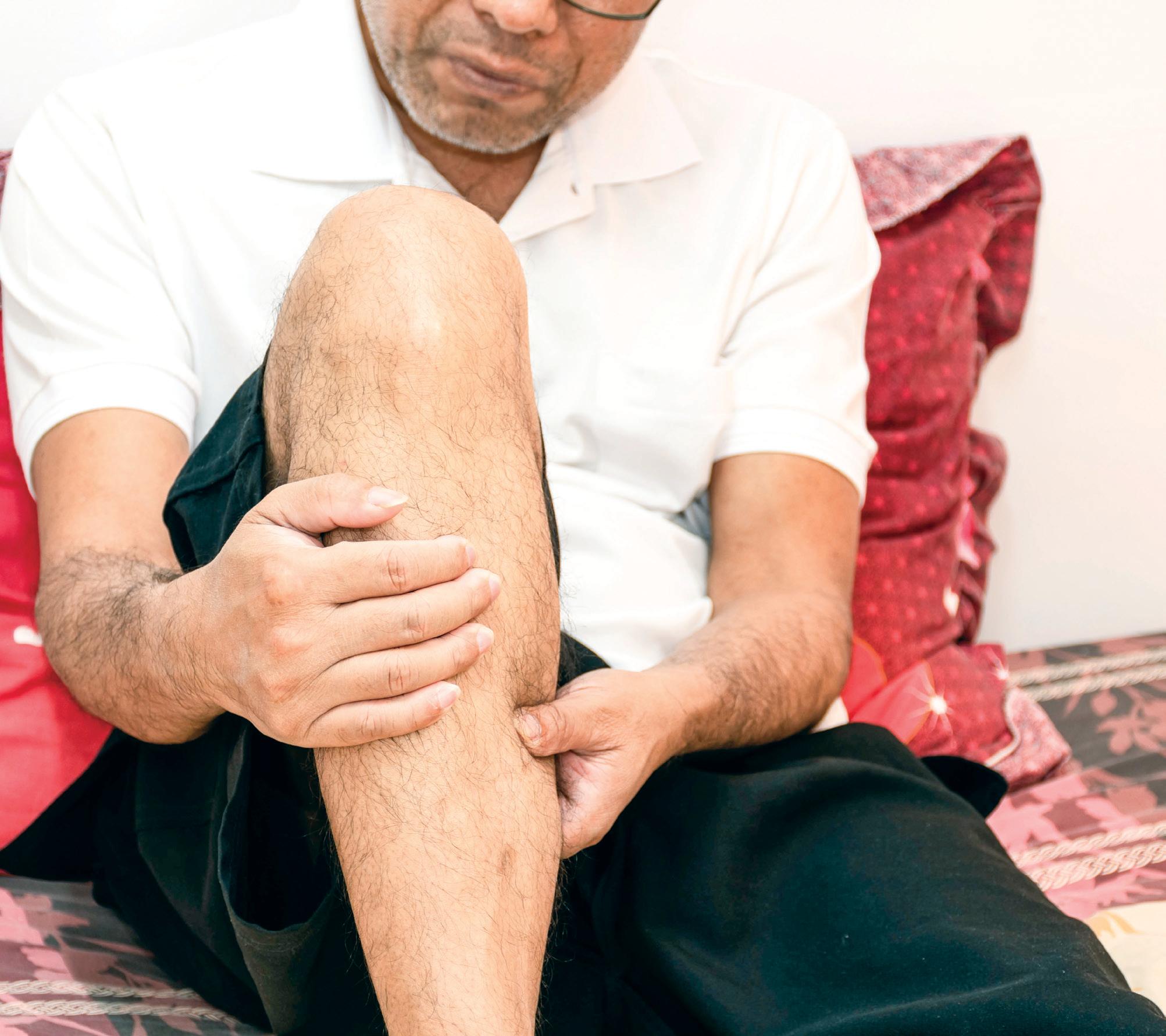
ON JANUARY 14, six-year-old Vivan (name changed) of Pimpri Chinchwad, a satellite town of Pune district in Maharashtra, struggled to get out of bed and use the toilet. Later while playing, he fell and was unable to get back up. A few days earlier, when Vivan was refusing to hold a pencil and write, his mother mistook this act and thought that her son was doing it just to avoid studying. Little did she know that Vivan was experiencing limb paralysis linked to Guillain-Barré syndrome (GBS) and would not only require hospitalisation but intensive care with ventilator support. Since then, his condition has marginally improved, and he can now talk and hold a glass, say his mother.
GBS is a rare neurological condition (affecting one in 100,000 people) in which the immune system attacks the nerves, leading to weakness in the upper and lower limbs, neck, face and eyes. From the first week of January to February 9, 2025, India has reported over 280 confirmed GBS cases and 13 deaths (suspected or confirmed) from seven states (see ‘Simultaneous outbreak’). Pune was the first and the worst hit, with 155 confirmed cases reported during the period, as per Maharashtra health department.
GBS is triggered by certain infections, including Campylobacter jejuni, Haemophilus influenza, Mycoplasma pneumoniae, Epstein–Barr virus, cytomegalovirus (CMV), hepatitis E and influenza virus. The infection produces an immune response which damages the nerves fibres causing weakness and loss of sensation. In milder disease, the damage only affects the sheaths of the nerve fibres (like the coating round an electric wire). This blocks the transmission of nerve impulses, but the patients can recover completely in a few weeks. In severe form of the disease, the immune response damages the conducting cores of the nerve fibres (like the electric wires themselves). Such patients take long to get better and the weakness may be permanent.


Esta historia es de la edición February 16, 2025 de Down To Earth.
Suscríbete a Magzter GOLD para acceder a miles de historias premium seleccionadas y a más de 9000 revistas y periódicos.
¿Ya eres suscriptor? Iniciar sesión
MÁS HISTORIAS DE Down To Earth
Down To Earth
Bitter pill
THE WEB SERIES PHARMA EXPOSES HARSH TRUTHS OF THE PHARMACEUTICAL INDUSTRY, WHERE PROFIT OFTEN BECOMES MORE IMPORTANT THAN HUMAN HEALTH

3 mins
January 16, 2026
Down To Earth
CHAOS IN-DEFINITION
The Aravallis are perhaps India's most litigated hill range. More than 4,000 court cases have failed to arrest their destruction. The latest dispute concerns a narrow legal definition of this geological antiquity, much of which has been obliterated by mining and urban sprawl. While the Supreme Court has stayed its own judgement accepting that definition, it must see the underlying reality and help reconcile development and national security with conservation.
19 mins
January 16, 2026
Down To Earth
BITS: INDIA
Indore has recorded 16 deaths and more than 1,600 hospitalisations between December 24 and January 6.
1 min
January 16, 2026
Down To Earth
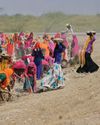
GUARANTEE EXPIRES
India's rural employment guarantee law is replaced with a centrally controlled, budget-capped scheme. Is this an attack on the right to work?
3 mins
January 16, 2026
Down To Earth
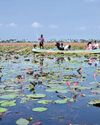
BLOOM OR BANE
Surge of vibrant pink water lilies in Kuttanad, Kerala, provides socio-economic benefits, but the plant's ecological impacts must be understood
4 mins
January 16, 2026
Down To Earth
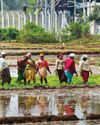
INVISIBLE EMPLOYER
Field and academic evidence shows sharp falls in casual agricultural employment at places where groundwater access declines
3 mins
January 16, 2026
Down To Earth
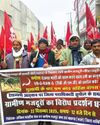
Schemed for erasure
Does the VB-G RAMG Act address structural weaknesses long observed in MGNREGA's implementation?
10 mins
January 16, 2026
Down To Earth
School of change
An open school in Panagar, Madhya Pradesh, aims to protect children of tribal settlements from falling into the trap of addiction
2 mins
January 16, 2026

Down To Earth
PULSE OF RESILIENCE
As a climate-ready crop, cowpea shows potential for widespread use in India
3 mins
January 16, 2026
Down To Earth
BITS GLOBAL
Britain recorded its hottest and sunniest year ever in 2025, the country's meteorological office said on January 2.
1 min
January 16, 2026
Listen
Translate
Change font size