Prøve GULL - Gratis
No more a rarity
Down To Earth
|February 16, 2025
What has caused widespread outbreak of the rare Guillain-Barré syndrome cases from seven states of the country?
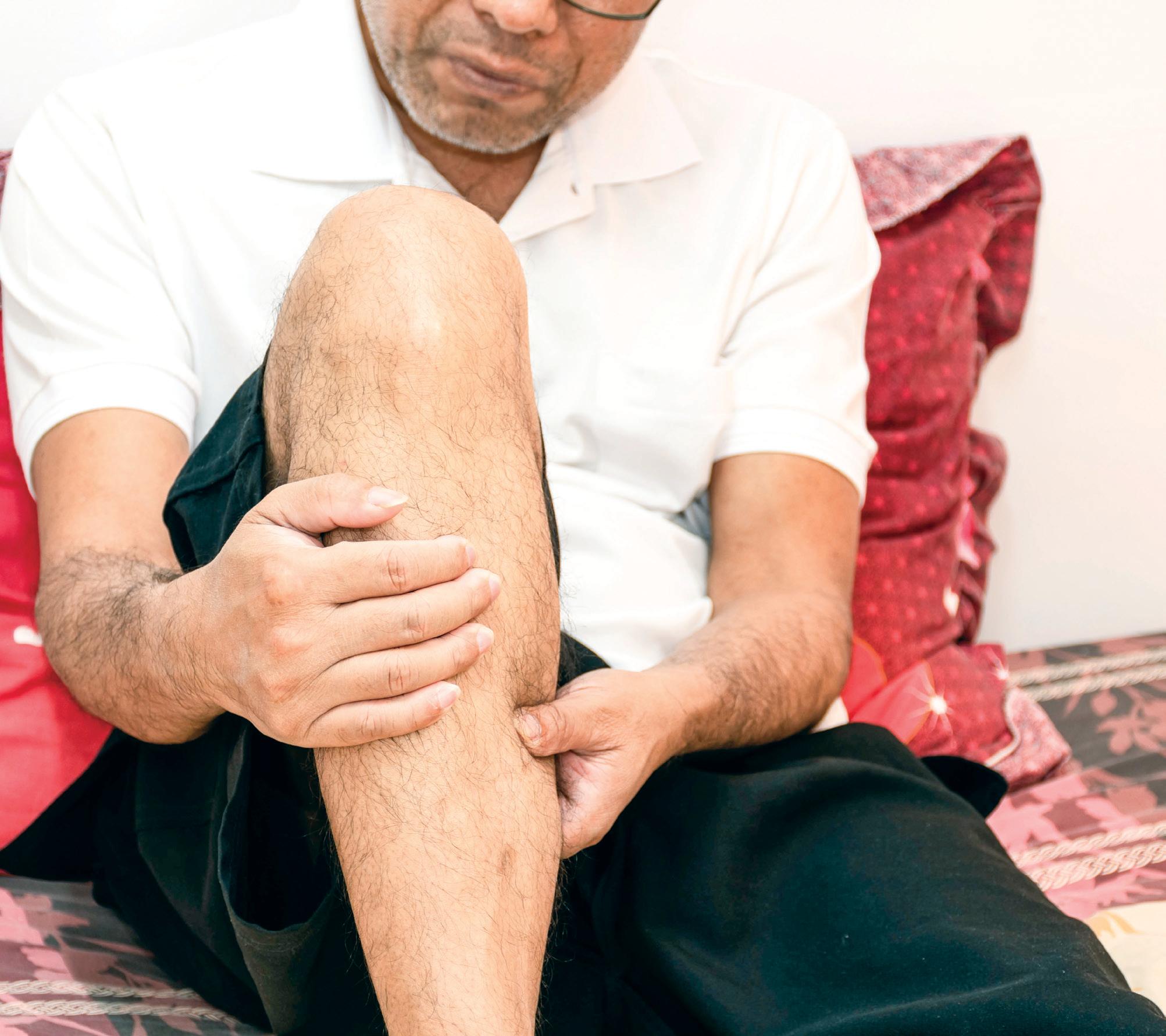
ON JANUARY 14, six-year-old Vivan (name changed) of Pimpri Chinchwad, a satellite town of Pune district in Maharashtra, struggled to get out of bed and use the toilet. Later while playing, he fell and was unable to get back up. A few days earlier, when Vivan was refusing to hold a pencil and write, his mother mistook this act and thought that her son was doing it just to avoid studying. Little did she know that Vivan was experiencing limb paralysis linked to Guillain-Barré syndrome (GBS) and would not only require hospitalisation but intensive care with ventilator support. Since then, his condition has marginally improved, and he can now talk and hold a glass, say his mother.
GBS is a rare neurological condition (affecting one in 100,000 people) in which the immune system attacks the nerves, leading to weakness in the upper and lower limbs, neck, face and eyes. From the first week of January to February 9, 2025, India has reported over 280 confirmed GBS cases and 13 deaths (suspected or confirmed) from seven states (see ‘Simultaneous outbreak’). Pune was the first and the worst hit, with 155 confirmed cases reported during the period, as per Maharashtra health department.
GBS is triggered by certain infections, including Campylobacter jejuni, Haemophilus influenza, Mycoplasma pneumoniae, Epstein–Barr virus, cytomegalovirus (CMV), hepatitis E and influenza virus. The infection produces an immune response which damages the nerves fibres causing weakness and loss of sensation. In milder disease, the damage only affects the sheaths of the nerve fibres (like the coating round an electric wire). This blocks the transmission of nerve impulses, but the patients can recover completely in a few weeks. In severe form of the disease, the immune response damages the conducting cores of the nerve fibres (like the electric wires themselves). Such patients take long to get better and the weakness may be permanent.


Denne historien er fra February 16, 2025-utgaven av Down To Earth.
Abonner på Magzter GOLD for å få tilgang til tusenvis av kuraterte premiumhistorier og over 9000 magasiner og aviser.
Allerede abonnent? Logg på
FLERE HISTORIER FRA Down To Earth

Down To Earth
THINK TWICE BEFORE FELLING SAL TREES
Many trees considered to be affected by sal borer in the 1990s are still alive today

1 mins
February 16, 2026

Down To Earth
EDGE OF SURVIVAL
Caste divides deny marginalised communities land, resources and essential aid, leaving them more vulnerable to climate disasters
6 mins
February 16, 2026

Down To Earth
A WISH LIST?
Union Budget for 2026-27 conveys the impression of a roll-call of intentions and ambitious proposals, with little detail on their formulation
6 mins
February 16, 2026
Down To Earth
Break down the gender wall
THE RULING National Democratic Alliance (NDA) government has been heavily invested in the goal to make India a developed economy by 2047.
2 mins
February 16, 2026

Down To Earth
MENSTRUAL HEALTH, NOW A FUNDAMENTAL RIGHT
In a landmark judgement, the Supreme Court has recognised menstrual health and hygiene as a fundamental right under Article 21 of the Constitution of India, which guarantees the right to life and dignity.
8 mins
February 16, 2026

Down To Earth
Of devolution and new disasters
The 16th Finance Commission pushes for changes in view of new fiscal and climatic conditions
11 mins
February 16, 2026
Down To Earth
Rising risks of plastics
NEGATIVE IMPACTS on human health due to emissions linked to the plastic lifecycle could double by 2040, according to a study published in The Lancet Planetary Health in January.
1 min
February 16, 2026

Down To Earth
GAP BETWEEN EPIDEMICS NARROWING
A watershed-based and landscape-level approach is needed to address forest degradation
2 mins
February 16, 2026
Down To Earth
WAITING TO STRIKE
Sal heartwood borer is considered the biggest threat to forestry in India, especially to the sal tree, where it lives and breeds.
11 mins
February 16, 2026

Down To Earth
A SPRING DELIGHT
Mustard flowers are not meant only for the eyes. Invite them to your plate once in a while
3 mins
February 16, 2026
Listen
Translate
Change font size