Intentar ORO - Gratis
A NEW BUZZ
Down To Earth
|June 01, 2025
Like many countries, India is in the middle of a pollinator crisis. In several states, farmers now rent honeybees to secure a decent harvest. In areas where agriculture is nearly impossible due to shortage of natural pollinators, people are manually carrying out nature's most critical operation. This artificial substitution of pollinators raises new concerns. A report by
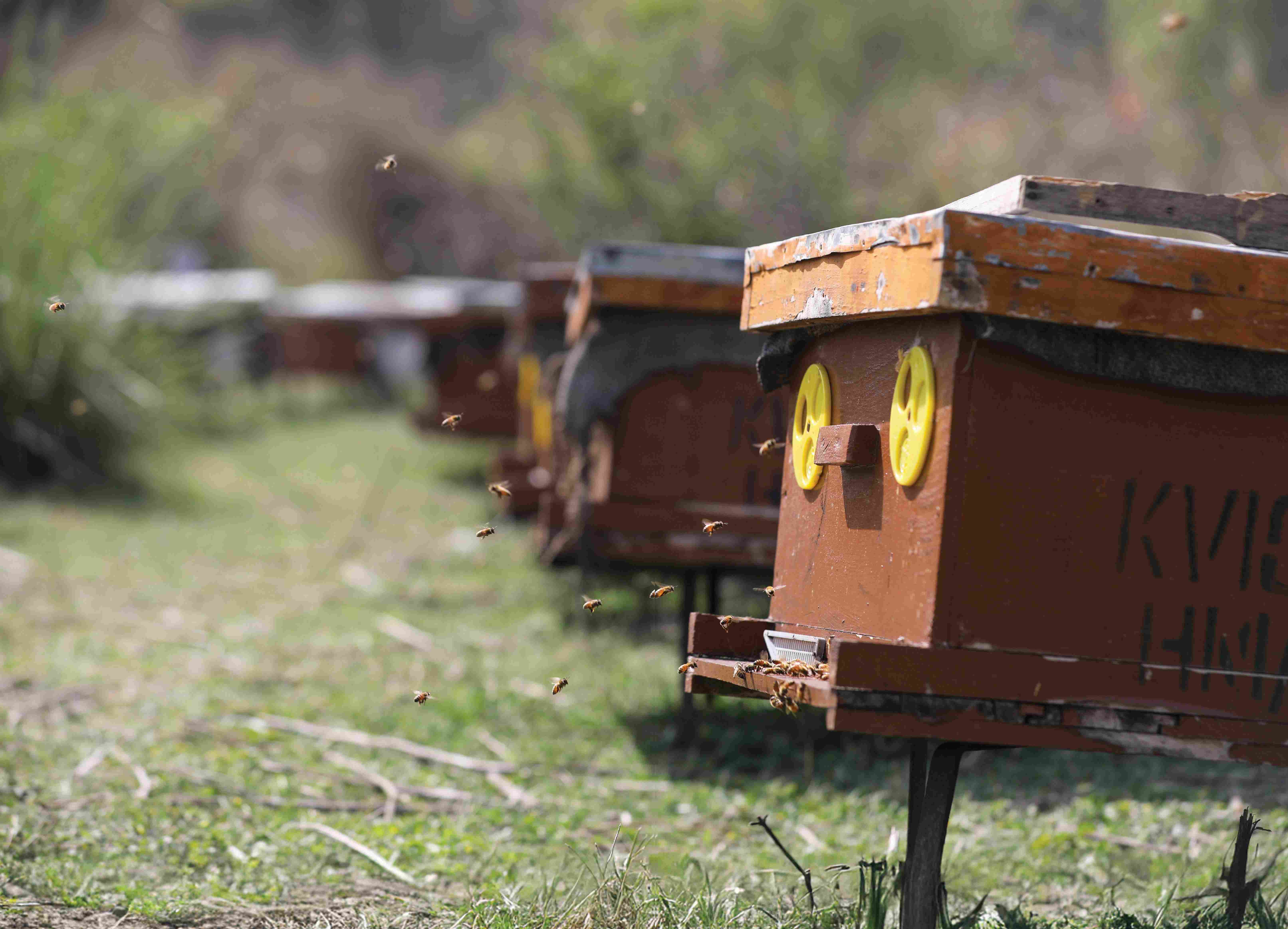
A BONE-CHILLING COLD has settled over the Himalayan district of Mandi, even as March is drawing to a close. But it does little to deter Gopal Singh, now nearing 70, from venturing outside. Accompanied by his grandson, Singh drives towards the biggest market in Janjehli valley in the stillness of the wee hours. Waiting for him at the bazaar is Bunty Chauhan with almost 50 boxes, each measuring half a metre on each side. Singh quickly inspects the boxes and asks Chauhan to place two of them in his car's boot space. “The supply is limited and I am running out of time,” Singh tells Down To Earth (DTE), as he drives off to his apple orchard, located some five kilometres away in his village Shihal. “These boxes contain 10,000 to 20,000 honeybees, which are in demand by apple growers in Janjehli and other parts of Himachal Pradesh,” says Chauhan, as he hands over the remaining boxes to those queued up at his shop that originally is a hardware store.
Perched at an altitude of 2,150 metres, Janjehli valley is known for its tranquil landscape and sprawling apple orchards. By the end of March, flower buds in most orchards in the valley have attained a delicate pink hue and are nearing blooming stage. “The mature ones will bloom within a week and will need to be pollinated over the next three to five days before the petals start dropping,” says Singh, who has placed the hive boxes at strategic locations in his orchard. Just till four to five years ago, he recalls, wild bees and butterflies used to buzz around the orchards in the valley. But then suddenly their numbers declined. Now, it is difficult to spot even a single pollinating insect around the trees. “We will lose an entire year's harvest if we fail to ensure pollination during this crucial flowering stage,” says Singh.
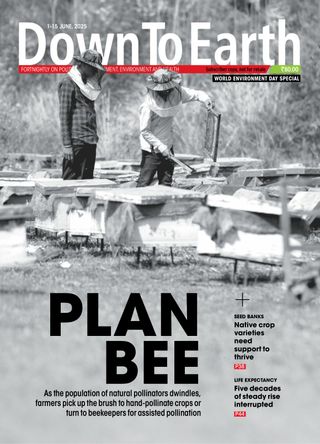

Esta historia es de la edición June 01, 2025 de Down To Earth.
Suscríbete a Magzter GOLD para acceder a miles de historias premium seleccionadas y a más de 9000 revistas y periódicos.
¿Ya eres suscriptor? Iniciar sesión
MÁS HISTORIAS DE Down To Earth

Down To Earth
BEYOND COLLATERAL DAMAGE
Recent geopolitical conflicts are urging a reconsideration of what constitutes environmental harm in war and the limits of existing legal frameworks

3 mins
April 01, 2026

Down To Earth
Masterstroke
Residents of a small Kerala town reject an inadequate state-led development blueprint and create their own master plan that prioritises protection of historic water systems and urban commons
4 mins
April 01, 2026

Down To Earth
Rethinking E20
It is pertinent to explore potential of ethanol as high-value industrial feedstock
4 mins
April 01, 2026
Down To Earth
Food in the age of climate change
WHEN WE eat, we contribute to climate change. But food is also about livelihoods, about nutrition and about nature.
3 mins
April 01, 2026

Down To Earth
FADING WINTER
India's winters are warming, becoming shorter, shifting and spilling beyond their traditional bounds. The consequences are already evident in meltwater availability, forest-fire intensity and changes in flowering cycles and insect behaviour.
20 mins
April 01, 2026

Down To Earth
War on Iran strikes India's pharmaceuticals sector
Shortages of critical raw materials and rising input costs for the drug industry will have global consequences
4 mins
April 01, 2026

Down To Earth
POWER IN AN AGE OF INSECURITY
Energy transition is no longer solely about emission reduction but also about energy security
3 mins
April 01, 2026
Down To Earth
Re-discovery of fuelwood
THE WEST Asia conflict has made visible a multi-billion dollar energy market in India.
2 mins
April 01, 2026

Down To Earth
A CASE THAT RESHAPED INDIA'S ENVIRONMENT
The case of MC Mehta v Union of India stands as proof that a proactive judiciary can accelerate action even when the executive drags its feet
4 mins
April 01, 2026
Down To Earth
FOREVER DEPENDENT
India depends on global fertiliser supply chains for 70 per cent of its needs, leaving its food security exposed to geopolitical disruptions
6 mins
April 01, 2026
Listen
Translate
Change font size