
Gå ubegrenset med Magzter GOLD
Få ubegrenset tilgang til over 9000 magasiner, aviser og premiumhistorier for bare
A NEW BUZZ
Down To Earth
|June 01, 2025
Like many countries, India is in the middle of a pollinator crisis. In several states, farmers now rent honeybees to secure a decent harvest. In areas where agriculture is nearly impossible due to shortage of natural pollinators, people are manually carrying out nature's most critical operation. This artificial substitution of pollinators raises new concerns. A report by
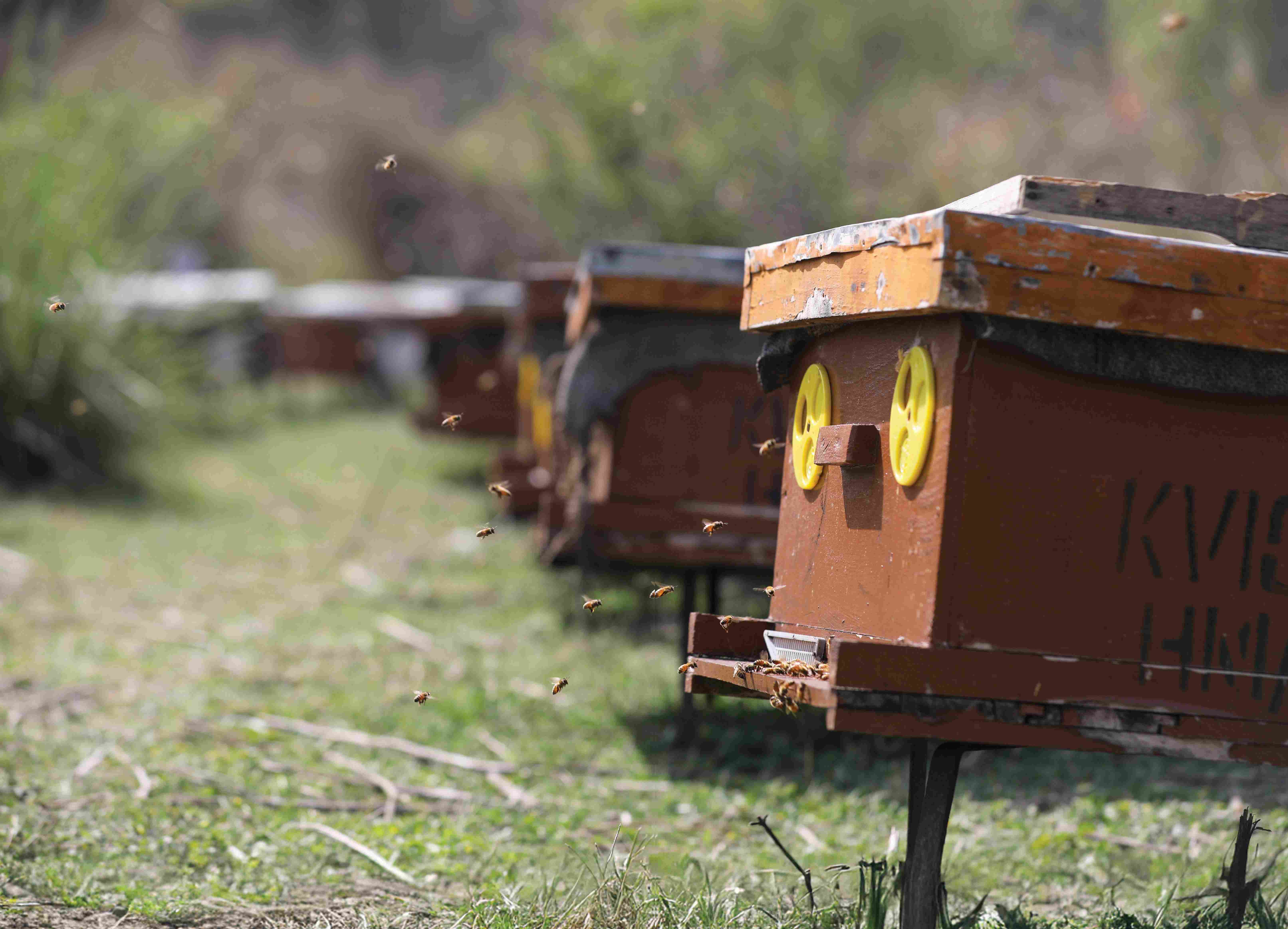
A BONE-CHILLING COLD has settled over the Himalayan district of Mandi, even as March is drawing to a close. But it does little to deter Gopal Singh, now nearing 70, from venturing outside. Accompanied by his grandson, Singh drives towards the biggest market in Janjehli valley in the stillness of the wee hours. Waiting for him at the bazaar is Bunty Chauhan with almost 50 boxes, each measuring half a metre on each side. Singh quickly inspects the boxes and asks Chauhan to place two of them in his car's boot space. “The supply is limited and I am running out of time,” Singh tells Down To Earth (DTE), as he drives off to his apple orchard, located some five kilometres away in his village Shihal. “These boxes contain 10,000 to 20,000 honeybees, which are in demand by apple growers in Janjehli and other parts of Himachal Pradesh,” says Chauhan, as he hands over the remaining boxes to those queued up at his shop that originally is a hardware store.
Perched at an altitude of 2,150 metres, Janjehli valley is known for its tranquil landscape and sprawling apple orchards. By the end of March, flower buds in most orchards in the valley have attained a delicate pink hue and are nearing blooming stage. “The mature ones will bloom within a week and will need to be pollinated over the next three to five days before the petals start dropping,” says Singh, who has placed the hive boxes at strategic locations in his orchard. Just till four to five years ago, he recalls, wild bees and butterflies used to buzz around the orchards in the valley. But then suddenly their numbers declined. Now, it is difficult to spot even a single pollinating insect around the trees. “We will lose an entire year's harvest if we fail to ensure pollination during this crucial flowering stage,” says Singh.

Denne historien er fra June 01, 2025-utgaven av Down To Earth.
Abonner på Magzter GOLD for å få tilgang til tusenvis av kuraterte premiumhistorier og over 9000 magasiner og aviser.
Allerede abonnent? Logg på
FLERE HISTORIER FRA Down To Earth
Down To Earth
KING OF BIRDS
Revered for centuries, western tragopan now needs protection as its forests shrink, human pressures mount

3 mins
December 16, 2025

Down To Earth
WHISKERS ALL AQUIVER
Climate change threatens creatures that have weathered extreme environments for thousands of years
2 mins
December 16, 2025

Down To Earth
GOLDEN SPIRIT
Survival of the shy primate is closely tied to the health of Western Ghats
3 mins
December 16, 2025

Down To Earth
RINGED EYES IN THE CANOPY
Rapid habitat destruction forces arboreal langur to alter habits
2 mins
December 16, 2025

Down To Earth
HANGING BY THE CLIFF
The Himalaya's rarest wild goat is on the brink of local extinction
2 mins
December 16, 2025

Down To Earth
ANGEL OF THE BEAS
Conservation reserves, citizen science, and habitat protection give the Indus River dolphin a fighting chance in India
2 mins
December 16, 2025

Down To Earth
UNDER MOONLIT SCRUB
Survival of this hidden guardian tells us whether our scrublands still breathe
2 mins
December 16, 2025

Down To Earth
SYMBOL OF SILENT VALLEY
Lion-tailed macaque remains vulnerable despite past victories
2 mins
December 16, 2025

Down To Earth
THE APE IN OUR STORIES
India's only non-human ape species is a cultural icon threatened by forest fragmentation
2 mins
December 16, 2025
Down To Earth
SENTINEL OF THE HIGH COLD DESERT
The bird's evocative call may not continue to roll across the cold desert valley for long
3 mins
December 16, 2025
Listen
Translate
Change font size