Intentar ORO - Gratis
MUSIC FOR A DISTRACTED GENERATION
BBC Science Focus
|November 2024
The number of things competing for our attention is often overwhelming. Can dreamy soundscapes created with neuroscience help our bewildered brains to concentrate?

You don't need a scientific paper to tell you that music can change your mood or behaviour. We all know, instinctively, that it can. Your foot taps of its own accord at a gig. A high-energy playlist gets you moving at the gym. Tears flow when an old heartbreaker catches you unprepared.
So it's not a huge leap of the imagination to think that the right music can also help our beleaguered brains perform better. Focus and productivity playlists attract millions of streams on music platforms. In labs, researchers are probing how sound can affect our ability to concentrate.
And a small number of companies are creating soundscapes and playlists, designed with insights from neuroscientific research to lull us into a trancelike state of hyperfocus and productivity. Background music with brains.
It sounds great to me, a man who has a mind that likes to wander and a to-do list that's going nowhere. I like to think it's evolution's fault that I'm so easily distracted. Almost anything can seduce my focus from the task at hand: my inbox, my appetite, postal deliveries and passersby. Never mind the beguiling buzz of notifications on my phone, which I've had to put in a drawer so I can concentrate on writing this article. It's no easier for you reading it. Chances are, your attention will be interrupted, on average, five times. More if you're a multitasker or somebody who's easily distracted.
The human brain evolved for vigilance. Recent neuroscience suggests our grey matter performs a kind of unconscious sweep for new information up to four times a second. It's a mechanism that has kept us safe and sociable for millennia, but evolution didn't see the internet coming, or the digital deluge that has arrived with it.
I'm sure we agree: it's too much information. We're overstimulated. Permanently distracted. Research from King's College London suggests that the average Brit checks their phone 80 times a day.
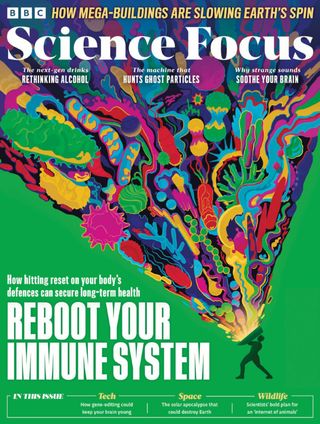

Esta historia es de la edición November 2024 de BBC Science Focus.
Suscríbete a Magzter GOLD para acceder a miles de historias premium seleccionadas y a más de 9000 revistas y periódicos.
¿Ya eres suscriptor? Iniciar sesión
MÁS HISTORIAS DE BBC Science Focus

BBC Science Focus
DOES MY DOG HAVE ADHD?
Officially, Attention-Deficit Hyperactivity Disorder (ADHD) is a human condition. People are diagnosed with it. Dogs are not. Yet many of its core features, including hyperactivity, impulsivity and distractibility, can be found in dogs.

1 min
March 2026

BBC Science Focus
DOES MY BRAIN LIVE A LITTLE IN THE PAST?
Yes, your brain does live a little in the past. It can't help it. The information it receives via your senses is always a little out of date. Whether it's light entering the retinas in your eyes, or sounds vibrating the hairs in your ears, it not only takes time for the data to arrive, but your brain then has to process it.
2 mins
March 2026

BBC Science Focus
ASTRONOMY FOR BEGINNERS
RETURN OF THE EVENING STAR (VENUS)
1 mins
March 2026

BBC Science Focus
CAN YOU STOP YOUR SENSE OF TASTE DULLING AS YOU AGE?
Sometimes I hear people say that food just doesn't taste the same as they get older. It's tempting to blame this on age, but there are other factors at play, too.
1 mins
March 2026

BBC Science Focus
MICROBIOMES OF THE SUPERAGERS
BY STUDYING THE INCREASING NUMBER OF PEOPLE WHO ARE LIVING BEYOND THEIR 100TH BIRTHDAYS, SCIENTISTS ARE DISCOVERING THAT THE SECRET TO REACHING A RIPE OLD AGE IN RUDE HEALTH MIGHT LIE IN OUR GUTS
8 mins
March 2026

BBC Science Focus
HOW BIG WERE MEDIEVAL WAR HORSES?
You might picture knights charging into battle on towering steeds, but medieval horses were typically no bigger than modern-day ponies.
1 min
March 2026
BBC Science Focus
FORCES OF HABIT
Could new research on setting up healthy habits resuscitate those stuttering New Year resolutions?
3 mins
March 2026

BBC Science Focus
5 DANGERS HIDING IN YOUR PROCESSED FOOD
We all know that ultra-processed foods are bad for us, but what ingredients should we particularly try to avoid? And what are they doing to our bodies?
9 mins
March 2026
BBC Science Focus
Mosquitoes are becoming thirstier for human blood
Habitat loss may be pushing mosquitoes towards human hosts with deadly consequences
1 mins
March 2026

BBC Science Focus
HOW CAN I GET OVER MY EX?
Relationship breakups can be brutal, just look at the popularity of songs like 'Someone Like You' by Adele, or all the covers of 'Cry Me a River' by Julie London.
1 mins
March 2026
Listen
Translate
Change font size