
Vuélvete ilimitado con Magzter GOLD
Obtenga acceso ilimitado a más de 9000 revistas, periódicos e historias Premium por solo
Intentar ORO - Gratis
The Canonization of James Joyce
The Atlantic
|July 2025
Richard Ellmann's biography made the novelist a hero to generations of readers and scholars.
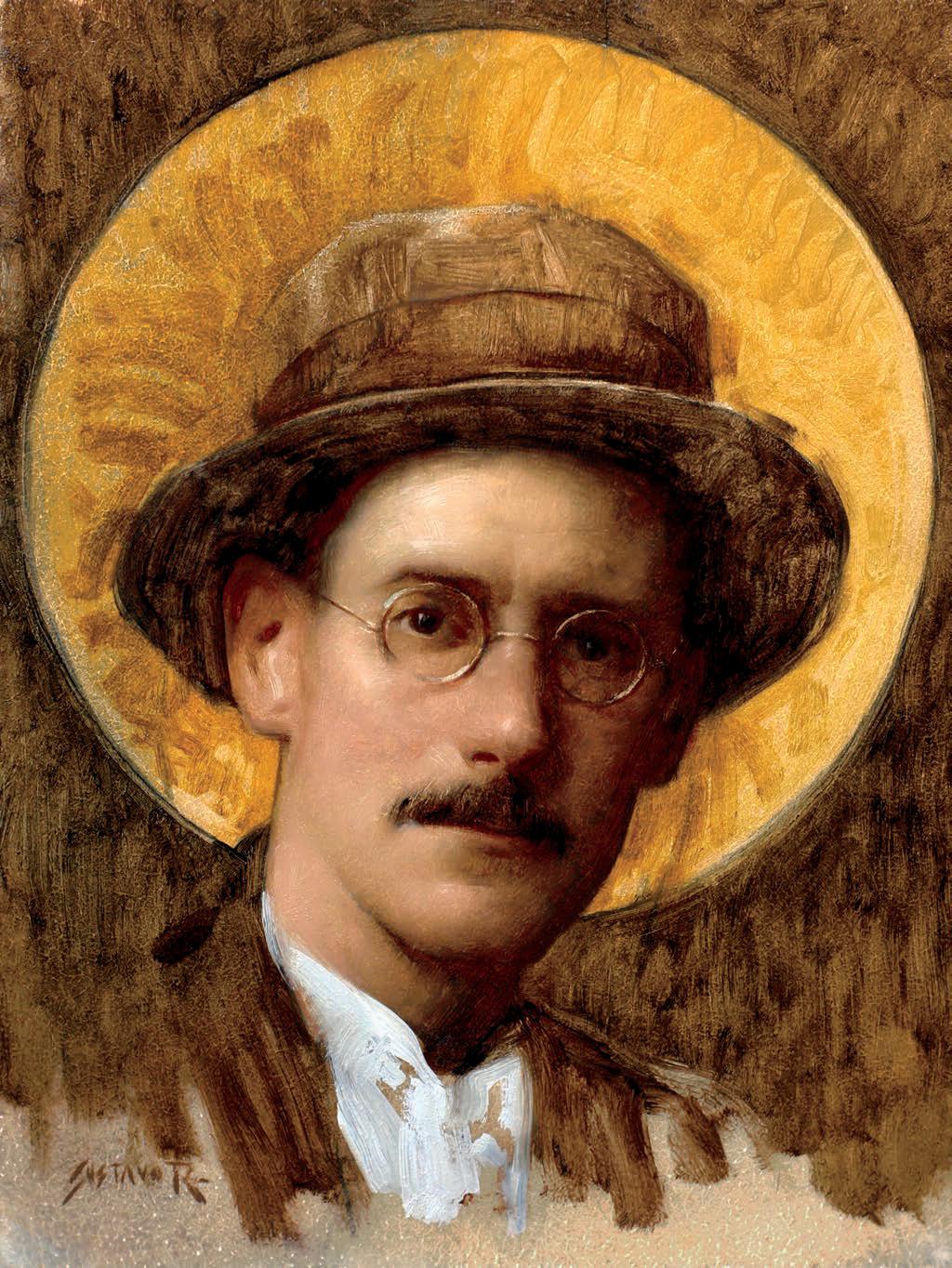
When Richard Ellmann's James Joyce hit the shelves in 1959, the sheer size of the book (842 pages, 100 longer than Ulysses) was as dazzling as the degree of detail. Joyce, who had been dead for 18 years, vividly inhabited its chapters, getting drunk, going blind, spending money, spiting enemies, cogitating, and, of course, creating a series of works that immediately made literary history. Moving briskly across the first half of the 20th century (not just a single day in Dublin), Ellmann spun a tale about the formation of a writer whose name could be mentioned in the same breath as Homer's without irony.
Ellmann owed his triumph, in part, to being in the right place at the right time. By the early 1950s, he had spent a year at Trinity College Dublin researching his prizewinning dissertation on William Butler Yeats, received a Ph.D. from Yale, and become an ambitious 30-something professor at Northwestern University. Yeats's widow was ready to provide introductions in Dublin; Joyce's most important patron, Harriet Shaw Weaver, and his dear friend Maria Jolas released a trove of unpublished letters. Stanislaus Joyce, his brother, had shared material from his diaries and unfinished memoir. Nelly Joyce, Stanislaus's widow, unleashed holy-grail-grade manuscripts; so did Jolas. And Sylvia Beach, a fellow American and the fearless publisher of Ulysses, was still knocking around Paris willing to entertain questions.
You also need charm, lots of it, to make a biography like James Joyce happen. Ellmann, a virtuosic schmoozer, could get people to do his bidding without ever seeming too pushy. A delivery of coal during the winter; some chocolates, cigarettes, cocoa, or tea in any season—accompanied by a carefully worded request, such offerings could go a long way when he needed to gain (or restrict) access to material.
James Joyce (Ellmann wisely heeded his mother's advice to drop the subtitle,

Esta historia es de la edición July 2025 de The Atlantic.
Suscríbete a Magzter GOLD para acceder a miles de historias premium seleccionadas y a más de 9000 revistas y periódicos.
¿Ya eres suscriptor? Iniciar sesión
MÁS HISTORIAS DE The Atlantic
The Atlantic
The Eighth Deadly Sin
Humankind has devised a new form of debasement.

5 mins
May 2026

The Atlantic
The Art of the (New) Deal
What the murals of the Wilbur J. Cohen Federal Building can teach us about patriotism, propaganda, and beauty
12 mins
May 2026

The Atlantic
New Chairs
Collaboration, for Robert Rauschenberg and Merce Cunningham, began with the arrangement of chairs.
1 mins
May 2026
The Atlantic
HISTORY IS RUNNING BACKWARDS
Why reactionaries are taking over the world
21 mins
May 2026

The Atlantic
SOMEDAY IN TEHRAN
Like Donald Trump, I, too, once underestimated the Islamic Republic of Iran.
16 mins
May 2026

The Atlantic
On Losing a Daughter
The people we were died at the exact moment our child did.
19 mins
May 2026

The Atlantic
I Found It: The Best Free Restaurant Bread in America
Thirteen thousand miles. Infinite contenders. One beautiful loaf.
15 mins
May 2026

The Atlantic
EVERYTHING IS FREE AND NOTHING MATTERS
What I saw at Jeff Bezos's Campfire retreat
9 mins
May 2026

The Atlantic
Who Is Black Comedy For?
A new book is nostalgic for the '90s. But the era of crossover success was not necessarily the pinnacle of Black comedic achievement.
8 mins
May 2026

The Atlantic
The Feeling of Becoming Less and Less of a Person
In Ben Lerner's new novel, technology divides us further from one another, and ourselves.
9 mins
May 2026
Listen
Translate
Change font size