
Gå ubegrenset med Magzter GOLD
Få ubegrenset tilgang til over 9000 magasiner, aviser og premiumhistorier for bare
The Canonization of James Joyce
The Atlantic
|July 2025
Richard Ellmann's biography made the novelist a hero to generations of readers and scholars.
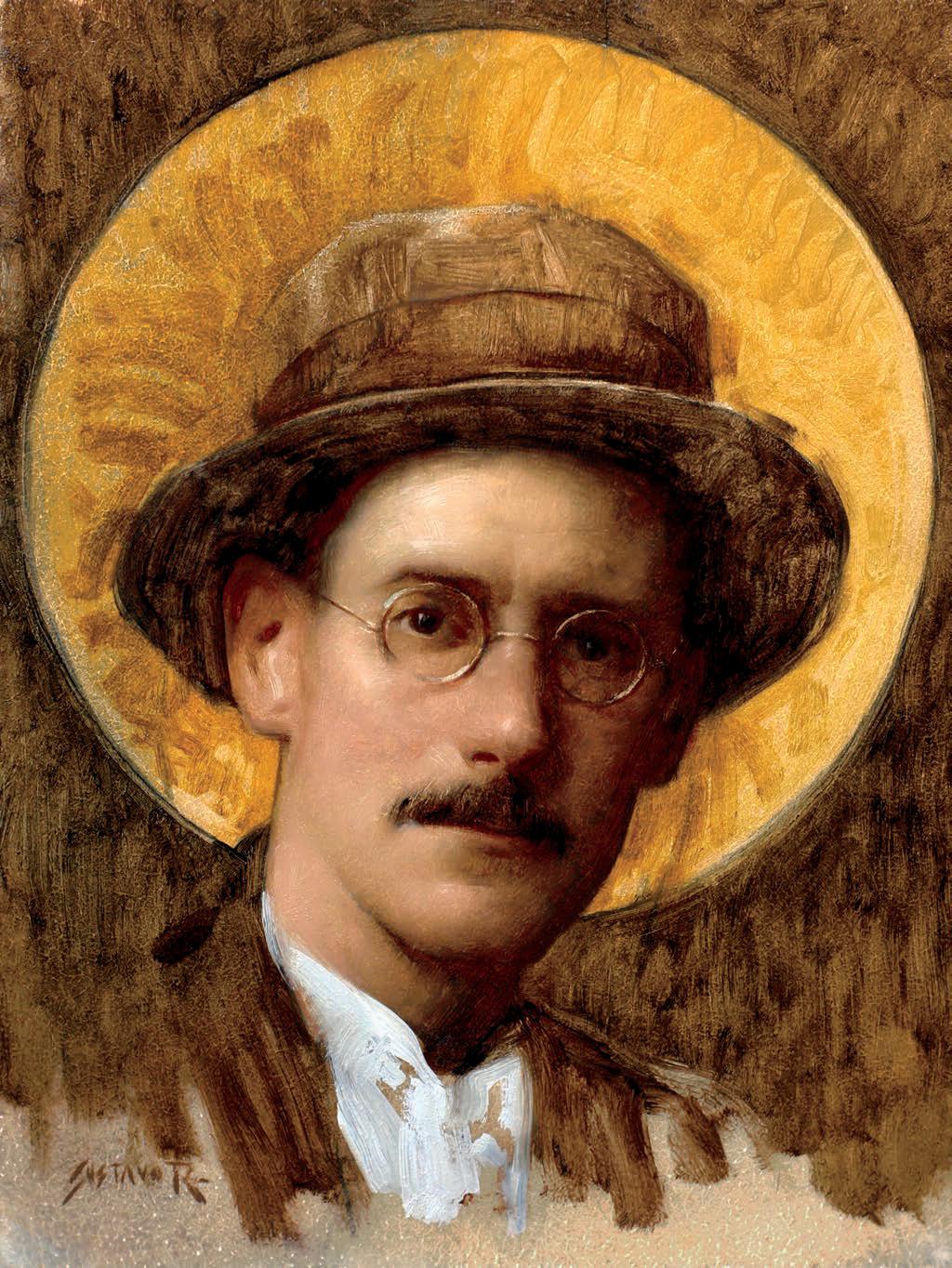
When Richard Ellmann's James Joyce hit the shelves in 1959, the sheer size of the book (842 pages, 100 longer than Ulysses) was as dazzling as the degree of detail. Joyce, who had been dead for 18 years, vividly inhabited its chapters, getting drunk, going blind, spending money, spiting enemies, cogitating, and, of course, creating a series of works that immediately made literary history. Moving briskly across the first half of the 20th century (not just a single day in Dublin), Ellmann spun a tale about the formation of a writer whose name could be mentioned in the same breath as Homer's without irony.
Ellmann owed his triumph, in part, to being in the right place at the right time. By the early 1950s, he had spent a year at Trinity College Dublin researching his prizewinning dissertation on William Butler Yeats, received a Ph.D. from Yale, and become an ambitious 30-something professor at Northwestern University. Yeats's widow was ready to provide introductions in Dublin; Joyce's most important patron, Harriet Shaw Weaver, and his dear friend Maria Jolas released a trove of unpublished letters. Stanislaus Joyce, his brother, had shared material from his diaries and unfinished memoir. Nelly Joyce, Stanislaus's widow, unleashed holy-grail-grade manuscripts; so did Jolas. And Sylvia Beach, a fellow American and the fearless publisher of Ulysses, was still knocking around Paris willing to entertain questions.
You also need charm, lots of it, to make a biography like James Joyce happen. Ellmann, a virtuosic schmoozer, could get people to do his bidding without ever seeming too pushy. A delivery of coal during the winter; some chocolates, cigarettes, cocoa, or tea in any season—accompanied by a carefully worded request, such offerings could go a long way when he needed to gain (or restrict) access to material.
James Joyce (Ellmann wisely heeded his mother's advice to drop the subtitle,

Denne historien er fra July 2025-utgaven av The Atlantic.
Abonner på Magzter GOLD for å få tilgang til tusenvis av kuraterte premiumhistorier og over 9000 magasiner og aviser.
Allerede abonnent? Logg på
FLERE HISTORIER FRA The Atlantic
The Atlantic
You Had to Be There
An emerging field of history asks if we can ever really understand how our forebears experienced love, anger, fear, and sorrow.

23 mins
January 2026

The Atlantic
By the Horns
The week before the biggest bullfight of her career, in Cádiz, Spain, this past July, 24-year-old Miriam Cabas posted a carefully produced video on Instagram.
1 mins
January 2026

The Atlantic
The New German War Machine
After World War II, Germany embraced pacifism as a form of atonement. Now the country is arming itself again.
18 mins
January 2026
The Atlantic
The Eloquence
The prime minister was watching a disaster movie when we found him.
4 mins
January 2026

The Atlantic
What's for Dinner, Mom?
The women who want to change the way America eats
12 mins
January 2026
The Atlantic
How Terror Works
A 1947 German novel explores the sometimes corrosive, sometimes energizing nature of fear.
8 mins
January 2026

The Atlantic
Yesterday's Idea of a Modern Man
Sam Shepard, a self-made cowboy, was also a poet of masculine angst.
7 mins
January 2026

The Atlantic
ACCOMMODATION NATION
America's colleges have an extra-time-on-tests problem.
11 mins
January 2026

The Atlantic
Respect the Drummer
A new history of rock, told through its overlooked heroes
5 mins
January 2026

The Atlantic
THE MOST POWERFUL MAN IN SCIENCE
WHY IS ROBERT F. KENNEDY JR. SO CONVINCED HE'S RIGHT?
42 mins
January 2026
Listen
Translate
Change font size