
Vuélvete ilimitado con Magzter GOLD
Obtenga acceso ilimitado a más de 9000 revistas, periódicos e historias Premium por solo
Intentar ORO - Gratis
Hot cockles, handball and hide-and-seek
BBC History UK
|April 2023
Nicholas Orme highlights some of the most popular children's pastimes in Tudor England - from ball games to blind man's buff - and explores their place in wider society

It was fashionable, about 60 years ago, to say that childhood was a recent invention. In the past, it was argued, children's lives were nasty, brutish and, often, short, deprived of the loving care and self-expression of modern times. That theory ignored what people in previous centuries actually thought - and wrote about children.
Human life in Tudor England was seen as a series of stages - the "seven ages of man", famously summed up by Shakespeare in As You Like It. Each age had its own character, and that of childhood - the ages of seven to 14 - was playfulness. "I am called Childhood," says a boy, in the words of Thomas More in the 1490s. "In play is all my mind, to cast a quoit, a throwing stick, and a ball... If only I could burn all my schoolbooks," he continues, "then might I lead my life always in play."
Tudor parents and educators did not, of course, approve of unrestricted play. Children had to learn good behaviour, religious duties and the skills needed for adult life. Some critics wanted to direct children's play, or even to prevent it, but play persisted nonetheless.
Children invented their own playthings. Some toys were mass-produced, to be sold in shops and at fairs. Spare time, on Sundays and the many holidays, was spent in social games. Every open space was used for activities such as running, chasing and ball games including tennis and football.
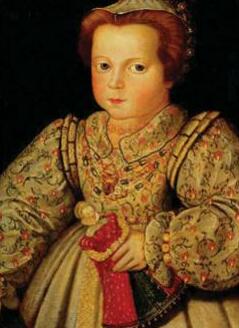
Tiny Tudors
Young children enjoyed playing with dolls-representations of themselves in miniature

Esta historia es de la edición April 2023 de BBC History UK.
Suscríbete a Magzter GOLD para acceder a miles de historias premium seleccionadas y a más de 9000 revistas y periódicos.
¿Ya eres suscriptor? Iniciar sesión
MÁS HISTORIAS DE BBC History UK

BBC History UK
On the skids
Richard Rodgers and Oscar Hammerstein II's smash musical Oklahoma! opened on Broadway on 31 March 1943.

1 min
Christmas 2025

BBC History UK
Small pleasures
Memory is imperfect, but what if you could get a professional model maker to recreate a moment from the past?
1 min
Christmas 2025

BBC History UK
Bath in five places
In the Georgian era, Bath became arguably Britain's most fashionable destination. KIRSTEN ELLIOTT promenades five historic highlights
3 mins
Christmas 2025
BBC History UK
End times
Why do civilisations that dominated their epoch fail? In an era of autocracy, climate change, the rise of Al and a first-hand understanding of how deadly pandemics can be, it's a question that seems pertinent.
1 min
Christmas 2025

BBC History UK
What are the origins of the Yule Lads?
To learn about the Jólasveinar (Yule Lads), we must start with their mother, the terrifying ogress Grýla. Her name appeared in Icelandic texts as early as the 13th century, although it wasn’t until later that those 13 mischievous lads became associated with her. Folk tales and poems tell how she descends from the mountains with an empty sack to stuff full of children. Grýla owns the monstrous Jólaköttur (Yule Cat), which roams the countryside on Christmas Eve, searching for children to gobble up if they're not wearing new clothes.
1 mins
Christmas 2025

BBC History UK
Santa Claus v Father Christmas
The true identity of the white-bearded, red-robed figure who fills children's stockings at Christmas has long been debated. Thomas Ruys Smith sizes up the merry contenders
8 mins
Christmas 2025

BBC History UK
Frontier friction
Set in Washington Territory in 1854, The Abandons is a Western that's unusual for having two matriarchs, women whose lives become entangled, at its centre.
1 min
Christmas 2025

BBC History UK
The Last Days of Pompeii: The Immersive Experience
Delve into the culture of daily Roman life, witness the momentous eruption of Mount Vesuvius, and follow its fallout in Immerse LDN's new exhibition. In a blend of cutting-edge technology and vivid storytelling, this exhibition launches visitors into Pompeii's rich history with recreations of the ancient city's beautiful pre-eruption landscape, a 360-degree virtual reality Roman amphitheatre experience, and a digital metaverse recreating Pompeii's 'Villa of Mysteries'.
1 min
Christmas 2025

BBC History UK
Elizabeth Marsh The corsair's captive
Taken hostage by a Barbary ship's captain in the 18th century, a young Englishwoman found herself fighting for her freedom in Marrakech. ADAM NICHOLS introduces a brave captive who later wrote a book about her dramatic experiences
6 mins
Christmas 2025

BBC History UK
29 DECEMBER 1170: Thomas Becket is murdered in Canterbury
Knights loyal to Henry II rid him of the “low-born cleric”
2 mins
Christmas 2025
Translate
Change font size