
Vuélvete ilimitado con Magzter GOLD
Obtenga acceso ilimitado a más de 9000 revistas, periódicos e historias Premium por solo
Intentar ORO - Gratis
Using regenerative farming to fight climate change
Farmer's Weekly
|June 28, 2024
The use of regenerative farming practices has enabled Barry Meijer to restore the lifeless dust’ on his farm and turn it into productive pastures for his cattle. He spoke to Glenneis Kriel about the transformation.

In 2010, when Barry Meijer bought Meijer's Rust near De Rust in the Klein Karoo, the soil was bare and depleted. Nevertheless, he managed to produce a small crop of barley and oats each year on the 14ha he had under irrigation, while he restricted his cattle to the hills and mountains, where they primarily lived off spekboom.
About seven years ago, Meijer realised he needed an 'intervention' to improve the water-holding capacity of the soil: "The soil was nothing more than dust. It was dead and compacted, resulting in poor water penetration and a lot of run-off."
This was a huge problem. The farm receives about 350mm of rain during a normal year but recorded less than 200mm per year for more than seven years, and below 100mm in one of those years, up until last year. The drought seemed to be broken last winter, but water reserves came under pressure again this summer, when thunderstorms were not accompanied by their usual rains.
Meijer ascribes the lower rainfall to climate change: "Climate change is real. It is resulting in lower rainfall in the Klein Karoo and shifts in the time we receive our rains. It is predicted to result in more extreme weather in future, such as droughts, heatwaves and floods, making it increasingly important to build a soil structure that can withstand these stressors."
REGENERATIVE FARMING
Meijer's search for a way to improve the water-holding capacity of his soil led him to a YouTube conversation between two regenerative agriculture pioneers, Buz Kloot and Ray Archuleta. In the video, they discussed the importance of having 'living roots' in the soil and how this could improve soil structure and, in effect, the water-holding capacity of the soil.


Esta historia es de la edición June 28, 2024 de Farmer's Weekly.
Suscríbete a Magzter GOLD para acceder a miles de historias premium seleccionadas y a más de 9000 revistas y periódicos.
¿Ya eres suscriptor? Iniciar sesión
MÁS HISTORIAS DE Farmer's Weekly
Farmer's Weekly
Cash flow budgets: keeping farmers in control of liquidity, risk, and their survival
Profit doesn't guarantee a farm's survival - cash does. Cobus du Plessis explains why cash flow budgets are one of the most important yet underused financial tools on South African farms.

5 mins
February 27 - March 06, 2026

Farmer's Weekly
The toast of the Navy
The incredible story of the World War II-era Great Dane dog Nuisance being enlisted in the Royal Navy is well documented. Graham Jooste shared some entertaining anecdotes involving the canine shipmate.
6 mins
February 27 - March 06, 2026
Farmer's Weekly
Healthier soils deter destructive locusts
Locust swarms remain a serious global threat, capable of devastating crops, livelihoods and local economies across vast regions.
1 min
February 27 - March 06, 2026
Farmer's Weekly
Wheat crisis dominates Grain SA regional meetings
As the ongoing wheat crisis continues to erode producers' margins, emotions ran high at Grain SA's regional meeting in Moorreesburg in the Western Cape.
2 mins
February 27 - March 06, 2026

Farmer's Weekly
A FARMER'S EXPERIENCE
Street Wallet has been a game-changer for Mario Athanasopoulos, hydroponic production consultant and owner of Green City Farms.
1 mins
February 27 - March 06, 2026
Farmer's Weekly
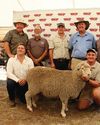
Kesieberg Merino Stud Production Sale
The Kesieberg Merino Stud Production Sale was held on the farm Leeuwfontein on 4 February on behalf of Willie and Herman Henning.
1 min
February 27 - March 06, 2026
Farmer's Weekly
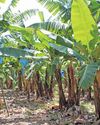
Not cheaper, just different: what you should know about farming in Mozambique
Although Mozambique is often viewed as a cheaper, easier farming location than South Africa, cost comparisons tell a more complex story. But while cross-border production presents real challenges, it also offers opportunities for complementary trade, diversification and regional food security, particularly when it comes to subtropical crops such as bananas.
10 mins
February 27 - March 06, 2026
Farmer's Weekly
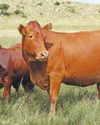
The all-rounder anchoring South Africa's beef value chain
Louis Steyl, CEO of the Bonsmara Cattle Breeders' Society of South Africa, spoke to Octavia Avesca Spandiel about how the versatile Bonsmara breed anchors the country's beef value chain, delivering balanced performance, reproductive and feed efficiency, and carcass traits across extensive and intensive systems.
6 mins
February 27 - March 06, 2026

Farmer's Weekly
THE HITCHING POST
I'm a 60-year-old white woman who loves camping, animals, the outdoors, and watching sport.
2 mins
February 27 - March 06, 2026
Farmer's Weekly
Foot-and-mouth disease in pigs
Recently, the radio news mentioned an outbreak of foot-and-mouth disease (FMD) in pigs in South Africa.
2 mins
February 27 - March 06, 2026
Listen
Translate
Change font size