
Vuélvete ilimitado con Magzter GOLD
Obtenga acceso ilimitado a más de 9000 revistas, periódicos e historias Premium por solo
Intentar ORO - Gratis
Neon signs
Octane
|April 2025
Colourful tubes of magic that were embraced wholeheartedly by the advertising industry
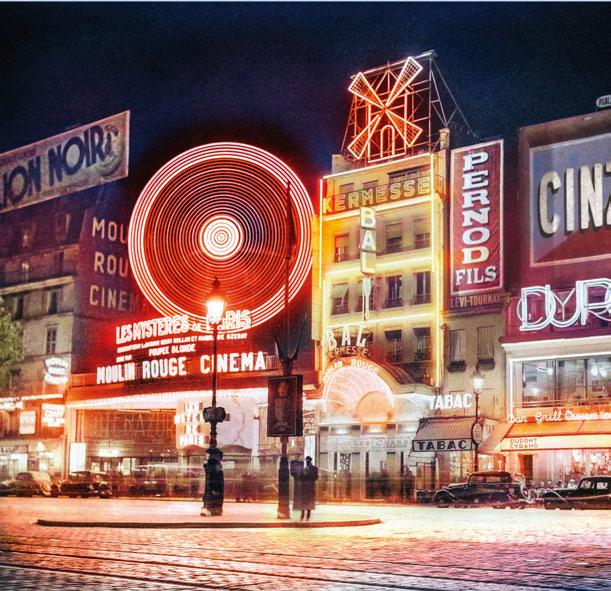
NOTHING ON DISPLAY inside the 1910 Salon de l'Automobile in Paris would fundamentally alter either the look or technology of the automobile. Outside the Grand Palais, however, inventor and entrepreneur Georges Claude was showing off his latest gizmo. Stretching for 35 metres across the façade of the Palaisour were 'fiery red' glass tubes that he hoped might revolutionise the world of lighting. Although his invention didn't replace the incandescent lightbulb, it did spawn its own industry, becoming a promotional tool that spread across the world's urban landscapes from Times Square to Tokyo and arguably became the foremost vernacular art of the 20th Century.
Neon, an inert gas, along with Krypton and Xenon, was first isolated from the air that we breathe by the eminent Victorian chemists Sir William Ramsey and Morris Travers in a busy six weeks of activity in 1898, four years after Ramsey and Lord Rayleigh had isolated Argon. All gained a Nobel Prize for their efforts. It was immediately noted that, when subjected to an electric current, neon glowed red. However, it wasn't until Claude - often called the 'Edison of France' - started harvesting neon on an industrial scale as a by-product of his recently formed Liquid Air company that the possibility of using it as a light source became a practical proposition.

Esta historia es de la edición April 2025 de Octane.
Suscríbete a Magzter GOLD para acceder a miles de historias premium seleccionadas y a más de 9000 revistas y periódicos.
¿Ya eres suscriptor? Iniciar sesión
MÁS HISTORIAS DE Octane
Octane
The Driver Robert Coucher
Why simplicity is best in the era of cars as appliances

3 mins
May 2026

Octane
The Legend Derek Bell
One of the great joys of my life in motorsport is the travelling. One of the biggest curses of my life in motorsport is the travelling. I am a farm boy from West Sussex and, growing up at least, I never thought that I would ever get to see the world.
3 mins
May 2026

Octane
The Aesthete Stephen Bayley
Nostalgia was once defined as a psychosis. So I certainly don’t want to be described as nostalgic.
7 mins
May 2026
Octane
Records tumble as Amelia and Miami sales top $251.9m
Hypercars attract big numbers as 'Florida week' sales rack up biggest total yet
1 mins
May 2026

Octane
DTM legends
Bonhams, Monaco 24-25 April
1 min
May 2026
Octane
The photo booth
From a practical necessity to a cultural phenomenon
4 mins
May 2026
Octane
All aboard for Monte Carlo
1956 Daimler Conquest Century
3 mins
May 2026
Octane
Hardcore pawn
Is a race-bred track star with impeccable Italian heritage too uncompromising for the road or worth the inevitable sacrifice? Massimo Delbò is feeling brave...
6 mins
May 2026
Octane
The end is nigh
1968 Ford Mustang GT390
2 mins
May 2026
Octane
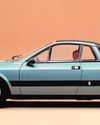
Lancia Beta Montecarlo
Styled and built by Pininfarina, this mid-engined sports car is sensibly priced exotic fun
2 mins
May 2026
Listen
Translate
Change font size