Intentar ORO - Gratis
TURNING THE RED PLANETGREEN
BBC Focus - Science & Technology
|September 2020
If humans are to stand a chance of successfully setting up a colony on Mars, we’re going to need to figure out a way of producing food on the Red Planet

Four years ago, in 2016, Wieger Wamelink, a plant ecologist based at Wageningen University, sat down at the New World Hotel in the Netherlands with 50 guests for a one-of-a-kind meal. Things might have looked ordinary enough from a quick glance at the menu, if maybe a little cheffy – pea puree appetisers to start, followed by potato and nettle soup with rye bread and radish foam, then carrot sorbet to finish.
But the thing that made it such an extraordinary occasion was that all the vegetables used to make the meal had been grown in simulation Martian and lunar soils by Wamelink and his team.
Since then, they have grown an impressive 10 crops, including quinoa, cress, rocket and tomatoes using simulation soils produced using crushed volcanic rocks collected here on Earth. The team produced their simulant soil by grading the particles of rock into different sizes and mixing them in proportions that match rover analyses of the Martian soil.
The soils were initially developed so that rovers and spacesuits could be tested on Earth to see how well they handled the surface materials of Mars and the Moon. Few thought that the soils could ever actually be farmed.
For a start, there were concerns about the texture of the soil, especially after early attempts to farm model lunar soils struggled as a result of tiny, razor-sharp rock fragments that punctured the plants’ roots. On Mars, though, the movements of ancient water and ongoing wind erosion have left a far more forgiving surface covering on the planet, and the simulation soils have proved to be successful.
Nutritionally, Wamelink says there’s no difference between the ‘Martian’ crops and those grown in local soils, and when it comes to flavour he was most impressed by the tomatoes’ sweetness.
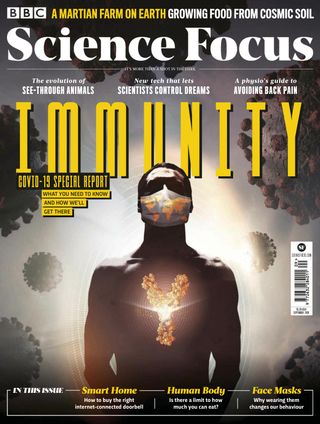

Esta historia es de la edición September 2020 de BBC Focus - Science & Technology.
Suscríbete a Magzter GOLD para acceder a miles de historias premium seleccionadas y a más de 9000 revistas y periódicos.
¿Ya eres suscriptor? Iniciar sesión
MÁS HISTORIAS DE BBC Focus - Science & Technology

BBC Science Focus
DOES MY DOG HAVE ADHD?
Officially, Attention-Deficit Hyperactivity Disorder (ADHD) is a human condition. People are diagnosed with it. Dogs are not. Yet many of its core features, including hyperactivity, impulsivity and distractibility, can be found in dogs.

1 min
March 2026

BBC Science Focus
DOES MY BRAIN LIVE A LITTLE IN THE PAST?
Yes, your brain does live a little in the past. It can't help it. The information it receives via your senses is always a little out of date. Whether it's light entering the retinas in your eyes, or sounds vibrating the hairs in your ears, it not only takes time for the data to arrive, but your brain then has to process it.
2 mins
March 2026
BBC Science Focus
ASTRONOMY FOR BEGINNERS
RETURN OF THE EVENING STAR (VENUS)
1 mins
March 2026

BBC Science Focus
CAN YOU STOP YOUR SENSE OF TASTE DULLING AS YOU AGE?
Sometimes I hear people say that food just doesn't taste the same as they get older. It's tempting to blame this on age, but there are other factors at play, too.
1 mins
March 2026

BBC Science Focus
MICROBIOMES OF THE SUPERAGERS
BY STUDYING THE INCREASING NUMBER OF PEOPLE WHO ARE LIVING BEYOND THEIR 100TH BIRTHDAYS, SCIENTISTS ARE DISCOVERING THAT THE SECRET TO REACHING A RIPE OLD AGE IN RUDE HEALTH MIGHT LIE IN OUR GUTS
8 mins
March 2026

BBC Science Focus
HOW BIG WERE MEDIEVAL WAR HORSES?
You might picture knights charging into battle on towering steeds, but medieval horses were typically no bigger than modern-day ponies.
1 min
March 2026
BBC Science Focus
FORCES OF HABIT
Could new research on setting up healthy habits resuscitate those stuttering New Year resolutions?
3 mins
March 2026

BBC Science Focus
5 DANGERS HIDING IN YOUR PROCESSED FOOD
We all know that ultra-processed foods are bad for us, but what ingredients should we particularly try to avoid? And what are they doing to our bodies?
9 mins
March 2026
BBC Science Focus
Mosquitoes are becoming thirstier for human blood
Habitat loss may be pushing mosquitoes towards human hosts with deadly consequences
1 mins
March 2026

BBC Science Focus
HOW CAN I GET OVER MY EX?
Relationship breakups can be brutal, just look at the popularity of songs like 'Someone Like You' by Adele, or all the covers of 'Cry Me a River' by Julie London.
1 mins
March 2026
Translate
Change font size