Intentar ORO - Gratis
TIME TO SHINE
BBC Focus - Science & Technology
|May 2021
A FEW YEARS AGO, SCIENTISTS BELIEVED ONLY A TINY BAND OF CREATURES COULD EMIT LIGHT. BUT A STRING OF NEW DISCOVERIES HAS ILLUMINATED A WIDER WORLD OF GLOW-IN-THE-DARK LIFE FORMS

DEVIL MAKES LIGHT WORK
“It was pretty shocking when we saw it,” Jacob Schoen, a technician at an Ohio zoo told local reporters in December 2020, just before the global media circus descended. The source of this storm? This image, clearly showing that the Tasmanian devils housed in their enclosure were fluorescing after-hours – parts of their faces were, quite literally, glowing in the dark. Certain Australian mammals, including Tasmanian devils, are thought to manage this via arrangements of special proteins in the skin and fur that absorb energy from sunlight during the day. At dusk, they re-emit this energy in a different wavelength – one invisible to humans without the use of blacklights or ultraviolet (UV) torches, which translate these hidden wavelengths into colours our eyes can process. The big question zoologists are now asking is: why? What role does fluorescence play in animal communication? Week-by-week, month-by-month, other animal discoveries are lighting a path towards answers.
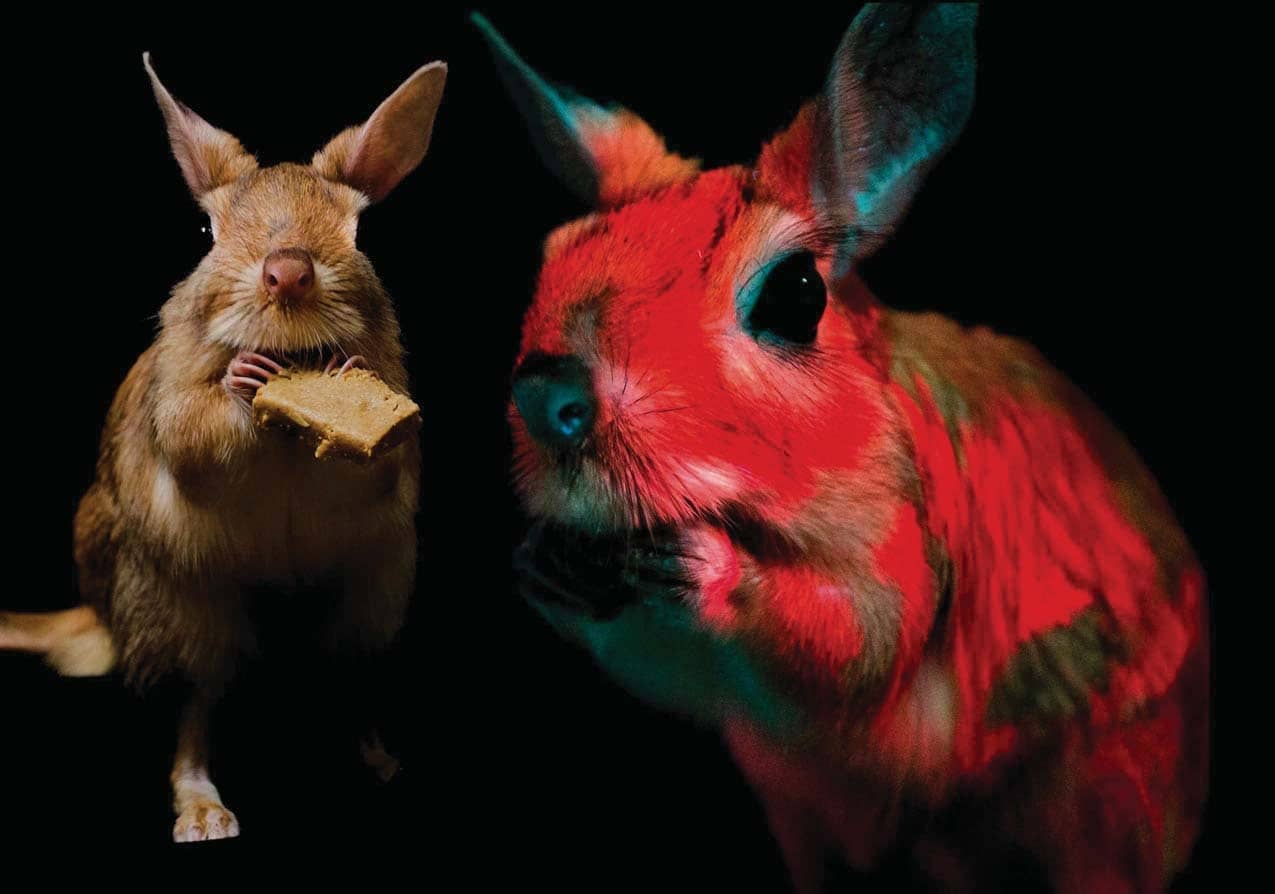
STRIKE ME PINK

Esta historia es de la edición May 2021 de BBC Focus - Science & Technology.
Suscríbete a Magzter GOLD para acceder a miles de historias premium seleccionadas y a más de 9000 revistas y periódicos.
¿Ya eres suscriptor? Iniciar sesión
MÁS HISTORIAS DE BBC Focus - Science & Technology

BBC Science Focus
DOES MY DOG HAVE ADHD?
Officially, Attention-Deficit Hyperactivity Disorder (ADHD) is a human condition. People are diagnosed with it. Dogs are not. Yet many of its core features, including hyperactivity, impulsivity and distractibility, can be found in dogs.

1 min
March 2026
BBC Science Focus
DOES MY BRAIN LIVE A LITTLE IN THE PAST?
Yes, your brain does live a little in the past. It can't help it. The information it receives via your senses is always a little out of date. Whether it's light entering the retinas in your eyes, or sounds vibrating the hairs in your ears, it not only takes time for the data to arrive, but your brain then has to process it.
2 mins
March 2026
BBC Science Focus
ASTRONOMY FOR BEGINNERS
RETURN OF THE EVENING STAR (VENUS)
1 mins
March 2026

BBC Science Focus
CAN YOU STOP YOUR SENSE OF TASTE DULLING AS YOU AGE?
Sometimes I hear people say that food just doesn't taste the same as they get older. It's tempting to blame this on age, but there are other factors at play, too.
1 mins
March 2026
BBC Science Focus
MICROBIOMES OF THE SUPERAGERS
BY STUDYING THE INCREASING NUMBER OF PEOPLE WHO ARE LIVING BEYOND THEIR 100TH BIRTHDAYS, SCIENTISTS ARE DISCOVERING THAT THE SECRET TO REACHING A RIPE OLD AGE IN RUDE HEALTH MIGHT LIE IN OUR GUTS
8 mins
March 2026

BBC Science Focus
HOW BIG WERE MEDIEVAL WAR HORSES?
You might picture knights charging into battle on towering steeds, but medieval horses were typically no bigger than modern-day ponies.
1 min
March 2026

BBC Science Focus
FORCES OF HABIT
Could new research on setting up healthy habits resuscitate those stuttering New Year resolutions?
3 mins
March 2026

BBC Science Focus
5 DANGERS HIDING IN YOUR PROCESSED FOOD
We all know that ultra-processed foods are bad for us, but what ingredients should we particularly try to avoid? And what are they doing to our bodies?
9 mins
March 2026

BBC Science Focus
Mosquitoes are becoming thirstier for human blood
Habitat loss may be pushing mosquitoes towards human hosts with deadly consequences
1 mins
March 2026

BBC Science Focus
HOW CAN I GET OVER MY EX?
Relationship breakups can be brutal, just look at the popularity of songs like 'Someone Like You' by Adele, or all the covers of 'Cry Me a River' by Julie London.
1 mins
March 2026