
Vuélvete ilimitado con Magzter GOLD
Obtenga acceso ilimitado a más de 9000 revistas, periódicos e historias Premium por solo
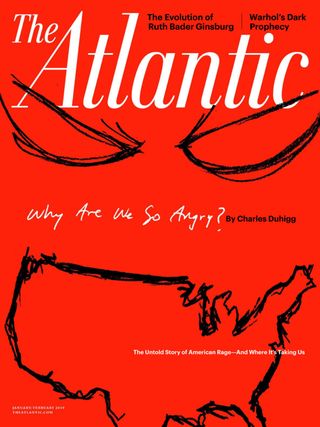
Why Are We So Angry?
The Atlantic
|January/February 2019
The untold story of how we all got so mad at one another

I. An Angry Little Town
Soon after the snows of 1977 began to thaw, the residents of Greenfield, Massachusetts, received a strange questionnaire in the mail. “Try to recall the number of times you became annoyed and/or angry during the past week,” the survey instructed. “Describe the most angry of these experiences.” One woman knew her answer: Recently, her husband had bought a new car. Then he had driven it to his mistress’s house so she could admire the purchase. When the wife found out, she was livid. Furious. Her rage felt like an eruption she couldn’t control.
The survey was interested in the particulars of respondents’ anger. In its 14 pages, it sought an almost voyeuristic level of detail. It asked the woman to describe the stages of her fury, which words she had shouted, whether punches had been thrown. “In becoming angry, did you wish to get back at, or gain revenge?” the survey inquired. Afterward, did you feel “triumphant, confident and dominant” or “ashamed, embarrassed and guilty”? There were also questions for people like her husband, who had been on the receiving end: “Did the other person’s anger come as a surprise to you, or did you expect that it would occur?”
Greenfield, population 18,000, was an unusual place to plumb these depths. It was a middle-class town with a prosperous tool-and-die factory, where churches outnumbered bars two to one. Citizens were private and humble, and—except for a few recent letters to the editor lamenting that the high-school hockey team had been robbed in the playoffs—the town showed little evidence of widespread resentment. In fact, this very placidity was why Greenfield had been chosen for the study.

Esta historia es de la edición January/February 2019 de The Atlantic.
Suscríbete a Magzter GOLD para acceder a miles de historias premium seleccionadas y a más de 9000 revistas y periódicos.
¿Ya eres suscriptor? Iniciar sesión
MÁS HISTORIAS DE The Atlantic

The Atlantic
You Had to Be There
An emerging field of history asks if we can ever really understand how our forebears experienced love, anger, fear, and sorrow.

23 mins
January 2026

The Atlantic
By the Horns
The week before the biggest bullfight of her career, in Cádiz, Spain, this past July, 24-year-old Miriam Cabas posted a carefully produced video on Instagram.
1 mins
January 2026

The Atlantic
The New German War Machine
After World War II, Germany embraced pacifism as a form of atonement. Now the country is arming itself again.
18 mins
January 2026
The Atlantic
The Eloquence
The prime minister was watching a disaster movie when we found him.
4 mins
January 2026

The Atlantic
What's for Dinner, Mom?
The women who want to change the way America eats
12 mins
January 2026

The Atlantic
How Terror Works
A 1947 German novel explores the sometimes corrosive, sometimes energizing nature of fear.
8 mins
January 2026

The Atlantic
Yesterday's Idea of a Modern Man
Sam Shepard, a self-made cowboy, was also a poet of masculine angst.
7 mins
January 2026

The Atlantic
ACCOMMODATION NATION
America's colleges have an extra-time-on-tests problem.
11 mins
January 2026

The Atlantic
Respect the Drummer
A new history of rock, told through its overlooked heroes
5 mins
January 2026

The Atlantic
THE MOST POWERFUL MAN IN SCIENCE
WHY IS ROBERT F. KENNEDY JR. SO CONVINCED HE'S RIGHT?
42 mins
January 2026
Translate
Change font size