
Vuélvete ilimitado con Magzter GOLD
Obtenga acceso ilimitado a más de 9000 revistas, periódicos e historias Premium por solo
Intentar ORO - Gratis
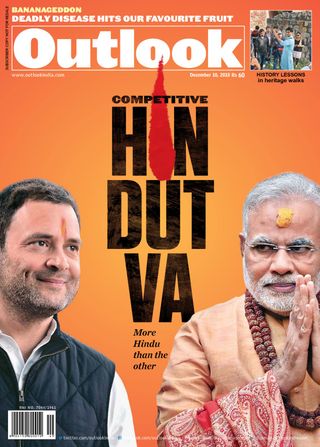
Ayodhya In The Time Of Jawaharlal
Outlook
|December 10, 2018
It’s still a puzzle why India’s first prime minister failed to act decisively when the Babri Masjid was effectively converted into a temple in 1949.

On the night of December 22-23, 1949, Lord Ram’s idols miraculously appeared inside the Babri mosque in Ayodhya in Uttar Pradesh’s Faizabad district. Those were tumultuous times for Hindutva activists, who had been facing extraordinary trials and tribulations since Independence and Partition. Less than six weeks earlier, on november 15, 1949, Nathu Ram Godse and Narayan Apte, Mahatma Gandhi’s assassins, had been hanged at the Ambala Central Jail. Before their execution, the two prisoners recited the 11th and 15th chapters of the Bhagavad Gita and the first four lines of the RSS prayer. While climbing the gallows, they are reported to have shouted “Akhand Bharat amar rahe” and “vande mataram”! The bodies were cremated in the jail by prison authorities according to Hindu Sanatanist rites as per their last wishes. Requests by family members to be present at the cremation had been turned down. Godse and Apte had also expressed their wish to have their ashes immersed in the river Indus, an indivisible part of Bharat mata.
The appearance of the idols brought a sense of closure to Hindutva activists, who had faced an extremely challenging environment in the 22 months since Gandhi’s murder. Prominent RSS leaders had been arrested. The government saw the RSS as the volunteer arm of the Hindu Mahasabha, even though ties between the two organisations had been tenuous.

Esta historia es de la edición December 10, 2018 de Outlook.
Suscríbete a Magzter GOLD para acceder a miles de historias premium seleccionadas y a más de 9000 revistas y periódicos.
¿Ya eres suscriptor? Iniciar sesión
MÁS HISTORIAS DE Outlook
Outlook
The Obituary that Took Me 30 Years to Write
When most of us were clueless about our ambitions in life, my classmate and best friend Samaresh Maitra announced, one hot day in April, that he wanted to become a goonda (gangsta) when he grew up.

3 mins
April 21, 2026

Outlook
Policing the Self
A democratic law on transgender rights would begin by trusting the person- recognising self-identification without bureaucratic mediation
7 mins
April 21, 2026

Outlook
Whatever Happened to the Voice of America?
War, once the defining moral crisis of American youth, no longer commands the same fire
6 mins
April 21, 2026

Outlook
Welfare Against Democracy
Among the four states where the election process has begun, three—Kerala, Tamil Nadu and West Bengal—present a striking picture of defiance; defiance directed at the style of politics associated with the Union government.
17 mins
April 21, 2026

Outlook
Why This War?
Failure to stop the war will hurt not only the region, but the entire global economy
6 mins
April 21, 2026

Outlook
Assam is a Place for All
It was as much a political signal as a warning, as Assam Chief Minister Himanta Biswa Sarma recently said that if the Bharatiya Janata Party (BJP) returns to power, his government will “break the backbone” of “Miyas”.
5 mins
April 21, 2026

Outlook
Bullets in Persepolis
The deep-seated love of Iranians for their land and cultural roots is what remains at stake in a war where the aggressors threaten to eradicate an entire civilisation
8 mins
April 21, 2026

Outlook
Why the Elite Hate Freebies
The deeper question to ask is not whether India can afford welfare but what happens without it
6 mins
April 21, 2026
Outlook
Machinery Vs. Maths
As more than 27 lakh people have their democratic rights suspended, Amit Shah's 'Mission Bengal' aims to bulldoze all equations, but they may still have to fight the maths
7 mins
April 21, 2026
Outlook
War From an Ocean Away
In the many endings that I picture, my mother and Ali end up stranded on roads, separated in different cities, looking for their belongings in the rubble, or chewing some meagre bread to quell their hunger
6 mins
April 21, 2026
Translate
Change font size