Intentar ORO - Gratis
The Glorious Dead
Country Life UK
|November 11, 2020
This year is the centenary of the unveiling of the Whitehall Cenotaph on Armistice Day in 1920. John Goodall explains how this famous monument came into existence and became a fixture in the nation’s consciousness

ON July 19, 1919, a vast procession of 15,000 servicemen and women seven miles long wound its way through the streets of London, past a naval pageant on the Thames and saluted the King Emperor, George V, at the end of The Mall. It marched to the acclaim of an enormous and elated crowd. The so-called Peace Parade celebrated not only the end of hostilities in the First World War eight months previously, but also the Treaty of Versailles, signed three weeks before. It brought together soldiers from the nations, colonies and Dominions that had fought for the Allied cause during the conflict, from France, Belgium and America to China, Japan, Siam and New Zealand. There was only one important omission—the Indian contingent was delayed on its journey and paraded alone a couple of weeks later on August 2.
At one point, the triumphant mood dramatically subsided. As the massed ranks of troops marched down Whitehall, they passed a tall thin monument hastily fashioned from plaster, timber and canvas to look like stone. It rose by stages from a low podium to a surmounting tomb draped with a Union Flag pall and a laurel wreath. It is from this elevated tomb, honouring those buried elsewhere, that the monument takes its familiar name, from the Greek for empty tomb: the ‘Cenotaph’. Where the tall, dignifying base ends and the tomb begins is impossible to tell. To either side were fixed three standards and at each end was a further laurel wreath with the inscription of the date and the words The Glorious Dead. For the parade, there stood at the corners four sentries with their arms reversed.
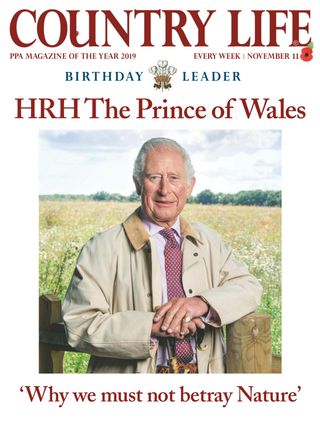

Esta historia es de la edición November 11, 2020 de Country Life UK.
Suscríbete a Magzter GOLD para acceder a miles de historias premium seleccionadas y a más de 9000 revistas y periódicos.
¿Ya eres suscriptor? Iniciar sesión
MÁS HISTORIAS DE Country Life UK
Country Life UK
Making up lost ground
The gardens of Wootton Hall, Staffordshire The home of Johnny and Laura Greenall This woodland garden is one of the most ambitious and successful made this century

5 mins
April 29, 2026
Country Life UK
All hail the 'glory of Britain'
Offa: King of the Mercians Rory Naismith (Yale, £30)
6 mins
April 29, 2026

Country Life UK
Burnt butter, miso and watercress columns of Pompeii
Kitchen garden cook Watercress
1 min
April 29, 2026
Country Life UK
Childhood lost and found
When he stumbles across a box of Nature books in the attic on a bright April morning, John Lewis-Stempel is transported from a donkey-identification hunt to a land of long ago and far away
4 mins
April 29, 2026

Country Life UK
Wild arts run free
A new, sustainable, small opera company is sweeping through our country-house gardens. Ysenda Maxtone-Graham reports
3 mins
April 29, 2026
Country Life UK
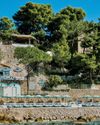
Le Sirenuse Mare, Italy
It was here, in Positano, that Hercules lost his heart to a nymph called Amalfi and where the very concept of la dolce vita was born.
1 mins
April 29, 2026

Country Life UK
'Gold bubbles rising into sky'
A wader with a haunting call, the enigmatic curlew has inspired both gloom and life-affirming joy in the hearts of some of our greatest writers
5 mins
April 29, 2026
Country Life UK
A garden lover's library
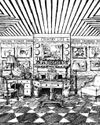
George Saumarez Smith reveals his design for COUNTRY LIFE's stand at this year's RHS Chelsea Flower Show, which embodies his passions for architecture, drawing and books, and his fiancée Jane Kennerley's love of plants
5 mins
April 29, 2026

Country Life UK
A study in history
JAMES NASON and his son Edward read at the table of the new library at Pitchford Hall. This striking Gothic interior was created in Shropshire with the help of the Kennedy family at nearby Acton Round Hall and a company of talented cabinetmakers.
1 min
April 29, 2026
Country Life UK
A leap in the dark
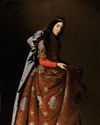
Francisco de Zurbarán captured the intense spirituality of Counter-Reformation Spain in highly charged paintings moulded by the contrast of light and shadow, often using tenebrism to almost shocking effect
7 mins
April 29, 2026
Translate
Change font size