
Vuélvete ilimitado con Magzter GOLD
Obtenga acceso ilimitado a más de 9000 revistas, periódicos e historias Premium por solo
Intentar ORO - Gratis
Running Veld-Adapted Dohne Merinos Since 1945
Farmer's Weekly
|October 11, 2019
The Blaine family near Kei Road in the Eastern Cape began breeding Merinos in the 1880s, and by the 1940s had established the Ross Dohne stud. This became a foundation stud in the Dohne Research Station’s breeding project near Stutterheim. Tom Blaine spoke to Mike Burgess about their determination to adhere to the ‘original true intention’ of the Dohne Merino.
-

Asked how much green feed is planted on the 1 200ha property, Tom Blaine smiles.
“Green feed? The best green feed on our farm is the kikuyu under the dripping gutters.”
The veld and lick, he says, are all that his sheep have access to.
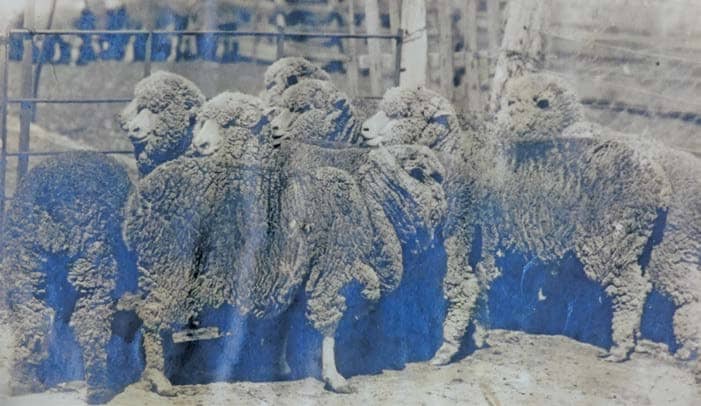
“Our sheep cope in this environment, and it’s all because of the guys before us. I can honestly say that the sheep on this farm are the closest to the original true intention of the Dohne Merino: a dual-purpose sheep producing from the veld.”
FROM MERINO TO DOHNE MERINO
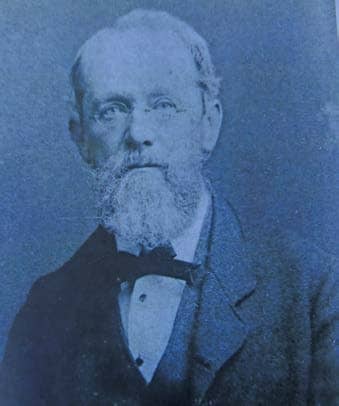
Tom, who farms alongside his father, Peter, and brother, John, on Ross farm near Kei Road in the Eastern Cape, is proud of the family’s historical contribution to sheep breeding in the region.
He tells of the first Blaine in the region, George, who imported Australian Merino genetics in the 1880s. The family continued importing Australian fine-wool genetics up until the 1930s, when stud ewes were producing on average 7,7kg of wool.
Tom’s great-grandfather, Jack, who inherited Ross farm, then started becoming concerned about their reliance on wool at the expense of fertility and mutton production. In fact, the problem became so severe that he was forced to buy wethers (hamels) from up country to make up for the paucity of lambs.

Esta historia es de la edición October 11, 2019 de Farmer's Weekly.
Suscríbete a Magzter GOLD para acceder a miles de historias premium seleccionadas y a más de 9000 revistas y periódicos.
¿Ya eres suscriptor? Iniciar sesión
MÁS HISTORIAS DE Farmer's Weekly

Farmer's Weekly
More about growing vegetable seedlings in trays
By considering various factors and tailoring care to specific vegetable needs, you can produce healthy, robust seedlings ready for transplanting into the garden, writes Shane Brody.

2 mins
March 27 - April 3, 2026

Farmer's Weekly
Prodigy of agriculture and land is now a presidential envoy
Wandile Sihlobo will be armed by state powers to accelerate any decision-making that the Presidency deems crucial to grow the sectors of agriculture and land
2 mins
March 27 - April 3, 2026

Farmer's Weekly
Notes from the Western Cape agricultural roadshow
We spent time last week engaging with agribusinesses and farmers in the Western Cape. The primary agricultural focus of the province is various fruits, citrus, table grapes, wine, wheat, barley, livestock, and aquaculture, among many value chains.
3 mins
March 27 - April 3, 2026

Farmer's Weekly
AGOA's promise fades under new US tariffs
Although the African Growth and Opportunity Act has been extended for another year, new US reciprocal tariffs have largely erased its duty-free benefits. Recent modelling shows sharp declines in African exports to the US, particularly in apparel-dependent economies such as Lesotho and Madagascar.
4 mins
March 27 - April 3, 2026
Farmer's Weekly
Egon Zunckel: a lifetime of learning from the soil
The Zunckel name is synonymous with no-till farming in South Africa. Egon Zunckel, a pioneer in the field and a passionate advocate for soil health, shared with Lindi Botha the lessons he has learnt over the years about building resilient soils and sustainable farming systems.
10 mins
March 27 - April 3, 2026
Farmer's Weekly
Researchers explore new tools to combat herbicide resistance
Research by students from Stellenbosch University aimed at combatting herbicide resistance was highlighted during a recent technical trial information day hosted by the Western Cape Department of Agriculture.
6 mins
March 27 - April 3, 2026

Farmer's Weekly
Lepas leaps into South Africa as the latest Chery-owned brand
Lepas has become Chinese carmaker Chery's latest local subbrand with the introduction of the L4 compact SUV. The Citizen's Charl Bosch reports.
2 mins
March 27 - April 3, 2026
Farmer's Weekly
La Rhone Limousins: a small mixed herd turned renowned stud
The Western Cape is not typically known for cattle farming, particularly in its fruit-growing regions. Yet nestled among the orchards below the mountains of Tulbagh is a Limousin stud that has made a name for itself. AJ du Toit of La Rhone Limousins spoke to Henning Naudé about producing high-quality genetics now found on farms in all nine provinces.
6 mins
March 27 - April 3, 2026
Farmer's Weekly
Nitrogen: no easy fix
Products that claim to herald a nitrogen revolution that will boost global food production are nothing more than snake oil, say scientists.
4 mins
March 27 - April 3, 2026

Farmer's Weekly
Potato soup
Rich, creamy, and indulgent, this soup is the ultimate in comfort food.
1 mins
March 27 - April 3, 2026
Translate
Change font size