Prøve GULL - Gratis
Running Veld-Adapted Dohne Merinos Since 1945
Farmer's Weekly
|October 11, 2019
The Blaine family near Kei Road in the Eastern Cape began breeding Merinos in the 1880s, and by the 1940s had established the Ross Dohne stud. This became a foundation stud in the Dohne Research Station’s breeding project near Stutterheim. Tom Blaine spoke to Mike Burgess about their determination to adhere to the ‘original true intention’ of the Dohne Merino.
-

Asked how much green feed is planted on the 1 200ha property, Tom Blaine smiles.
“Green feed? The best green feed on our farm is the kikuyu under the dripping gutters.”
The veld and lick, he says, are all that his sheep have access to.
“Our sheep cope in this environment, and it’s all because of the guys before us. I can honestly say that the sheep on this farm are the closest to the original true intention of the Dohne Merino: a dual-purpose sheep producing from the veld.”
FROM MERINO TO DOHNE MERINO
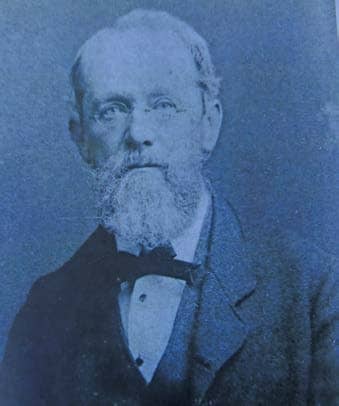
Tom, who farms alongside his father, Peter, and brother, John, on Ross farm near Kei Road in the Eastern Cape, is proud of the family’s historical contribution to sheep breeding in the region.
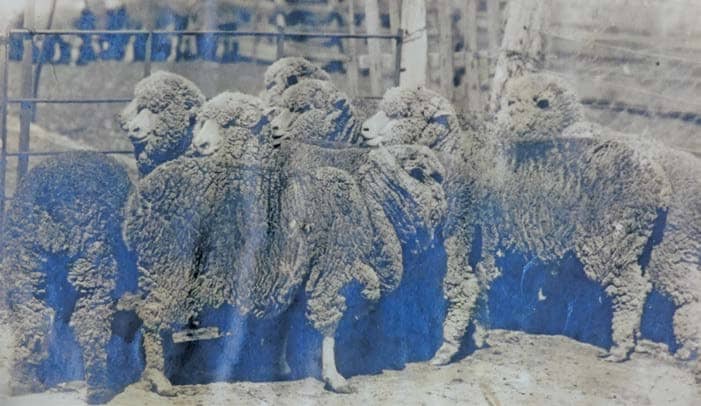
He tells of the first Blaine in the region, George, who imported Australian Merino genetics in the 1880s. The family continued importing Australian fine-wool genetics up until the 1930s, when stud ewes were producing on average 7,7kg of wool.
Tom’s great-grandfather, Jack, who inherited Ross farm, then started becoming concerned about their reliance on wool at the expense of fertility and mutton production. In fact, the problem became so severe that he was forced to buy wethers (hamels) from up country to make up for the paucity of lambs.

Denne historien er fra October 11, 2019-utgaven av Farmer's Weekly.
Abonner på Magzter GOLD for å få tilgang til tusenvis av kuraterte premiumhistorier og over 9000 magasiner og aviser.
Allerede abonnent? Logg på
FLERE HISTORIER FRA Farmer's Weekly

Farmer's Weekly
Tropical avo smoothie
Escape to the tropics with this luxurious, creamy, and vibrant smoothie! Blending rich avocado and sweet mango with zesty lime, fragrant mint, and a punch of tangy granadilla, this recipe transforms into a nutrient-packed and silky-smooth treat.

1 min
January 16-23, 2026
Farmer's Weekly
THE HITCHING POST
I am a 60-year-old white woman who loves camping, animals, the outdoors and watching sport.
2 mins
January 16-23, 2026
Farmer's Weekly
The enduring legacy of Tiyo Soga
In the 1850s, Tiyo Soga, a Xhosa man, became the first ordained black South African minister. But as Mike Burgess writes, his legacy would also be determined by his all-round intellectual abilities honed by a solid Scottish education.
4 mins
January 16-23, 2026

Farmer's Weekly
Isuzu D-Max shows single cabs can be comfortable companions
Bakkie manufacturers don't give single cabs to the media due to them generally being regarded as workhorses without the bells and whistles from fancier double cabs. The Citizen's Charl Bosch was gobsmacked when a single cab arrived for a three-month stay.
2 mins
January 16-23, 2026
Farmer's Weekly
South Africa eyes home-grown rice as ARC expands research efforts
South Africa is taking bold steps toward reducing its dependence on rice imports by exploring the viability of home-grown upland rice. Through a major research drive led by the Agricultural Research Council's Small Grain division, scientists and industry partners are testing rice varieties capable of thriving in South Africa's diverse soils and increasingly water-scarce climate. Anelisa Gusha reports.
3 mins
January 16-23, 2026

Farmer's Weekly
Spanish tortilla
Bring the authentic flavours of Spain to your table with this robust and satisfying Spanish tortilla.
1 min
January 16-23, 2026

Farmer's Weekly
New year brings marvellous new titles
Patricia McCracken, like many of us, has settled back into the grind of the new year and picked up a diverse selection of books ranging from travel, to fiction, to non-fiction and a delightful local children's adventure.
2 mins
January 16-23, 2026
Farmer's Weekly
Nitrogen 'switch' unlocks greener crops
A ground-breaking discovery by molecular biology professors Kasper Røjkjær Andersen and Simona Radutoiu at Aarhus University in Denmark offers a significant step toward developing self-fertilising grain crops, potentially revolutionising agriculture to be greener and more climate-friendly.
1 min
January 16-23, 2026
Farmer's Weekly
Sweet prospects: the current state of litchi production in South Africa
Bram Snijder, agricultural consultant and chairperson of the South African Litchi Growers' Association, spoke to Octavia Avesca Spandiel about the litchi industry embracing new opportunities, tackling challenges, implementing innovation, and reaching markets both locally and internationally.
6 mins
January 16-23, 2026
Farmer's Weekly
How AFGRI uses technology to unlock farm finance from asset to market
As modern farming becomes more capital-intensive and digitally driven, AFGRI is reinventing agricultural finance by linking technology directly to lending decisions.
5 mins
January 16-23, 2026
Translate
Change font size