Try GOLD - Free
"TIDB supports scaling to millions of queries per second"
Open Source For You
|March 2025
The inverse correlation between the need for data storage and the rate at which data is processed has led to companies searching for database management systems that can keep up with the rapid growth of data. In conversation with OSFY's Yashasvini Razdan, Bhanu Jamwal, Head of Presales and Solution Engineering, APAC, TiDB, explains how distributed open source databases like TiDB are an alternative for organisations dealing with massive and complex data requirements.
-

What is the need for another database like TiDB when MySQL and PostgreSQL exist?
A. Traditional databases like MySQL and PostgreSQL were initially designed for smaller datasets and simpler workloads. While they serve well for small-scale operations, they struggle with scalability and performance as data sizes grow or query demands increase. This creates bottlenecks for organisations experiencing rapid growth. For instance, as businesses adopt SaaS (software-as-a-service) models, there is a need to handle not just more data but also higher query volumes and more database tables, all while maintaining performance. Traditional systems often cannot scale horizontally to meet these demands.
TiDB is a distributed database specifically designed to eliminate bottlenecks by offering scalability. Businesses can start small and grow as needed without compromising performance. TiDB supports scaling to millions of queries per second, which is essential for high-traffic applications. It can handle up to one million tables on a single cluster, making it an ideal solution for SaaS companies onboarding multiple tenants.
How does distributed architecture impact scalability and performance?
A. Distributed databases like TiDB ensure that regardless of data size or performance expectations, the system remains consistent. For instance, if your data grows from 1 terabyte to 100 terabytes, TiDB will deliver the same performance levels. This is achieved by scaling out the cluster—adding more computational resources or storage as needed. As a result, there is no performance degradation, ensuring the applications remain unaffected, regardless of growth.
How does TiDB compete with proprietary distributed databases or cloud-native offerings like Google Spanner and AWS Aurora?


This story is from the March 2025 edition of Open Source For You.
Subscribe to Magzter GOLD to access thousands of curated premium stories, and 10,000+ magazines and newspapers.
Already a subscriber? Sign In
MORE STORIES FROM Open Source For You

Open Source For You
Sending IoT Sensor Data to Public or Private Servers
This IoT system shows a simple and effective way to send sensor data using an ESP8266 microchip.

3 mins
March 2026

Open Source For You
Popular FOSS Tools for LLM Observability, Monitoring and Evaluation
This overview of popular tools for monitoring large language models also sheds light on how LLM-as-a-judge enhances their performance.
2 mins
March 2026
Open Source For You
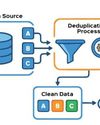
Data Deduplication Done the Right Way
Deduplication helps to save space on Linux-based storage systems. Choose the right platform and check whether it meets your goals.
6 mins
March 2026

Open Source For You
The Relevance of Rubber Duck Debugging in the Age of AI
Discover why rubber duck debugging is a powerful process today. There's also a step-by-step guide on how to use it in the age of artificial intelligence.
4 mins
March 2026

Open Source For You
GitHub weighs turning off pull requests as AĬ slop floods projects
GitHub has formally acknowledged that AI-generated 'slop' is overwhelming open source projects, forcing maintainers to sift through poor pull requests (PRS), abandoned submissions and guideline violations - and is now considering restricting or even disabling pull requests, the core mechanism of open collaboration.
1 min
March 2026

Open Source For You
Global banks are deploying Ethereum's Layer-2 stack
Banks are standardising on Ethereum's open source stack as production financial infrastructure, shifting from experimental pilots and proprietary blockchains to live Layer-2 networks for tokenised deposits, interbank payments, and cross-border settlement.
1 min
March 2026

Open Source For You
OpenClaw's creator joins OpenAl
In a move that reinforces its commitment to open development rather than acquisition, OpenAI has brought Peter Steinberger, founder of OpenClaw, into the company while placing the popular AI agent under a foundation structure to ensure it remains open source.
1 min
March 2026
Open Source For You
LibreOffice 26.2 comes with native Markdown support
LibreOffice 26.2 has been released by The Document Foundation, strengthening its position as a fully free and open source office suite for Windows, macOS, and Linux, with support for more than 120 languages.
1 min
March 2026

Open Source For You
Indian government mandates labelling of Al-generated content and quicker deletion of illegal deepfakes
India has introduced sweeping AI content rules that immediately place pressure on social platforms and open source AI ecosystems to label, trace and rapidly remove AI Open ource synthetic media at scale.
1 min
March 2026
Open Source For You
I2C and I3C: How Modern Devices Communicate
I3C and I2C are both two-wire communication protocols that help exchange data between multiple devices. While I3C preserves the simplicity of I2C, it introduces new features suited for today's sensor-rich devices.
8 mins
March 2026
Listen
Translate
Change font size