Try GOLD - Free
Data Engineering: Keeping Pace with Python in the Al Era
Open Source For You
|January 2026
Organisations must leverage Python's growing capabilities, alongside open source technologies, to design data and Al platforms for 2026 and beyond. Innovations on the horizon will reshape this landscape in the coming years.
-
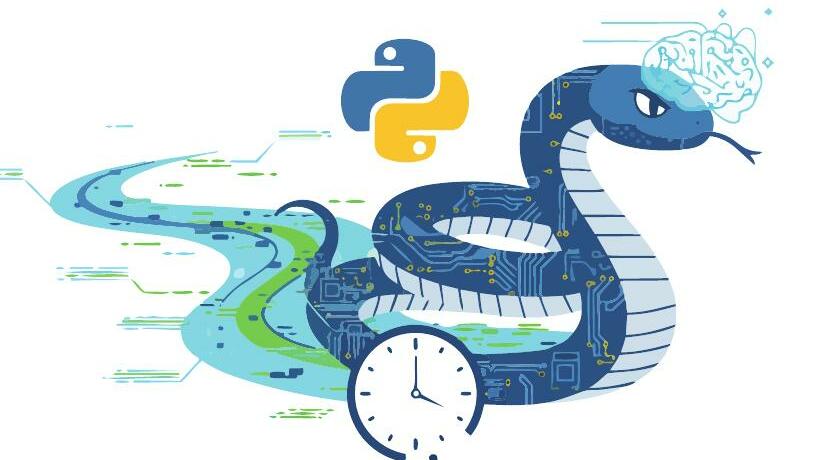
Enterprise data engineering is at a pivotal moment, with artificial intelligence moving from experimental workloads to core business infrastructure. Organisations are grappling with unprecedented data volumes, real-time processing demands, and the operational complexity of running AI systems at scale. Python has emerged as the foundational layer for this transformation, evolving from a scripting language into the backbone of mission-critical data platforms. The maturity of Python's open source ecosystem enables enterprises to build sophisticated platforms without vendor lock-in, creating composable architectures that can evolve with technological innovation.
The composable data platform architecture
Enterprise data architecture in 2026 demands a fundamental shift from monolithic vendor platforms to composable systems built on interoperable open source components. The architectural pattern that has proven most resilient combines best-of-breed tools orchestrated through Python-based integration layers, creating systems that can evolve independently without cascading changes across the platform. Frameworks like FastAPI have revolutionised API development, offering automatic OpenAPI documentation, native async support, and type technologies without wholesale platform replacements. Python's type hints, significantly enhanced in Python 3.13 and 3.14, provide the foundation for contract-based architectures in which components can be verified for interface compliance using static analysis tools such as mypy. The architectural implications are profound: systems become collections of loosely coupled services with well-defined contracts, enabling teams to innovate independently while maintaining platform coherence. In 2026, the trend towards composability will accelerate with the emergence of standardised protocols for feature stores, model registries, and data catalogues, creating true plug-and-play ecosystems for data infrastructure.

This story is from the January 2026 edition of Open Source For You.
Subscribe to Magzter GOLD to access thousands of curated premium stories, and 10,000+ magazines and newspapers.
Already a subscriber? Sign In
MORE STORIES FROM Open Source For You
Open Source For You
I2C and I3C: How Modern Devices Communicate
I3C and I2C are both two-wire communication protocols that help exchange data between multiple devices. While I3C preserves the simplicity of I2C, it introduces new features suited for today's sensor-rich devices.

8 mins
March 2026
Open Source For You
Data Deduplication Done the Right Way
Deduplication helps to save space on Linux-based storage systems. Choose the right platform and check whether it meets your goals.
5 mins
March 2026

Open Source For You
The Relevance of Rubber Duck Debugging in the Age of AI
Discover why rubber duck debugging is a powerful process today.
4 mins
March 2026

Open Source For You
Sending IoT Sensor Data to Public or Private Servers
This IoT system shows a simple and effective way to send sensor data using an ESP8266 microchip.
3 mins
March 2026

Open Source For You
Optimising RAM Usage with Python
Discover how we can make better use of RAM by applying various Python optimisation techniques.
7 mins
March 2026

Open Source For You
How a Job Portal Benefited from Microservices Architecture
Microservices architecture has emerged as a preferred pattern for building scalable and maintainable software applications. Here's how a monolithic job portal application was re-engineered into a microservices-based system. The migration process, key design decisions, the technology stack used, and measurable improvements in performance and flexibility are all laid out for you.
9 mins
March 2026
Open Source For You
The Role that Software Architects Play
Software architects design software projects and ensure these meet their goals. They must balance tech skills with leadership and mentoring abilities.
5 mins
March 2026

Open Source For You
The Path to Cybersecurity in the Quantum Era
The rise of quantum computing will be accompanied by a failure of conventional cryptography. Post-quantum cryptography and advanced threat detection methodologies, among other techniques, are being evolved to counter security threats in the quantum era.
8 mins
March 2026

Open Source For You
Why Open Source Large Language Models are Popular
Open source large language models mark a pivotal moment in the evolution of generative Al. By lowering barriers to entry and fostering collaborative innovation,these models are enabling a broader spectrum of organisations to benefit from Al.
7 mins
March 2026

Open Source For You
Ant Group open sources two frontier AI models
Ant Group has open sourced two trillion-parameter frontier AI models-Ling2.5-1T and Ring-2.5-1T-placing advanced large language and reasoning systems directly in the hands of developers and researchers worldwide.
1 min
March 2026
Listen
Translate
Change font size