Try GOLD - Free
The Long Journey to an Artificial Pancreas
Scientific American
|November 2025
This biotech could transform type 1 diabetes care
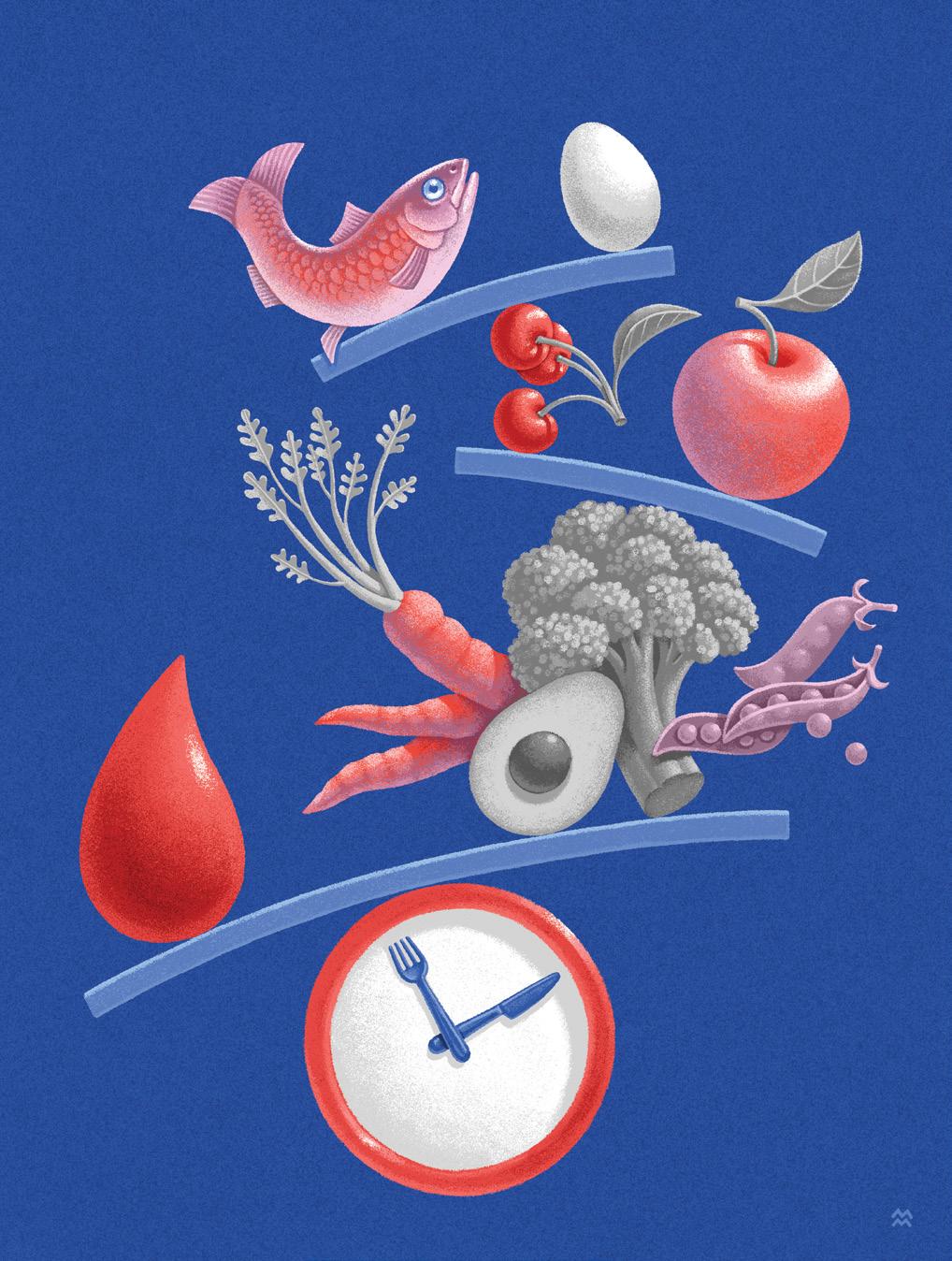
EDWARD DAMIANO CARVED his life into precise 90-minute intervals. In 2000 his then 11-month-old son, David, developed type 1 diabetes when an autoimmune response in his tiny body attacked the beta cells in his pancreas, which manufacture and secrete the hormone insulin. No beta cells meant no insulin. If Damiano or his wife, Toby Milgrome, a pediatrician, didn't give David injections of the hormone, the baby's cells could no longer use glucose, a vital energy source. Within hours David could be in a coma or dead. With their son's pancreas no longer functioning, Damiano and Milgrome had to take over the organ's work by measuring every gram of carbohydrate David ate and dosing the right amount of insulin. To ensure his son didn't receive too much or too little of the lifesaving medicine, Damiano checked David's blood glucose every hour and a half, rain or shine, day or night.
When David first became ill, Damiano, a bioengineer at Boston University, kicked it old school to monitor his son, accumulating a set of spiral-bound notebooks in which he or Milgrome logged every drop of insulin and morsel of food. Each day the couple flipped over a new page and started again, building a complex calculus of sugar grams per sip of Juicy Juice measured against units of insulin and blood glucose that would allow David to thrive. Even for a physician-scientist team, the work was grueling and relentless. Damiano also knew that he was one of the lucky ones.
“The hardest part of diabetes management is making all those decisions. And if you give yourself a little too much insulin, you could end up in the ICU,” Damiano says.

This story is from the November 2025 edition of Scientific American.
Subscribe to Magzter GOLD to access thousands of curated premium stories, and 10,000+ magazines and newspapers.
Already a subscriber? Sign In
MORE STORIES FROM Scientific American

Scientific American
Probiotic Hope and Hype
Despite their popularity, supplements with billions of \"good\" microbes help only a few illnesses, research shows

3 mins
January 2026

Scientific American
Mondays Really Are More Stressful
The start of the workweek can be a biologically measurable stressor, with consequences for long-term health that can stretch into retirement
4 mins
January 2026
Scientific American
Tiny Display
An e-paper breakthrough brings extremely high-resolution color
2 mins
January 2026
Scientific American
Fine-Feathered Snack
A bat's tracker documents a dramatic midair hunt
2 mins
January 2026

Scientific American
OUR ROBOTIC PICTURE
Will mechanical helpers ever be commonplace at home, at work and beyond?
11 mins
January 2026

Scientific American
"Use Your Words" Can Be Good for Kids' Health
Writing or expressing feelings can help adults mentally and physically. Kids are no different
5 mins
January 2026

Scientific American
Distant Diplomacy
Unrelated species “talk” and understand one another to avoid threats
2 mins
January 2026

Scientific American
Behind the Nobel
A 2025 winner reflects on the mysterious T cells that won him the prize
5 mins
January 2026

Scientific American
A Suite of Killers
Heart ailments, kidney diseases and type 2 diabetes actually may be part of just one condition. It's called CKM syndrome
10 mins
January 2026
Scientific American
Static Launch
Tiny worms leap toward their fruit fly hosts with an electric “tractor beam”
3 mins
January 2026
Listen
Translate
Change font size