Try GOLD - Free
Brain Washing
Scientific American
|September 2025
Cleaning waste from the brain is an essential function of sleep—and it could help ward off dementia
YOU CAN SEE IT COMING in right there, that little spot,” says neuroscientist and engineer Laura Lewis.
A remarkably bright pulsing dot has appeared on the monitor in front of us. We are watching, in real time, the brain activity of a graduate student named Nick, who is having an afternoon nap inside an imaging machine at the Massachusetts Institute of Technology, where Lewis has her laboratory.
The bright spot first appears toward the bottom of the screen, about where Nick’s throat meets his jaw. It moves slowly upward, fades and then is followed by another bright dot. “It really comes and goes,” says Lewis, who is also affiliated with Massachusetts General Hospital. “It’s in waves.” This moving dot depicts something few people have ever seen: fresh cerebrospinal fluid flowing from the spinal cord into the brain, part of a process that researchers are now learning is vital for keeping us healthy.
For decades biologists have pondered a basic problem. As human brains whir and wonder throughout the day, they generate waste—excess proteins and other molecules that can be toxic if not removed. Among those proteins are amyloid beta and tau, key drivers of Alzheimer’s disease. Until recently, it was entirely unclear how the brain takes out this potentially neurotoxic trash.
In the rest of the body, garbage removal is handled initially by the lymphatic system. Excess fluid and the waste it carries move from tissue into the spleen, lymph nodes and other parts of the system, where certain particles are removed and put into the bloodstream to be excreted. It was long thought that the brain can’t use the same trick, because the so-called blood-brain barrier, a protective border that keeps infections from reaching critical neural circuitry, stops the transport of most everything in and out.
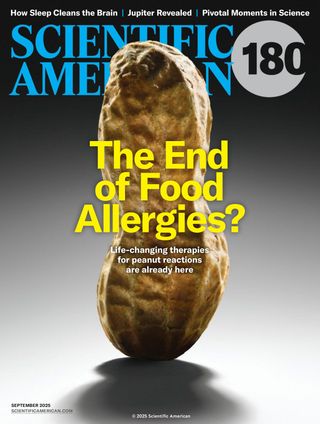

This story is from the September 2025 edition of Scientific American.
Subscribe to Magzter GOLD to access thousands of curated premium stories, and 10,000+ magazines and newspapers.
Already a subscriber? Sign In
MORE STORIES FROM Scientific American

Scientific American
Probiotic Hope and Hype
Despite their popularity, supplements with billions of \"good\" microbes help only a few illnesses, research shows

3 mins
January 2026
Scientific American
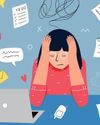
Mondays Really Are More Stressful
The start of the workweek can be a biologically measurable stressor, with consequences for long-term health that can stretch into retirement
4 mins
January 2026
Scientific American
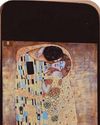
Tiny Display
An e-paper breakthrough brings extremely high-resolution color
2 mins
January 2026
Scientific American
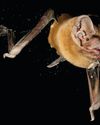
Fine-Feathered Snack
A bat's tracker documents a dramatic midair hunt
2 mins
January 2026

Scientific American
OUR ROBOTIC PICTURE
Will mechanical helpers ever be commonplace at home, at work and beyond?
11 mins
January 2026

Scientific American
"Use Your Words" Can Be Good for Kids' Health
Writing or expressing feelings can help adults mentally and physically. Kids are no different
5 mins
January 2026

Scientific American
Distant Diplomacy
Unrelated species “talk” and understand one another to avoid threats
2 mins
January 2026
Scientific American
Behind the Nobel
A 2025 winner reflects on the mysterious T cells that won him the prize
5 mins
January 2026

Scientific American
A Suite of Killers
Heart ailments, kidney diseases and type 2 diabetes actually may be part of just one condition. It's called CKM syndrome
10 mins
January 2026
Scientific American
Static Launch
Tiny worms leap toward their fruit fly hosts with an electric “tractor beam”
3 mins
January 2026
Listen
Translate
Change font size