Try GOLD - Free
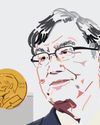
Behind the Nobel
Scientific American
|January 2026
A 2025 winner reflects on the mysterious T cells that won him the prize

IN 2006 IMMUNOLOGIST SHIMON SAKAGUCHI co-wrote an article in Scientific American that now feels prophetic. In the article, entitled “Peacekeepers of the Immune System,” Sakaguchi and his coauthor, Zoltan Fehervari, now a senior editor at Nature, traced a timeline of important studies that led to Sakaguchi’s discovery of an elusive type of immune cell he called a regulatory T cell.
In the 1980s the field was not entirely convinced of the existence of such a class of cells, but Sakaguchi and other scientists proved that regulatory T cells, or Tregs, are the integral “peacekeepers” that prevent the immune system from overreacting and harming the body. That process, known as peripheral immune tolerance, stops the body’s primary defense mechanism from entering a self-destruct mode known as autoimmunity.
The experiments Sakaguchi cataloged in Scientific American nearly 20 years ago were recognized in December at the 2025 Nobel award ceremony in Stockholm, where he and immunologists Mary E. Brunkow of the Institute for Systems Biology in Seattle and Fred Ramsdell of Sonoma Biotherapeutics in San Francisco shared the prize in physiology or medicine for their discoveries.
“I didn’t expect it, and of course I was very much pleased,” Sakaguchi says. “I’m happy to have this honor. But at the same time, I really appreciate the community of scientists who have worked together. The progress of this field is really due to the collective effort of many scientists and immunologists.”
In an exclusive interview, SCIENTIFIC AMERICAN caught up with Sakaguchi on the day after the award announcement. He discussed the crucial findings that led to the discovery of regulatory T cells and the clinical trials that have harnessed these cells to potentially treat chronic infections, cancer and autoimmune diseases.
An edited transcript of the interview follows.
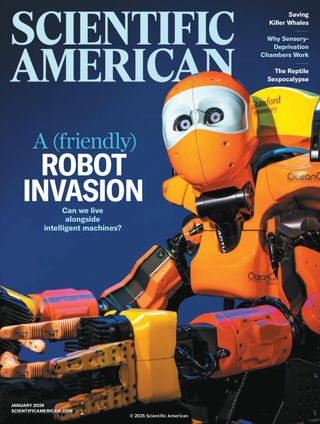

This story is from the January 2026 edition of Scientific American.
Subscribe to Magzter GOLD to access thousands of curated premium stories, and 10,000+ magazines and newspapers.
Already a subscriber? Sign In
MORE STORIES FROM Scientific American

Scientific American
Probiotic Hope and Hype
Despite their popularity, supplements with billions of \"good\" microbes help only a few illnesses, research shows

3 mins
January 2026

Scientific American
Mondays Really Are More Stressful
The start of the workweek can be a biologically measurable stressor, with consequences for long-term health that can stretch into retirement
4 mins
January 2026
Scientific American
Tiny Display
An e-paper breakthrough brings extremely high-resolution color
2 mins
January 2026
Scientific American
Fine-Feathered Snack
A bat's tracker documents a dramatic midair hunt
2 mins
January 2026

Scientific American
OUR ROBOTIC PICTURE
Will mechanical helpers ever be commonplace at home, at work and beyond?
11 mins
January 2026

Scientific American
"Use Your Words" Can Be Good for Kids' Health
Writing or expressing feelings can help adults mentally and physically. Kids are no different
5 mins
January 2026

Scientific American
Distant Diplomacy
Unrelated species “talk” and understand one another to avoid threats
2 mins
January 2026
Scientific American
Behind the Nobel
A 2025 winner reflects on the mysterious T cells that won him the prize
5 mins
January 2026

Scientific American
A Suite of Killers
Heart ailments, kidney diseases and type 2 diabetes actually may be part of just one condition. It's called CKM syndrome
10 mins
January 2026
Scientific American
Static Launch
Tiny worms leap toward their fruit fly hosts with an electric “tractor beam”
3 mins
January 2026
Listen
Translate
Change font size