Try GOLD - Free
SUBMARINES WITHOUT SAILORS
How It Works UK
|Issue 212
Dive into the world of autonomous submarines and discover the mission that will see one sail around the world
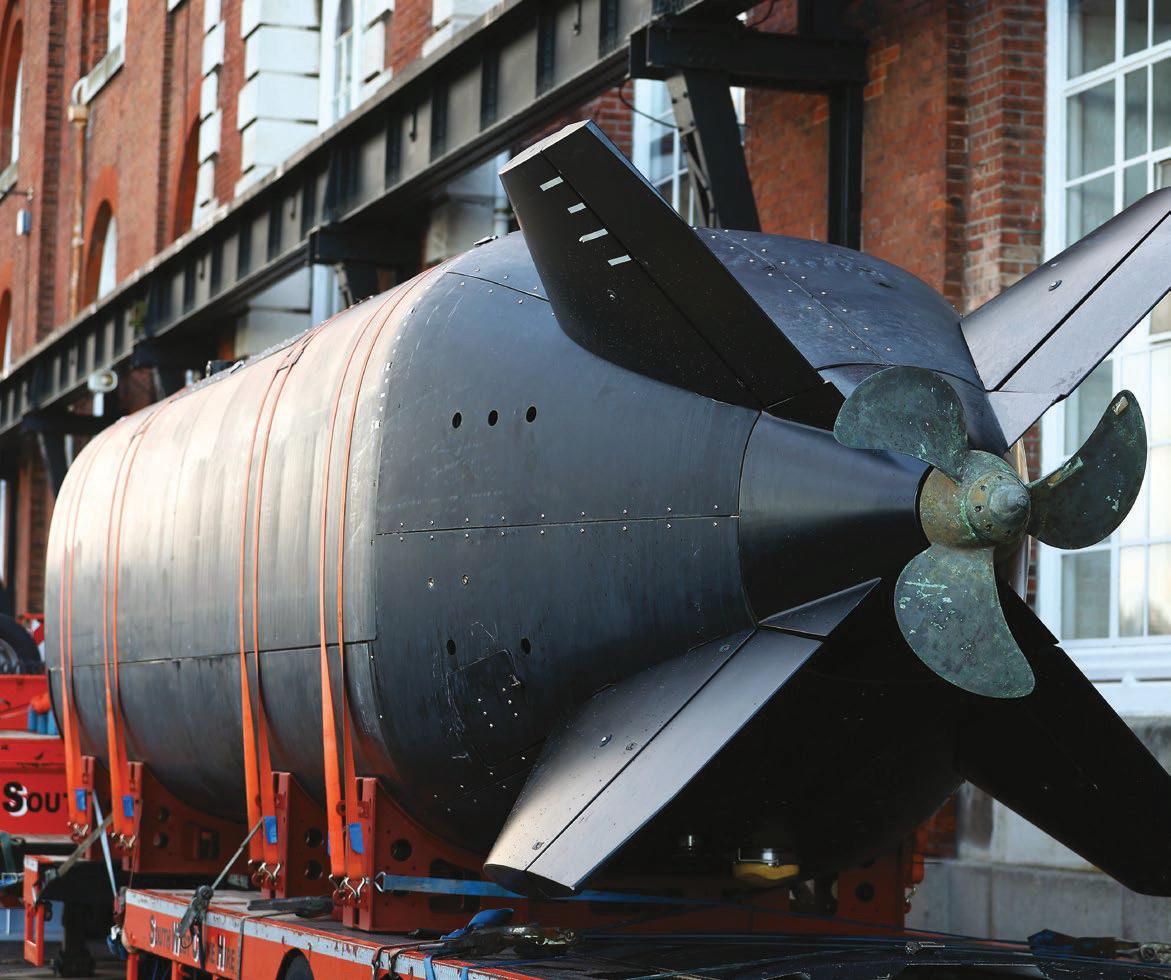
As self-driving cars and self-flying aircraft continue to emerge on our roads and in the skies, the sea is next in line for autonomous vehicles. Autonomous underwater vehicles (AUVs) are a group of submarines that can manoeuvre through the water without the need for a human pilot. Used for military surveillance, ocean monitoring and underwater freight, AUVs can venture into the deep ocean to collect data and transport goods to places too treacherous for human sailors to navigate.
To autonomously move through the water and dodge any drifting marine obstacles that come their way, many AUVs use a technology called a Doppler Velocity Logger (DVL). The system works in a similar way to lidar (light detection and ranging) on autonomous cars, measuring the time it takes beams of light to rebound off objects to gauge their distance, except a DVL uses sound waves. The AUV’s underwater sound system emits sound waves into the water. Depending on the time it takes them to bounce back to the vessel, the onboard computer can determine the speed and direction the craft is travelling and detect anything in its way.
The concept of an AUV first emerged in 1957 with the creation of the Self-Propelled Underwater Research Vehicle (SPURV). Developed at the University of Washington in the US, the AUV’s intended use was to gather oceanic information, such as acoustic transmission, and map the wake (turbulence) of submarines. As the technology's maiden voyage, SPURV set the standard for future AUVs.

This story is from the Issue 212 edition of How It Works UK.
Subscribe to Magzter GOLD to access thousands of curated premium stories, and 10,000+ magazines and newspapers.
Already a subscriber? Sign In
MORE STORIES FROM How It Works UK

How It Works UK
FORMULA FAST
YOUR ULTIMATE GUIDE TO FORMULA ONE RACING

1 mins
Issue 212

How It Works UK
MY LIFE AS AN ASTHMANAUT
A CHILDREN'S BOOK ABOUT ASTHMA
1 min
Issue 212

How It Works UK
LYDIA LOVES BUGS
A SHORT AND SWEET STORY OF AN ENTHUSIASTIC ENTOMOLOGIST
1 min
Issue 212
How It Works UK
INSIDE A DRONE
Drones aren't just for the military any more. These flying marvels are now taking over our lives
3 mins
Issue 212

How It Works UK
WE CAN HEAR WITHOUT EARS
AND OTHER THINGS YOU DIDN'T KNOW WE PLANTS COULD DO
1 min
Issue 212

How It Works UK
DO GEESE GET GOOSEBUMPS?
Many animals experience a similar reaction when they feel cold or scared
2 mins
Issue 212
How It Works UK
SUBMARINES WITHOUT SAILORS
Dive into the world of autonomous submarines and discover the mission that will see one sail around the world
4 mins
Issue 212

How It Works UK
WHAT HAPPENS INSIDE A COCOON?
How certain species of insects transform from crawling caterpillars to flying moths and butterflies
3 mins
Issue 212

How It Works UK
HOW THE ROSE LOST ITS SCENT
From floral to fragranceless, there's a biological reason behind a rose's missing odour today
3 mins
Issue 212
How It Works UK
How many insects have been discovered so far?
The total number of named species is around a million.
7 mins
Issue 212
Listen
Translate
Change font size