Try GOLD - Free
Seed saviours
Down To Earth
|June 01, 2025
Seed banks managed by communities and non-profits are repositories of hundreds of indigenous climate-resilient crop varieties but need help in storage, technical aid and policy support to thrive
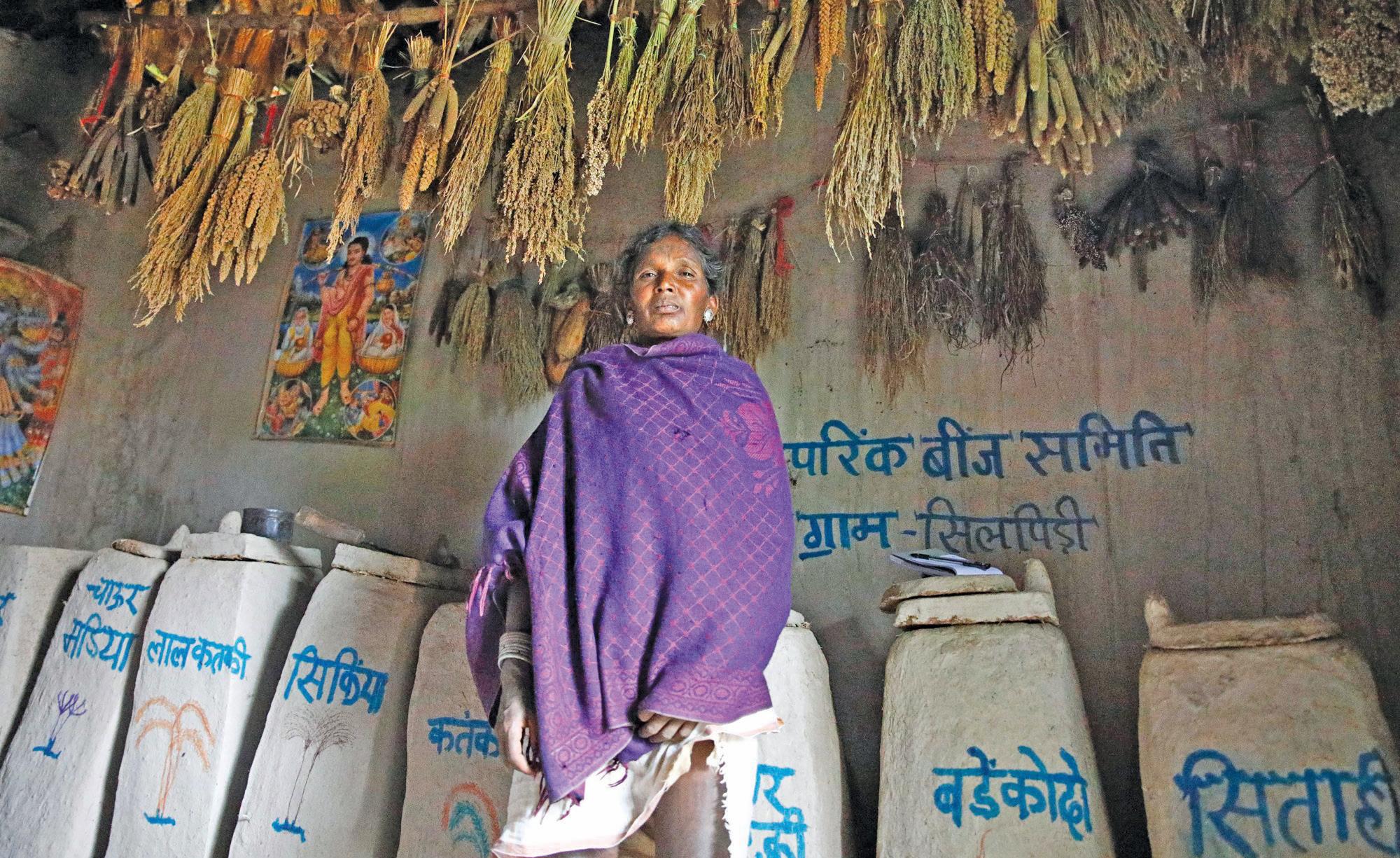
THERE WAS a time women farmers in Machnoor village of Telangana faced shortage of good quality seeds. They were forced to borrow seeds from landlords and would often get them too late, or find them to be of poor quality. Not anymore.
To break this cycle, they decided to save and share their own seeds with each other, leading to the birth of Sangham Seed Bank in 1995, formed with the help of Deccan Development Society, a Telangana-based non-profit. Women from nearly 75 villages are part of the initiative.
The bank stores 80 types of traditional food crops—mainly millets, pulses and oilseeds—that grow well in dry, tough conditions. It also has dryland rice and wheat varieties that need less water and can survive high temperatures.
Farmers with whom the seeds are shared, return double the amount after harvest. Some people even come from far to buy these seeds at a fair price. “The seeds are stored using traditional methods—in palm-leaf baskets, with neem leaves, ash and clay to protect them from moisture and pests. This keeps them safe for two-three years,” says R Santhoshi Srilaya, programme coordinator of the seed bank.

This story is from the June 01, 2025 edition of Down To Earth.
Subscribe to Magzter GOLD to access thousands of curated premium stories, and 10,000+ magazines and newspapers.
Already a subscriber? Sign In
MORE STORIES FROM Down To Earth

Down To Earth
Bitter pill
THE WEB SERIES PHARMA EXPOSES HARSH TRUTHS OF THE PHARMACEUTICAL INDUSTRY, WHERE PROFIT OFTEN BECOMES MORE IMPORTANT THAN HUMAN HEALTH

3 mins
January 16, 2026
Down To Earth
CHAOS IN-DEFINITION
The Aravallis are perhaps India's most litigated hill range. More than 4,000 court cases have failed to arrest their destruction. The latest dispute concerns a narrow legal definition of this geological antiquity, much of which has been obliterated by mining and urban sprawl. While the Supreme Court has stayed its own judgement accepting that definition, it must see the underlying reality and help reconcile development and national security with conservation.
19 mins
January 16, 2026

Down To Earth
BITS: INDIA
Indore has recorded 16 deaths and more than 1,600 hospitalisations between December 24 and January 6.
1 min
January 16, 2026
Down To Earth
GUARANTEE EXPIRES
India's rural employment guarantee law is replaced with a centrally controlled, budget-capped scheme. Is this an attack on the right to work?
3 mins
January 16, 2026
Down To Earth
BLOOM OR BANE
Surge of vibrant pink water lilies in Kuttanad, Kerala, provides socio-economic benefits, but the plant's ecological impacts must be understood
4 mins
January 16, 2026
Down To Earth
INVISIBLE EMPLOYER
Field and academic evidence shows sharp falls in casual agricultural employment at places where groundwater access declines
3 mins
January 16, 2026
Down To Earth
Schemed for erasure
Does the VB-G RAMG Act address structural weaknesses long observed in MGNREGA's implementation?
10 mins
January 16, 2026

Down To Earth
School of change
An open school in Panagar, Madhya Pradesh, aims to protect children of tribal settlements from falling into the trap of addiction
2 mins
January 16, 2026

Down To Earth
PULSE OF RESILIENCE
As a climate-ready crop, cowpea shows potential for widespread use in India
3 mins
January 16, 2026
Down To Earth
BITS GLOBAL
Britain recorded its hottest and sunniest year ever in 2025, the country's meteorological office said on January 2.
1 min
January 16, 2026
Listen
Translate
Change font size